
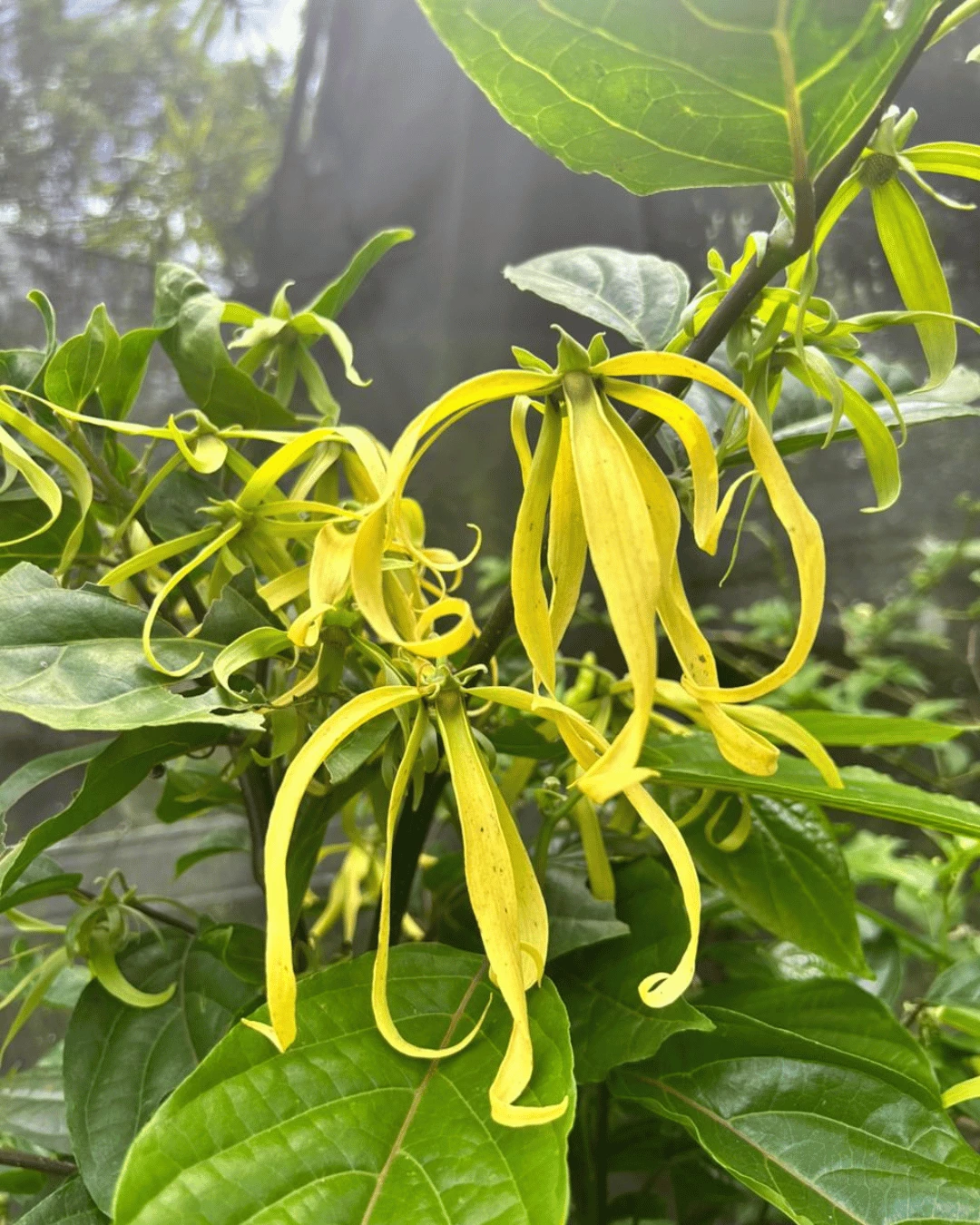
What Is Cananga odorata?
Cananga odorata, commonly known as Ylang-Ylang, is one of the most iconic rare exotic plants in the world. It originates from the tropical rainforests of Southeast Asia. Primarily, its native range spans Indonesia, the Philippines, Malaysia, and Papua New Guinea. Furthermore, it extends naturally through Indochina all the way to northeastern Australia.
Indonesia holds a special place in the story of this plant. The name Cananga itself comes from the Malay word kananga. Additionally, the name Ylang-Ylang traces back to the Tagalog word ilang-ilang, meaning “wild.” This reflects its origins deep in wild tropical forests.
This exotic plant is globally sought after for one powerful reason: its flowers. The blossoms produce one of the most valuable essential oils in the fragrance industry. Consequently, Ylang-Ylang oil is a key ingredient in some of the world’s most expensive perfumes. It takes up to five tonnes of fresh flowers to produce just one litre of essential oil. That fact alone tells you how rare and precious this plant truly is.
Moreover, Cananga odorata is not just a perfume tree. It holds deep cultural value across Southeast Asia. In Indonesia, flower petals are traditionally strewn at weddings and religious ceremonies. Furthermore, traditional medicine has used this plant for centuries to treat ailments such as malaria, anxiety, and high blood pressure.
A well-managed Cananga odorata tree can remain productive for up to 50 years. It is fast-growing and begins flowering within just two to five years after planting. Consequently, collectors who invest in these rare seeds enjoy a long-term botanical treasure that delivers beauty, fragrance, and cultural depth for decades.
Aesthetic Features Cananga odorata
Cananga odorata is a visually striking tree at every stage of its life. Its graceful form, glossy foliage, and extraordinary flowers make it a standout specimen for any serious collector. Furthermore, its year-round blooming habit ensures your garden is never without its legendary scent.
Leaf Structure
The leaves of Cananga are evergreen and alternate — meaning they grow one leaf at a time along the stem, not in pairs. Each leaf is ovate — egg-shaped — and comes to a pointed tip. The margins are wavy, giving each leaf an elegant, slightly ruffled edge.
Leaves measure up to 22 cm long and 9 cm wide. They are dark, glossy green on top, with a prominent central vein running down the middle. Additionally, 8 to 11 pairs of smaller side veins spread out from that central vein like a fine herringbone pattern. The overall effect is a lush, layered canopy that looks beautiful even when the tree is not in bloom.
The tree itself is fast-growing and can reach 10 to 30 metres in height in the wild. In cultivation and managed gardens, it is more typically kept at 3 to 10 metres. The bark is smooth and pale grey on young trees. Moreover, it becomes slightly fissured and textured as the tree matures.
Flower and Fruit
The flowers of Cananga odorata are the true showpiece of this exotic plant. Each flower has six narrow, ribbon-like petals that can grow up to 9–13 cm long. The petals emerge twisted and green when young. Consequently, as they mature, they unfurl and turn a rich, deep yellow-green to bright golden yellow.
The flowers hang in drooping clusters — called cymes or panicles — from the leaf axils, the joint where a leaf meets the branch. This gives the tree its signature weeping, cascading silhouette. Furthermore, the fragrance is most powerful in the evening, filling a garden with a sweet, exotic, slightly spicy scent that can carry for many metres.
After flowering, the tree produces small, oval berries that start out green and ripen to a deep black colour. Each fruit can contain 2 to 12 seeds, embedded in an oily flesh. Additionally, these fruits attract tropical birds such as imperial pigeons and fruit doves, making this plant a wonderful addition to any wildlife-friendly garden.
Growth Habit and Year-Round Blooming
One of the most remarkable traits of Cananga odorata is that it flowers almost continuously throughout the year. There is no strict dormancy period in its preferred tropical climate. Consequently, a well-grown tree rewards collectors with near-constant blooms and fragrance.
The tree thrives best in full to partial sun. It prefers acidic, well-draining soil with a pH between 5.0 and 7.0. Furthermore, it tolerates altitudes from sea level up to 1,800 metres. The ideal temperature range is 20–27°C, with a minimum tolerance of around 2°C. Moreover, the tree develops a shallow root system and grows best with consistent moisture. Avoid waterlogged or heavy clay soils.
Global Seed Delivery & Phytosanitary Certification
Induare Agro is committed to delivering export-quality seeds safely and legally to collectors, botanists, and growers worldwide. Furthermore, every order is treated as a professional transaction from start to finish. Your seeds deserve expert care — and that is exactly what Induare Agro provides.
Packaging and Shipping
Induare Agro ships all seeds via Global Express delivery. This ensures your rare exotic seeds arrive quickly and in excellent condition. Each seed is carefully cleaned, dried, and packed to maintain viability throughout international transit.
Packaging is designed to protect seeds from moisture, pressure, and temperature fluctuations. Consequently, you receive seeds in the same high standard in which they left Indonesia. Additionally, every shipment includes full tracking so you can monitor your order from departure to arrival.
Buyer Peace of Mind
Every order from Induare Agro includes a Phytosanitary Certificate — an official government-issued document certifying that your seeds are free from pests, diseases, and harmful organisms. Furthermore, this certificate is recognised by customs authorities in most countries worldwide. It is your legal guarantee of clean, safe, export-quality seeds.
Induare Agro sources all seeds directly from verified organic growers in Indonesia. Moreover, no synthetic chemicals or treatments are used in the growing or post-harvest process. Consequently, every seed you receive from Induare Agro is genuinely organic and ready to plant.
Additionally, Induare Agro complies fully with international plant trade regulations. This means you can import with confidence, backed by proper documentation at every step.
How to Grow Cananga odorata
Step 1 — Seed Preparation Soak your Cananga odorata seeds in warm water for 24 hours before planting. This softens the seed coat and helps speed up germination.
Step 2 — Prepare Your Growing Medium Mix loamy soil, coarse sand, and compost in equal parts. This mix provides the well-draining, slightly acidic conditions that Cananga odorata needs to thrive.
Step 3 — Sow the Seeds Plant each seed about 5 cm deep in a prepared pot or planting pit. Keep at least 6 metres of spacing if planting directly in the ground.
Step 4 — Watering and Humidity Keep the soil consistently moist but never waterlogged. High humidity is important — use a humidifier or place the pot in a humid environment if growing indoors.
Step 5 — Light and Temperature Place your seedling in full to partial sun. The ideal temperature range is 20–27°C. Protect plants from temperatures below 10°C.
Step 6 — Fertilising Apply a balanced fertiliser every four to six weeks during the growing season. This encourages healthy root development and early flowering.
Step 7 — First Flowers Patience pays off. Cananga odorata typically begins flowering within two to five years. Furthermore, a well-cared-for tree can remain productive for 50 years or more.
