
What Is Dipterocarpus gracilis?
Dipterocarpus gracilis is a critically endangered tropical rainforest tree. It belongs to the family Dipterocarpaceae — one of Southeast Asia’s most ecologically important tree families. This species grows natively across Indonesia, including Kalimantan, Java, and Sumatra. Furthermore, it also occurs in Malaysia, the Philippines, Thailand, Myanmar, and Bangladesh.
The tree grows in lowland evergreen forests, on valley floors, ridges, and slopes. It thrives from sea level up to 900 metres in elevation. It prefers well-drained soils and often dominates the forest canopy where it grows. Consequently, it plays a vital ecological role in the landscapes it inhabits.
Dipterocarpus gracilis is classified as Critically Endangered on the IUCN Red List. Habitat loss and heavy timber exploitation have severely reduced wild populations. Moreover, natural regeneration in the wild is extremely limited. This makes each viable seed exceptionally rare and scientifically valuable.
Collectors, botanical gardens, and conservation programmes worldwide seek this species. Additionally, it represents a living piece of Indonesia’s ancient forest heritage. Owning and growing this plant is a meaningful act of conservation. Induare Agro is proud to connect dedicated collectors with this extraordinary species.
Aesthetic Features Dipterocarpus gracilis
Dipterocarpus trees are some of the most visually striking plants in the tropical world. D. gracilis is no exception. Its physical features are bold, elegant, and deeply rooted in the tropical forest landscape.
Leaf Structure
The leaves of Dipterocarpus gracilis are large, leathery, and dark green. Each leaf has a firm, thick texture that feels almost like stiff leather to the touch. The surface is smooth and glossy on the upper side. Furthermore, the leaf blade is folded or pleated — meaning it has a subtle rippled or corrugated pattern running across its surface.
Prominent veins run from the central midrib outward to the leaf edge. These veins give the leaf a clean, architectural appearance. Additionally, young leaves emerge with a reddish or bronze tone before maturing to deep green. This colour change adds dramatic seasonal interest to any collection.
The leaves grow alternately along the branches. Large bud-protecting sheaths — called stipules — wrap around each growing tip before falling away. This gives the branch tips a distinctively bold, layered look when new growth appears.
Flower and Fruit
The flowers of Dipterocarpus gracilis are large and sweetly fragrant. Petals are white to pale pink, often with a soft reddish stripe running down the centre. The flower cluster — called a raceme, or a short branching spray of blooms — holds three to nine individual flowers. Moreover, each bloom releases a pleasant, light scent that attracts insect pollinators.
Flowering is not a yearly event in this species. Blooms appear only when environmental conditions are right — often triggered by drought stress or strong shifts in day-to-night temperatures. Consequently, a flowering D. gracilis is a rare and remarkable sight even in its native habitat.
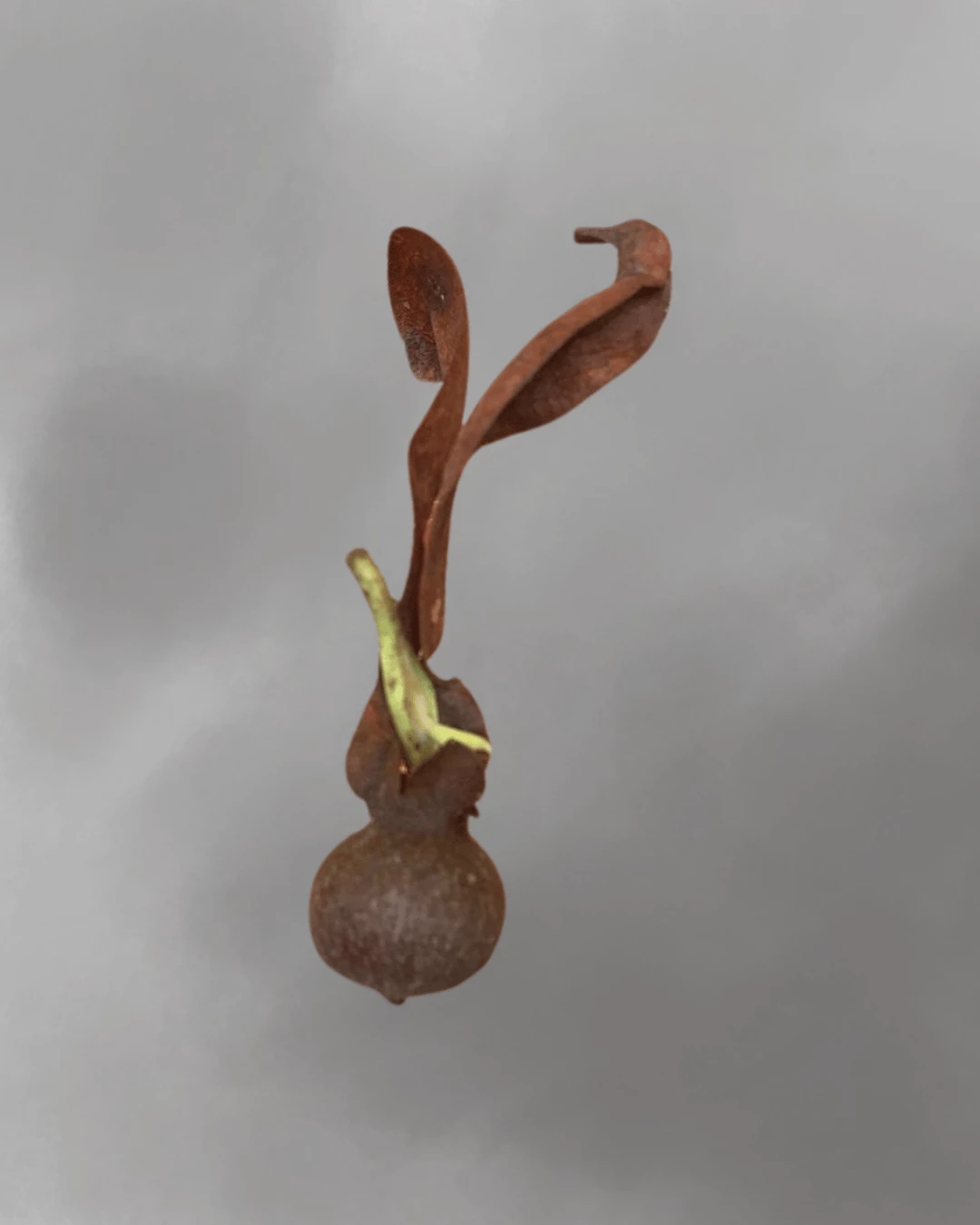
The fruit is one of the most iconic features of the entire Dipterocarpaceae family. It is a hard, nut-like seed enclosed within a cup-shaped calyx — the outer covering of the flower base. Two large wings extend upward from this cup. These wings act like a helicopter rotor. They allow the seed to spin and drift gently through the air when it falls from the canopy.
Bark, Resin, and Overall Form
Dipterocarpus gracilis grows into a towering emergent tree — one that rises above the surrounding forest canopy. It can reach 50 metres in height, with a straight, strong trunk. The base of the trunk is often buttressed — meaning it flares outward at the base with wide, plank-like root structures that anchor the tree in the soil.
The bark is grey to orange-brown in colour. It is rough, flaky, and covered with small raised pores called lenticels — tiny breathing holes in the bark. Furthermore, the tree produces an aromatic white resin from natural fissures in the bark. This resin has historically been used as varnish, timber sealant, and even as a fragrant torch fuel in traditional Southeast Asian communities.
Global Seed Delivery & Phytosanitary Certification
Induare Agro is committed to professional, legal, and safe delivery of rare seeds worldwide. We follow all international plant export regulations. Additionally, we ensure every package reaches its destination in perfect condition.
Packaging and Shipping
Each seed is carefully cleaned, inspected, and prepared for export. We use professional protective packaging to keep seeds viable during long-distance transit. Furthermore, every order ships via Global Express courier — one of the fastest and most reliable international delivery methods available.
All seeds are dispatched with full tracking. You receive your tracking number by email as soon as your order is dispatched. Consequently, you can follow your package every step of the way, from our facility in Indonesia to your door.
Shipping times vary by destination. Most orders reach Europe, North America, and Australia within five to ten business days. We ship year-round, subject to seasonal seed availability.
Buyer Peace of Mind
Every order from Induare Agro includes an official Phytosanitary Certificate. This is an internationally recognised government-issued plant health document. It certifies that the seeds have been inspected and are free from pests and disease. Moreover, it confirms the seeds meet the import requirements of the destination country.
This document protects buyers at customs. It significantly reduces the risk of package seizure or delays at the border. Additionally, it gives you full confidence that your seeds come from a legitimate, regulated, and professional source.
Induare Agro is a trusted exporter of rare Indonesian plant seeds. We pride ourselves on export-quality standards, transparent documentation, and dedicated customer support. Primarily, our goal is to bring Indonesia’s rarest botanical treasures safely to collectors around the world.
How to Grow Dipterocarpus gracilis
Step 1 — Source Fresh Seeds Always start with fresh seeds from a verified supplier like Induare Agro. Dipterocarpus seeds lose viability quickly and should be planted as soon as possible after arrival.
Step 2 — Prepare Your Growing Medium Use a well-drained, loamy or slightly sandy growing mix. Add organic material such as compost to improve moisture retention. Avoid heavy clay soils that stay waterlogged.
Step 3 — Plant at the Right Depth Place the seed on the soil surface or cover it very lightly — no deeper than 1 cm. Press it gently into the mix. The seed needs good soil contact but should not be buried deeply.
Step 4 — Create the Right Environment Place your pot in a warm, humid location with partial shade. A greenhouse, terrarium, or sheltered outdoor space in a tropical or subtropical climate works best. Aim for temperatures above 20°C (68°F) at all times.
Step 5 — Water Carefully Keep the soil consistently moist but never waterlogged. Water from below or at the base of the pot. Furthermore, maintain high humidity around the seedling to mimic its rainforest origins.
Step 6 — Manage Light Gradually Young seedlings of D. gracilis grow best with about 20–25% canopy openness — meaning partial filtered light. Gradually increase light exposure as the plant establishes and grows stronger.
Step 7 — Monitor and Maintain Watch for pests and fungal issues in humid conditions. Remove dead material promptly. Additionally, feed with a balanced slow-release fertiliser during the active growing season for best results.
