
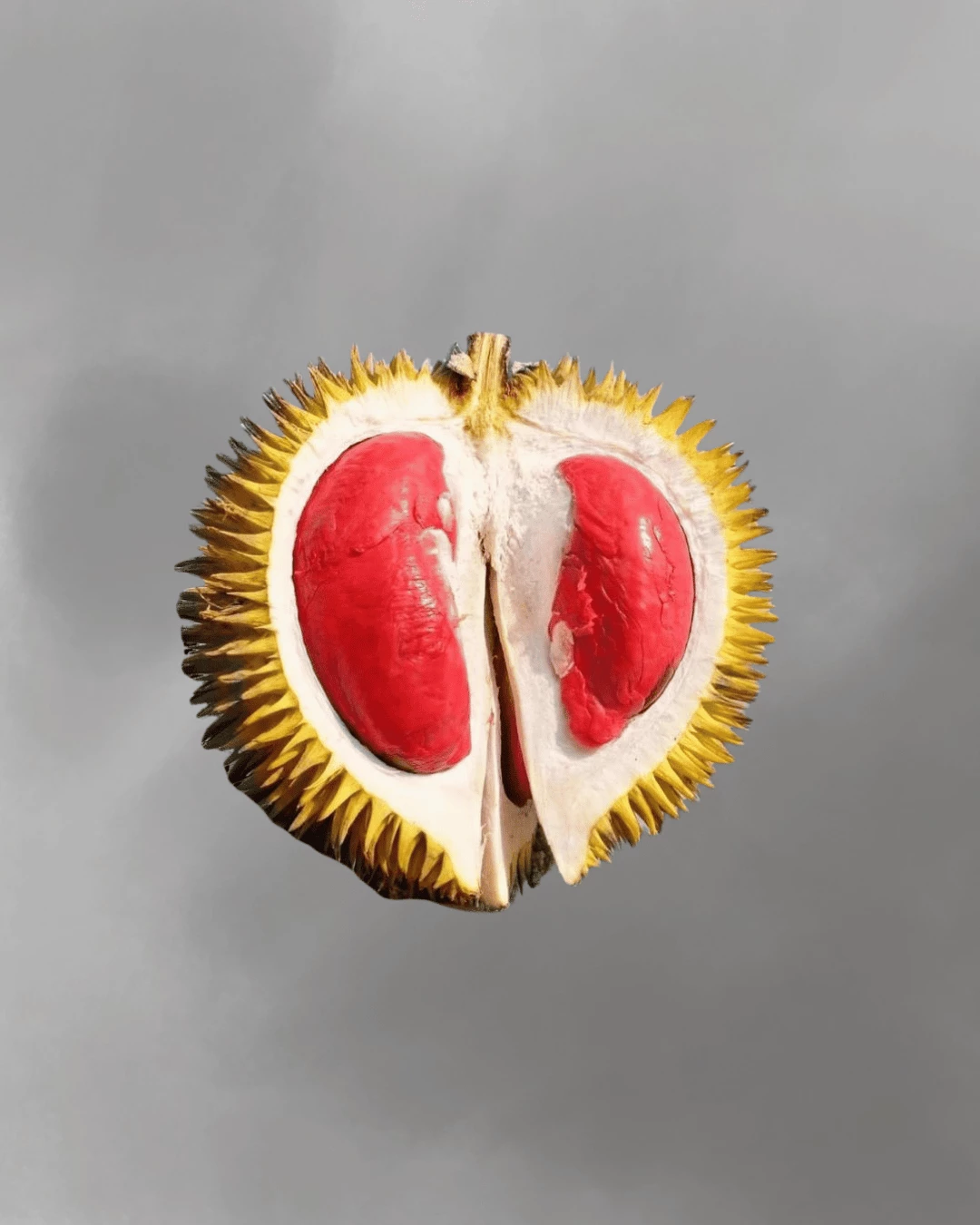
What Is Durio dulcis?
Durio dulcis is one of the rarest and most prized durian species in the world. Its common name, Lahung, comes from the Banjar language of South Kalimantan, Indonesia. The name dulcis is Latin for “sweet” — and for good reason. Many durian lovers consider Lahung the sweetest of all durian species. Furthermore, it is endemic to Borneo, meaning it grows naturally nowhere else on Earth. Its native range covers the lowland forests of Kalimantan, Sabah, Sarawak, and Brunei.
The tree thrives in mixed lowland forest — a type of tropical rainforest rich in tall hardwood trees. It grows on sandy clay soils at altitudes between 20 and 800 metres above sea level. Primarily, wild Lahung trees are found deep inside forests, far from roads and settlements. Consequently, the fruit is extremely difficult to harvest. Local collectors in South Kalimantan typically find it between December and February, when ripe fruits fall naturally to the forest floor.
Additionally, Durio dulcis is now classified as a vulnerable species. Deforestation and habitat loss in Borneo have reduced its wild population significantly. This combination of wild scarcity, extraordinary flavour, and near-zero cultivation makes Lahung one of the most sought-after exotic fruit trees among collectors globally. Induare Agro offers fresh seeds from verified Kalimantan sources — making it possible for growers worldwide to cultivate this legendary species legally and responsibly.
Aesthetic Features Durio dulcis
Durio dulcis is a large and impressive forest tree. Furthermore, it stands out even among other durian species for its striking red fruit and powerful scent. Every part of the plant — from its tall trunk to its vivid fruit — makes it a remarkable specimen for any serious collector.
Tree and Leaf Structure
Durio dulcis is a tall tree. In the wild, it can reach up to 40 metres in height. The trunk can grow up to 80 cm wide. Additionally, it develops large buttresses — wide, wing-like structures at the base of the trunk — that can rise up to 4 metres high. These buttresses help support the tree’s great weight in the soft forest soil. The bark is rough and reddish-brown. It is slightly cracked or flaky on the surface. The leaves are oval to elliptical in shape. They measure about 7–14 cm long and 3.5–6 cm wide. Furthermore, the underside of each leaf is densely covered in tiny scales, giving it a silvery appearance in certain light.
Flowers and Fruit
The flowers of Durio dulcis are a beautiful pale pink. They grow in short clusters directly on the older branches of the tree — not on new growth. Primarily, this branching pattern is a key identification feature. The flower petals grow up to 45 mm long. Pollination occurs naturally through forest insects and small animals.
The fruit is the most iconic part of this species. It is round and up to 15 cm wide. The outer skin — called a husk — is dark red to deep brown-red in color. Consequently, this vivid red color is what gives the species its popular English name: Red Durian. The husk is covered in slender spines that are 15–20 mm long. Unlike the thick pyramidal spines of common durian, these spines are thin and straight. Furthermore, the fruit does not split open along a seam like other durians. The collector must cut it open manually to access the flesh inside.
Flesh and Flavour
The flesh of Durio dulcis is dark yellow in color. It is thin but intensely flavoured. Additionally, it carries a deep caramel taste that many durian experts describe as richer and sweeter than any other species. The aroma is strong and distinctive — often described as a mix of sweet caramel and turpentine. Primarily, this powerful scent is what first guided botanist Odoardo Beccari to discover the species in 1865 during his exploration of Borneo. He described it as “one of the most exquisite wild durians of Borneo.” Consequently, this species carries both a remarkable flavour profile and a compelling history that make it a must-have for elite collectors.
Global Seed Delivery & Phytosanitary Certification
Induare Agro is a professional botanical seed exporter based in Indonesia. The company specialises in rare and endemic Indonesian plant species. Furthermore, Induare Agro partners with verified local collectors in Kalimantan to source Lahung seeds during the short natural fruiting season. Every seed is checked for freshness and viability before it is packed for export.
Packaging and Shipping
Induare Agro uses professional-grade packaging for all seed orders. Each seed is wrapped in moisture-control material and placed in cushioned express packaging. This protects the seed throughout its full international journey. Shipments go out via Global Express couriers such as DHL and EMS. Additionally, most international orders arrive within 5–14 business days. Furthermore, every parcel includes an official Phytosanitary Certificate. This certificate is issued by Indonesia’s Plant Quarantine Authority. It confirms the seeds are free from pests, disease, and regulated pathogens. Consequently, it satisfies the import requirements of customs offices in the EU, USA, UK, Australia, Japan, and most other regulated countries.
Buyer Peace of Mind
Induare Agro follows a strict export compliance process. Every order is fully traceable from Kalimantan to the collector’s door. Furthermore, the commercial invoice and all required export papers travel inside the parcel. This ensures smooth and fast customs clearance at every destination. Additionally, the Induare Agro team provides after-sales support and growing guidance. Primarily, the goal is simple: every collector who orders Lahung seeds should have the best possible chance of growing this legendary tree successfully.
How to Grow Durio dulcis
Growing Durio dulcis is a rewarding long-term project. Furthermore, collectors in tropical and subtropical climates can grow it outdoors. Those in cooler regions can start it in a large container indoors. Follow these steps for the best results.
Step 1 — Seed Freshness Use fresh seeds immediately after receiving them. Durio seeds lose the ability to sprout quickly once they dry out. Additionally, do not refrigerate the seeds before planting.
Step 2 — Seed Preparation Soak the seed in warm water (28–30°C) for 24 hours before planting. Consequently, this softens the outer coat and helps the seed sprout faster.
Step 3 — Growing Medium Use a rich, well-draining mix: 50% potting soil, 30% coarse sand or perlite, and 20% compost. Furthermore, the mix should hold moisture but never become waterlogged. Good drainage is essential to prevent root problems.
Step 4 — Sowing Plant the seed on its side, about 2–3 cm deep in a pot with drainage holes. Primarily, laying the seed on its side — rather than upright — improves the germination rate for Durio species.
Step 5 — Temperature and Humidity Keep the temperature between 25°C and 32°C at all times. Additionally, maintain high humidity of 70–90% around the seedling. A plastic dome or enclosed tray works well for this purpose.
Step 6 — Light Place the pot in bright, indirect light. Furthermore, protect the seedling from direct midday sun during the first 3 months. Lahung seedlings are sensitive to heat stress at this early stage.
Step 7 — Watering Keep the soil consistently moist but not wet. Water gently every 1–2 days during the sprouting phase. Consequently, steady moisture — without flooding — gives the best germination results.
Step 8 — Transplanting Move the seedling to a larger pot or garden bed once it reaches 25–30 cm in height. Additionally, choose a sunny, sheltered location with deep, slightly acidic soil for outdoor planting. The tree needs space and good airflow to develop its large canopy.
Step 9 — Long-Term Care Apply a balanced organic fertiliser every 4–6 weeks during the growing season. Furthermore, mulch around the base of the tree to retain soil moisture and protect the roots. Patience is key — Durio dulcis is a long-term tree, but its extraordinary fruit is well worth the wait.
© Induare Agro — Indonesia’s professional rare seed exporter.
