
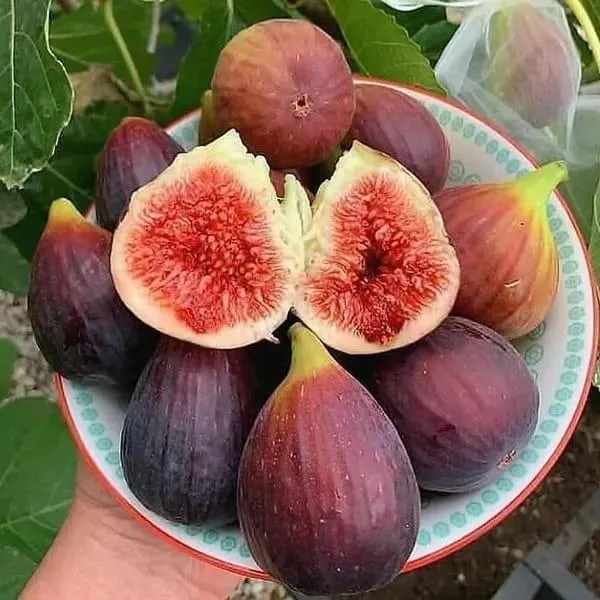
What Is Ficus carica?
Ficus carica, the Common Fig, is one of humanity’s oldest and most treasured fruit trees. Its origins trace back to southwestern Asia and the eastern Mediterranean — a region stretching from Anatolia in modern Turkey to northern India. Consequently, this species carries over 11,000 years of cultivation history. It was growing in human settlements long before wheat or oats became staple crops.
Today, Ficus carica is globally rare in its pure, seed-grown form. Most commercial plants are propagated by cuttings, not seeds. Furthermore, authentic organic seeds with proper export documentation are extremely hard to find. Collectors, botanical gardens, and exotic-plant enthusiasts worldwide actively search for genuine Ficus carica seeds. Additionally, the species holds deep cultural significance — from ancient Greek texts to religious scriptures — making it a must-have for any serious plant collection.
Induare Agro sources only fresh, viable, organic seeds. Moreover, every shipment complies with international plant export standards. This makes Ficus carica from Induare Agro one of the most complete rare-seed offerings available on the global market today.
Aesthetic Features Ficus carica
Ficus carica is a visually striking tree. Its bold structure, distinctive leaves, and unique fruit set it apart from almost any other plant in a collector’s garden. Primarily, it is the combination of ancient character and ornamental beauty that makes this species so desirable.
Leaf Structure
The leaves of Ficus carica are large, deeply lobed, and highly decorative. Each leaf grows between 12 and 25 centimeters in length. Furthermore, the leaf surface has a rough, sandpaper-like texture on top. The underside is much smoother and paler green. Additionally, each leaf features three to five distinct lobes, giving it a bold, palm-like shape. This impressive foliage creates instant tropical drama in any landscape or container garden.
Flower and Fruit
The flowering system of Ficus carica is truly unique and scientifically fascinating. The flowers are actually hidden inside a fleshy, hollow receptacle called a syconium — this is the structure we commonly call the “fig.” Consequently, you never see the flowers from the outside. Most cultivated varieties produce fruit without any pollination at all. The fruit ripens in late summer to autumn. It ranges in color from yellow-green to rich purple-brown, depending on the variety. Furthermore, the inner flesh is soft, honey-sweet, and pink to deep red. This dual value — ornamental and edible — makes Ficus carica exceptional among rare exotic plants.
Bark and Form
Mature Ficus carica trees develop a striking silvery-gray bark that becomes slightly gnarled and textured with age. Moreover, the overall form is a broad, spreading canopy reaching 3 to 9 meters in height. Young trees have smooth, pale branches with a clean, modern appearance. Additionally, the plant grows well in containers, making it suitable for collectors with limited outdoor space. Consequently, this species adapts beautifully to both garden planting and large pot cultivation.
Global Seed Delivery & Phytosanitary Certification
Induare Agro is committed to safe, legal, and fully documented global seed export. Furthermore, every seed we ship meets the highest international phytosanitary standards. We understand that collectors and importers need complete peace of mind with every order.
Packaging and Shipping
Induare Agro uses professional-grade packaging for all seed orders. Each seed is carefully sealed to maintain freshness and viability during transit. Furthermore, we use Global Express courier services for fast and reliable delivery worldwide. Additionally, every shipment includes a Phytosanitary Certificate issued by the relevant Indonesian government authority. This certificate confirms that the seeds are free from pests and diseases. Consequently, buyers can import the seeds legally and with confidence into most countries.
Buyer Peace of Mind
We know that importing plant material across international borders can feel complex. Moreover, Induare Agro handles all the official paperwork on your behalf. Primarily, our goal is to make the import process as simple as possible for you. Additionally, our seeds are organically grown and export-quality certified. Furthermore, we provide full tracking information for every shipment. Consequently, you always know exactly where your order is. Choosing Induare Agro means choosing a trusted, professional partner for all your rare and exotic seed needs.
How to Grow Ficus carica
Growing Ficus carica from seed is a rewarding experience. Furthermore, the process is straightforward when you follow these simple steps carefully.
Step 1 — Seed Viability Test Place your seeds in a glass of lukewarm water. Seeds that sink are viable and ready to plant. Seeds that float are not suitable for germination.
Step 2 — Soaking Soak viable seeds in clean, lukewarm water for 12 to 24 hours. This softens the seed coat and improves germination rates significantly. Consequently, you will see faster and more consistent sprouting.
Step 3 — Prepare Your Growing Medium Fill a small pot or tray with a light, well-draining seed-raising mix. Additionally, ensure the container has drainage holes at the bottom. Good drainage prevents root rot at the seedling stage.
Step 4 — Sowing Place the seeds on the surface of the moist soil mix. Do not bury them deeply — a very light covering of 3 to 5 millimeters of soil is enough. Furthermore, gently press the soil surface to ensure good seed-to-soil contact.
Step 5 — Warmth and Humidity Cover the pot with clear plastic wrap or a humidity dome. Place the pot in a warm location with bright, indirect light. Moreover, maintain a temperature of 21–27°C (70–80°F) at all times for best results.
Step 6 — Watering Keep the soil lightly and consistently moist. Do not let it dry out completely between waterings. Additionally, avoid overwatering, as soggy soil will damage the seeds.
Step 7 — Germination Germination typically occurs within 2 to 6 weeks. Once most seedlings have sprouted, gradually remove the humidity cover. Furthermore, begin introducing fresh air slowly over 7 to 10 days to harden the seedlings.
Step 8 — Transplanting When seedlings develop two to four true leaves, transplant them into larger individual pots. Use nutrient-rich, well-draining soil. Moreover, place the young plants in a bright, sunny spot with at least 6 hours of direct light daily.
Step 9 — Ongoing Care Water regularly but allow the top layer of soil to dry between waterings. Additionally, Ficus carica tolerates drought well once established. Expect the first fruit production in 3 to 5 years from seed.
All seeds are supplied by Induare Agro — your trusted source for rare exotic seeds and export-quality Indonesian plants.
