
What Is Mangifera odorata?
Mangifera odorata is a rare, fragrant tropical tree in the cashew family, Anacardiaceae. It originates from the humid lowlands of Southeast Asia — primarily Indonesia, Malaysia, and Thailand. Scientists believe it is a natural hybrid between Mangifera indica (the common mango) and Mangifera foetida (the horse mango). Because it has never been found growing truly wild, it is considered an ancient cultivated rarity. This mystery makes it even more desirable to serious collectors.
The tree thrives where most mango varieties fail. It grows in areas with heavy, year-round rainfall, including the wet rainforests of Borneo, Sumatra, and Java. Consequently, it fills an ecological niche that no ordinary mango can occupy. Furthermore, its strong disease resistance makes it a durable long-term addition to any tropical garden. Its local names — kuweni in Indonesia, kuini in Malaysia — reflect centuries of cultural appreciation across the region.
Today, Mangifera odorata is classified as Data Deficient by the IUCN. This means its wild populations are poorly documented. Additionally, increasing land-use pressure in Southeast Asia puts traditional cultivated varieties at risk. Preserving and growing these seeds is an act of genuine conservation. Moreover, owning this species connects you directly to the living heritage of Indonesian tropical biodiversity — a living link to one of the world’s most biodiverse archipelagos.
Aesthetic Features Mangifera odorata
Mangifera is one of the most celebrated genera of tropical trees in the world. The species odorata — meaning “fragrant” in Latin — stands out even within this remarkable genus. Its physical characteristics are bold, purposeful, and deeply appealing to collectors of rare exotic plants.
Leaf Structure
The leaves of Mangifera odorata are simple and elongated, measuring 12 to 35 cm long and 4 to 10 cm wide. They are thick and leathery in texture. Furthermore, their surface shows a prominent network of veins, especially on the underside. The leaves attach to rather stout branches, giving the tree a solid, architectural presence. They are evergreen, meaning the tree keeps its foliage year-round. Additionally, young leaves often emerge with a reddish tint before turning deep green. This seasonal flush of color makes the tree visually striking at multiple times of year.
The tree itself grows to 10–15 meters tall, with exceptional specimens reaching 20–30 meters. Its crown — the upper spread of branches and leaves — is broadly rounded and full. Consequently, it provides generous shade and creates a lush canopy that collectors and gardeners both appreciate. The bark is grey and smooth. It produces a resinous, mildly irritant sap that should be handled with care.
Flower and Fruit
The flowers of Mangifera odorata are small — about 6 mm wide — but they appear in large, branching clusters called panicles — flat-topped flower heads that can grow 15 to 50 cm long. The petals are lance-shaped, pale yellow to light pink, marked with a distinctive dark red base. Primarily, these flower clusters are fragrant, attracting pollinators and filling the surrounding air with a sweet scent. The flowering season is a spectacular event in any garden.
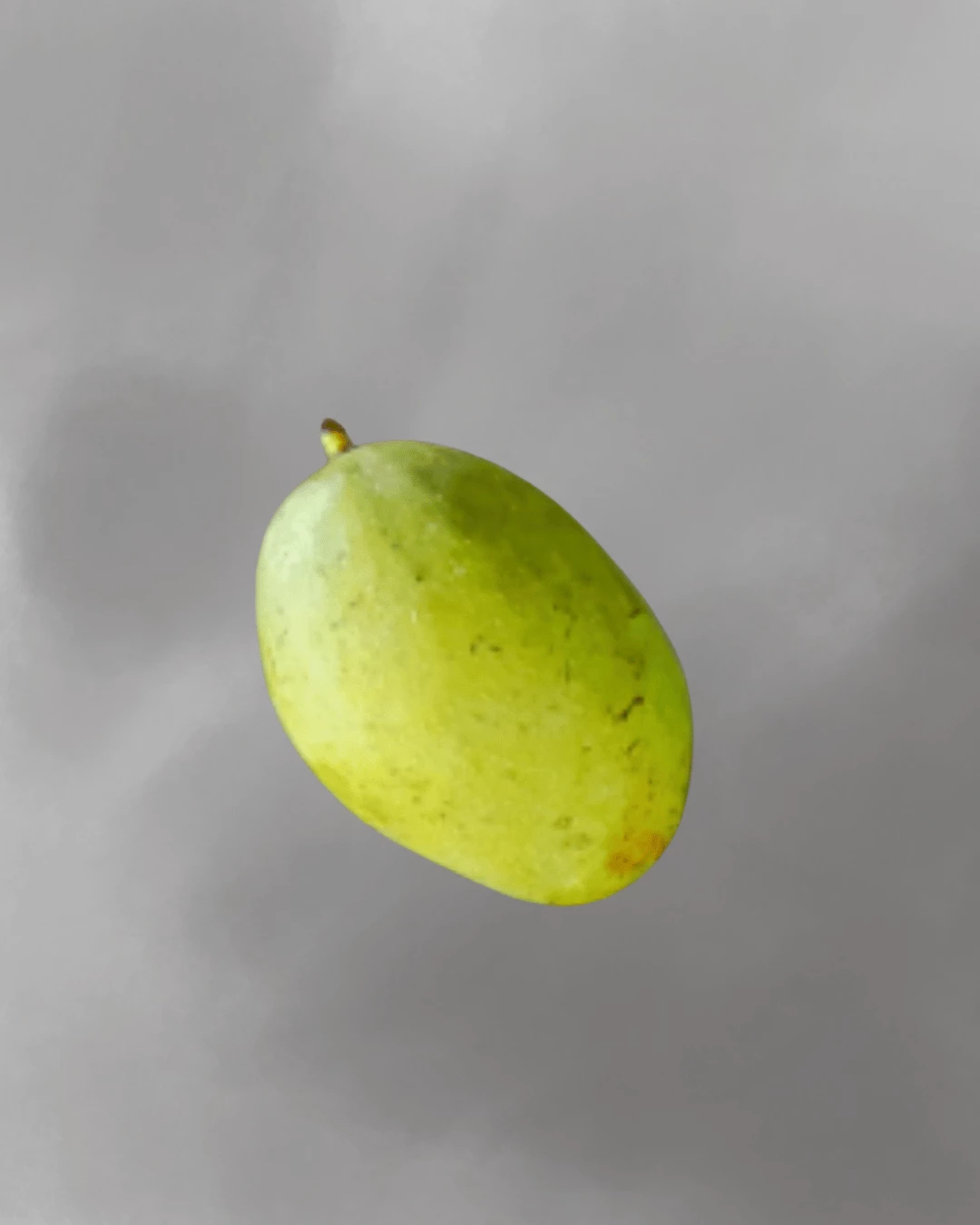
The fruit is the crown jewel of this species. Each fruit is an oblong drupe — a fleshy fruit with a central stone or seed — measuring 10 to 13 cm long and 6 to 9 cm wide. The skin stays greenish-yellow even when fully ripe and is dotted with small brown pores. The flesh inside is orange-yellow, firm, and fibrous, with a sweet-sour, juicy flavor and a distinctive aromatic quality. The seed inside is flat and covered with soft fibers. Consequently, the seed is easy to identify and handle for planting purposes.
Fragrance Profile
The word odorata defines this tree. Its fragrance is the most powerful sensory feature it possesses. The ripe fruit emits a bold, turpentine-like aroma from its skin. Primarily, this scent comes from natural aromatic compounds unique to this hybrid species. Furthermore, even the flowers contribute a sweet, distinct fragrance at bloom time. For collectors of rare exotic seeds and rare plants in Indonesia and abroad, this olfactory dimension adds remarkable value. Additionally, the fresh fruit is used in traditional Southeast Asian cuisine — in chutneys, pickles, and fresh preparations — where its aroma creates complexity and depth that no ordinary mango can match.
Global Seed Delivery & Phytosanitary Certification
Induare Agro is committed to making Indonesia’s rarest botanical treasures accessible to collectors and growers worldwide. Every seed we supply meets the highest standards of quality, legality, and care. We are proud to offer export-quality, organically sourced rare seeds backed by full international documentation.
Packaging and Shipping
Every seed of Mangifera odorata is carefully harvested at peak viability. We use professional, moisture-controlled packaging to preserve seed health during transit. Moreover, each order ships via Global Express courier services for the fastest and safest delivery to your door. Furthermore, we track every shipment and provide buyers with full tracking details. Our team carefully follows all international phytosanitary — plant health regulation — protocols at every stage of packing and dispatch.
Additionally, Induare Agro includes a valid Phytosanitary Certificate with every international order. This is an official government-issued document confirming that the seeds have been inspected and are free from pests and diseases. Consequently, your package can pass through customs in most countries without delay. This makes buying rare exotic seeds from Indonesia safer and simpler than ever before.
Buyer Peace of Mind
We understand that purchasing rare seeds from overseas requires trust. Primarily, our reputation rests on honesty, accuracy, and customer satisfaction. Every seed we sell is fresh, organic, and sourced directly from authentic Indonesian specimens. Furthermore, we verify the botanical identity of each seed before it leaves our facility.
Induare Agro has served collectors and botanical institutions across multiple continents. Our Phytosanitary Certificate is your legal guarantee that the product complies with international plant import regulations. Additionally, our team is available to assist you with any import documentation queries your country may require. We believe that access to rare plants in Indonesia should be a smooth, transparent, and rewarding experience for every buyer.
How to Grow Mangifera odorata
Step 1 — Seed Preparation Rinse the seed gently under clean, room-temperature water to remove any residue. Soak it in warm water for 24 hours. This softens the outer seed coat and improves germination speed.
Step 2 — Prepare Your Growing Medium Fill a deep pot or seedling tray with well-draining, fertile tropical mix. Add organic compost to improve moisture retention. A pH of 5.5 to 7.0 is ideal for this species.
Step 3 — Planting Plant the seed horizontally, about 2–3 cm below the surface. The flat face of the seed should face downward. Press the soil gently and water thoroughly after planting.
Step 4 — Warmth and Humidity Place the pot in a warm location with temperatures above 20°C (68°F). Maintain high humidity around the seedling. Covering the pot loosely with a plastic sheet can help retain moisture.
Step 5 — Germination Expect germination within 2 to 4 weeks under optimal conditions. Keep the soil consistently moist — not waterlogged. Provide bright, indirect light at this early stage.
Step 6 — Ongoing Care Once the seedling reaches 10–15 cm, move it to a sunnier location. Water regularly and fertilize monthly with a balanced tropical plant fertilizer. Mangifera odorata adapts well to container growing in non-tropical climates with a heated greenhouse.
