
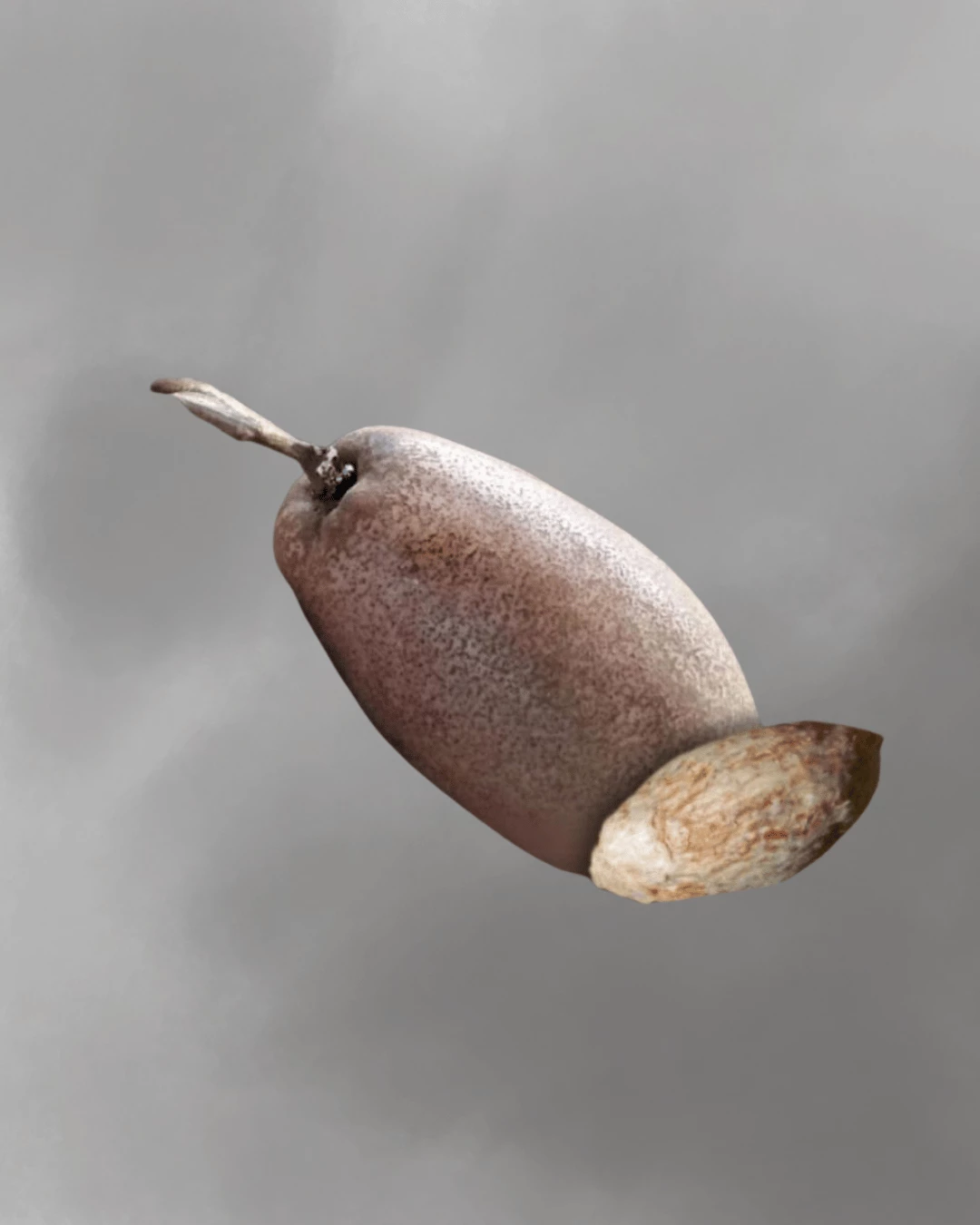
What Is Mangifera kemanga?
Mangifera kemanga is a rare, wild tropical fruit tree native to the wet lowland forests of Indonesia, Peninsular Malaysia, and Borneo. It belongs to the Anacardiaceae family — the same plant family as the common cashew and mango. Scientists believe it may be a wild ancestor of cultivated mango varieties. Consequently, it holds enormous value for botanical research and conservation science.
This species grows abundantly near Bogor, in West Java. Furthermore, it thrives along riverbanks in East Kalimantan, where it tolerates seasonal flooding with ease. Authorities in Bogor Regency have officially declared Mangifera kemanga the identity flora of their region. Additionally, conservation experts now consider it endangered. Its numbers have declined sharply as modern mango varieties replaced it in commercial farming.
Globally, rare plant collectors and botanical gardens recognise this tree as a living piece of botanical history. Moreover, its unique flavour profile — a bold, pungent, acid-sweet taste — makes it one of the most distinctive fruits in all of Southeast Asia. Induare Agro is proud to offer authenticated, export-quality seeds of this irreplaceable Indonesian plant.
Aesthetic Features Mangifera kemanga
Mangifera kemanga is a visually majestic tree. It commands attention in any landscape or botanical collection. Furthermore, each part of this plant — from its canopy to its fruit — tells a story of ancient tropical evolution.
Leaf Structure
Mangifera kemanga produces large, leathery leaves that sit almost directly on the branch. They have very short leaf stalks — called petioles — meaning the leaves appear nearly stalkless. The leaf edges narrow at the base and flow continuously along the branch. Primarily, this gives the tree a dense, lush, layered look that is instantly recognisable. Moreover, young leaves flush in soft reddish tones before maturing to deep, glossy green.
The leaves grow densely along massive branches. Furthermore, the open, dome-shaped crown of the tree can spread up to 30 metres across. Consequently, mature specimens cast wide, cooling shade — a prized quality in tropical gardens and agroforestry systems.
Flower and Fruit
The flowers of Mangifera kemanga are small and delicate, measuring only about 0.7 cm in length. They appear in purple or pink tones, each with five sepals — small leaf-like parts that protect the flower. Additionally, the flower clusters — called panicles — are exceptionally long. They can reach up to 75 centimetres in length. These open, loosely arranged flower clusters hold fewer individual flowers than related species. Primarily, this loose arrangement is one of the key features that sets Mangifera kemanga apart from its close relative, the binjai (Mangifera caesia).
The fruit is large and elliptical, measuring 10–15 cm long and 6–8 cm wide. Furthermore, the skin is thin, and its colour ranges from dull yellow-brown to greenish at maturity. The flesh inside is white to pale yellow, extremely juicy, and strongly fibrous. Moreover, the aroma is powerful and distinctive — pungent and unmistakable. Consequently, the fruit is eaten fresh when ripe, or used unripe in the famous Indonesian rujak — a spiced fruit salad. Additionally, the young leaves are edible and enjoyed raw or lightly cooked in local cuisine.
Canopy Form and Deciduous Cycle
Mangifera kemanga is a deciduous tree — meaning it sheds its leaves during a specific season. This natural cycle gives the tree a dramatic visual rhythm throughout the year. Primarily, bare branches stand tall and sculptural during the dry season. Furthermore, new leaf flushes emerge in vivid reddish tones as the rainy season begins. Consequently, this seasonal display makes the tree a living feature in any large garden or estate.
Mature trees reach 30 metres tall, with exceptional specimens recorded at 45 metres. Additionally, the open, dome-shaped canopy creates a striking silhouette against the sky. Moreover, the massive trunk and wide-spreading branches give the tree a majestic, ancient quality. Primarily, this scale makes Mangifera kemanga a centrepiece specimen for botanical gardens, conservation estates, and large tropical properties.
Global Seed Delivery & Phytosanitary Certification
Induare Agro ships rare and exotic Indonesian plant seeds to collectors, researchers, and nurseries worldwide. Furthermore, every shipment is handled with professional care. We follow all international plant export regulations to protect both our customers and global biodiversity.
Packaging and Shipping
Each seed travels in specialist packaging designed to preserve viability during international transit. Additionally, we use Global Express courier services to ensure the fastest possible delivery. Primarily, fresh seeds require speed — and we prioritise that above all. Furthermore, we include all required export documentation with every order.
Every shipment from Induare Agro includes a valid Phytosanitary Certificate issued by Indonesia’s official plant health authority. Consequently, your seeds clear international customs legally and efficiently. Moreover, this certificate confirms that your seeds are free from pests and plant diseases. Primarily, this protects agriculture in your home country and guarantees full legal compliance.
Buyer Peace of Mind
We understand that rare plant collectors invest significant trust in their seed suppliers. Furthermore, Induare Agro is committed to full transparency at every step. Our seeds are sourced organically and sustainably from verified Indonesian growing regions. Additionally, we provide species-accurate labelling on every order — no misidentification, no substitutions.
Primarily, our customers include serious botanical collectors, academic institutions, and conservation-focused nurseries. Moreover, we have built our reputation on consistent quality and reliable international shipping. Consequently, buyers across Europe, North America, Australia, and Asia trust Induare Agro for their rarest Indonesian plant material. Furthermore, our team is available to assist with import queries, documentation questions, and growing advice.
How to Grow Mangifera kemanga
Step 1 — Seed Preparation Soak the seed in clean, warm water for 24 hours before planting. This softens the outer coat and encourages faster germination.
Step 2 — Choose the Right Soil Use a well-draining, moist, loamy growing medium with a slightly acidic to neutral pH. Additionally, mix in organic compost to enrich the soil structure before planting.
Step 3 — Plant the Seed Place the seed approximately 3–5 cm deep in the soil. Furthermore, position the broader end facing downward to support correct root development.
Step 4 — Provide Warmth and Moisture Keep the soil consistently moist but never waterlogged. Primarily, Mangifera kemanga thrives in full tropical sun and does not tolerate shade.
Step 5 — Maintain Tropical Conditions Maintain temperatures above 18°C at all times. Additionally, high humidity levels support healthy seedling growth.
Step 6 — Space for Growth Plan for a large, open planting area. Mature trees require 12–16 metres of space in each direction. Consequently, this species suits large gardens, estates, botanical parks, or conservation land.
Step 7 — Patience and Long-Term Care Water regularly and protect young seedlings from strong winds. Furthermore, avoid applying harsh chemical fertilisers during early growth. Primarily, consistent moisture and full sun are the most important factors for success.
