
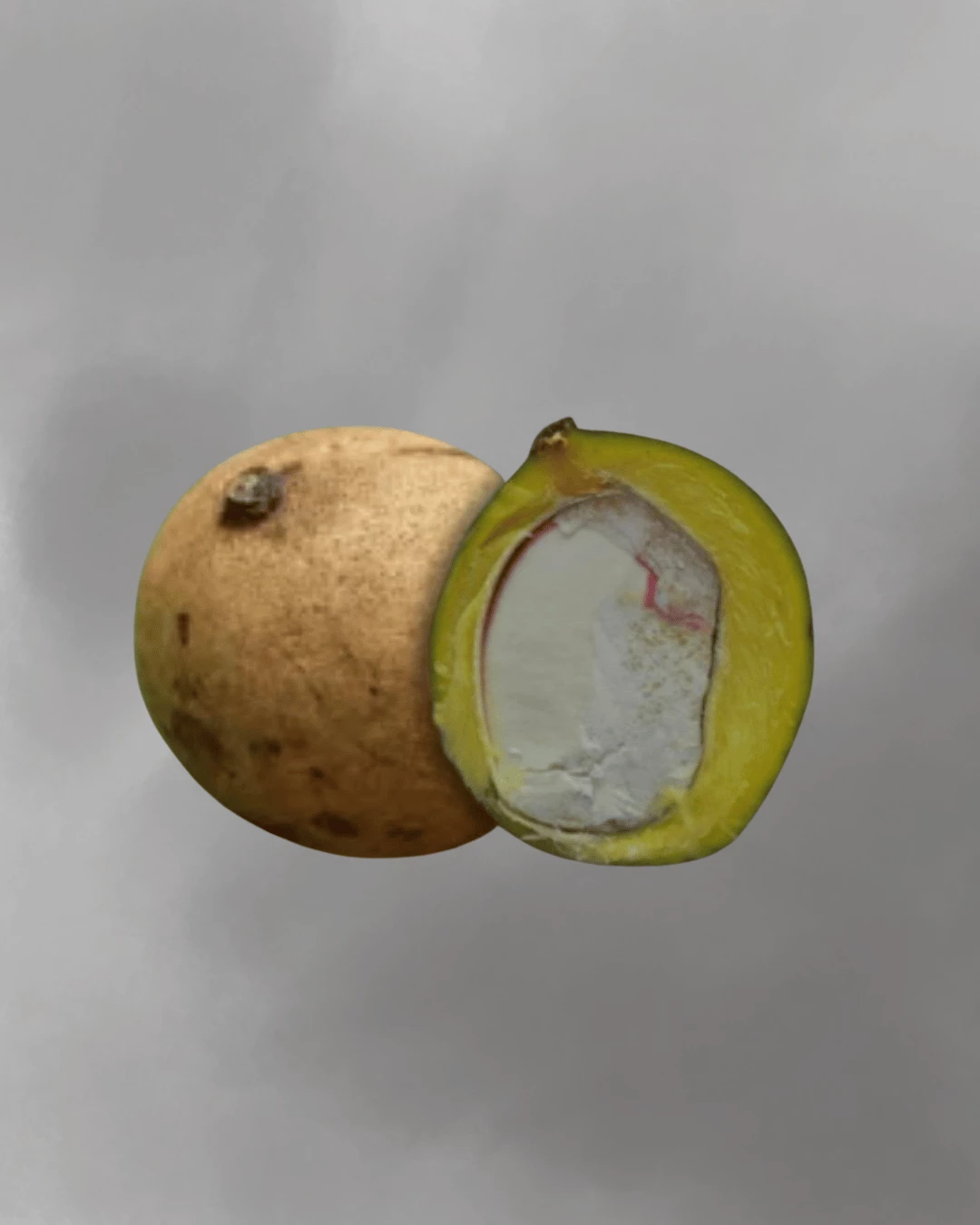
What Is Mangifera pajang?
Mangifera pajang is one of the rarest and most prized wild mango species in the world. It is commonly known as the Bambangan Mango. This tree grows only on the island of Borneo. Its natural range covers Kalimantan in Indonesia, Sabah and Sarawak in Malaysia, and Brunei. Furthermore, it grows wild in lowland rainforests across these regions. It also appears in traditional orchards planted by the Dayak and Kadazan-Dusun people who have cultivated it for generations.
The species was first formally described in 1965 by Dutch botanist André Kostermans. He based his description on specimens collected from Sarawak. Consequently, M. pajang entered the scientific record as a distinct and unique member of the mango family. Additionally, the IUCN has classified it as a Vulnerable species. This means that its wild population faces a real risk of decline if deforestation continues.
Furthermore, Mangifera pajang holds a unique record in its genus — it produces the largest fruit of any known wild Mangifera species. This alone makes it an extraordinary tree. Induare Agro sources fresh seeds directly from Kalimantan. Moreover, every order ships with full export documentation. This gives collectors worldwide a legal, traceable, and fully certified gateway to one of Borneo’s most iconic fruit trees.
Aesthetic Features Mangifera pajang
Mangifera pajang is a large, impressive deciduous tree. It grows 15 to 33 metres tall in its natural forest habitat. In cultivation, it typically reaches a more manageable height. Furthermore, the trunk grows 30 to 70 cm wide. The overall form is tall and upright, with a broad, spreading canopy. Consequently, it creates deep shade and makes a powerful statement in any tropical garden or collection.
Leaves and Bark
The leaves of M. pajang are long and lance-shaped. They are smooth, dark green on top, and slightly lighter underneath. Furthermore, the leaves grow in clusters near the tips of the branches. This gives the canopy a layered, lush appearance. The bark is grey-brown and slightly rough in texture. Young branches have a reddish tint. Additionally, the tree is deciduous — meaning it sheds its leaves once a year before the new flush of growth begins.
Flowers and Pollination
The flowers of Mangifera pajang appear in large upright clusters — called panicles — at the branch tips. Each panicle holds hundreds of small flowers. Primarily, the flowers are cream to pale yellow in colour. They release a soft, sweet scent that attracts bees and other insects. Consequently, natural pollination is efficient in outdoor garden settings. Furthermore, the tree typically flowers once a year. Fruiting follows about three to four months after pollination.
Fruit — The Crown of the Tree
The fruit of M. pajang is the defining feature of this species. It is semi-oval in shape with a rough, brown outer skin — called the rind. Primarily, each fruit weighs between 0.5 and 2 kg. This makes it by far the largest fruit in the entire Mangifera genus. Furthermore, the flesh inside is highly fibrous, very juicy, and intensely aromatic. The flavour is a bold blend of wild mango, tropical herbs, and a slight tanginess. Additionally, the flesh contains high levels of antioxidants, flavonoids, and carotenoids — compounds studied for their potential health benefits. The seed inside is large and white. Traditionally, it is shaved and used in pickles alongside the fruit pulp.
Global Seed Delivery & Phytosanitary Certification
Induare Agro is a professional botanical seed exporter based in Indonesia. The company connects rare and endemic Indonesian plant species with collectors and institutions worldwide. Furthermore, Induare Agro follows a fully compliant export process for every order. Consequently, buyers across the EU, USA, UK, Australia, Japan, and more than 50 other countries receive their seeds legally, safely, and on time.
Packaging and Shipping
Induare Agro handles Mangifera pajang seeds with special care. Bambangan seeds are large and must be kept fresh. Primarily, each seed is wrapped in moist packing material to maintain viability during transit. Cushioned express packaging protects the seed from physical damage. Shipments go via Global Express couriers such as DHL and EMS. Additionally, most international orders arrive within 5–14 business days. Furthermore, every parcel includes an official Phytosanitary Certificate issued by Indonesia’s Plant Health Authority. This document confirms the seeds are free from pests and disease. Consequently, it satisfies customs import rules in virtually every regulated market worldwide.
Buyer Peace of Mind
Induare Agro believes every collector deserves full confidence in their purchase. Every order ships with the Phytosanitary Certificate, a commercial invoice, and all required export papers. Furthermore, this complete documentation ensures smooth and fast customs clearance. Additionally, the Induare Agro team provides after-sales growing guidance. Primarily, the goal is to help every buyer successfully grow their Bambangan tree from seed to first fruit.
How to Grow Mangifera pajang
Mangifera pajang thrives in warm, humid, tropical conditions. Furthermore, growers in tropical and subtropical regions can cultivate it in gardens or large containers. Because the seeds lose viability quickly, it is important to plant as soon as possible after receiving your order.
Step 1 — Plant Immediately Bambangan seeds lose their ability to germinate within 2–3 weeks of harvest. Plant the seed within 3–5 days of receiving it. Additionally, do not let the seed dry out before sowing.
Step 2 — Growing Medium Use a rich, well-draining mix: 50% loamy soil, 30% compost, and 20% coarse sand or perlite. Consequently, this supports strong early root development while preventing waterlogging.
Step 3 — Sowing Depth Plant the seed flat, 3–4 cm deep, in a large pot with drainage holes. Furthermore, the seed is large — use a pot at least 30 cm wide and deep to give the roots enough space from the start.
Step 4 — Temperature Keep the temperature between 24°C and 32°C throughout germination. Primarily, consistent warmth is essential. A heated propagation mat works well for growers in cooler climates.
Step 5 — Watering Keep the soil evenly moist — not wet — during the germination period. Furthermore, check the soil daily. Bambangan seeds respond well to steady moisture but rot quickly in waterlogged conditions.
Step 6 — Light Place the pot in bright, indirect light during the seedling stage. Additionally, once the seedling reaches 20 cm tall, gradually increase sun exposure. Mature trees thrive in full sun.
Step 7 — Transplanting Move the seedling to a larger pot or garden bed once it reaches 30–40 cm tall. Consequently, more root space leads to faster trunk development and earlier fruiting. Plant in deep, fertile, slightly acidic soil (pH 5.5–6.5).
Step 8 — Fertilising Apply a balanced organic fertiliser (NPK 10-10-10) every 4–6 weeks during the growing season. Additionally, a potassium-rich feed during the fruiting stage improves fruit size and flavour. Furthermore, a healthy, well-fed tree can begin fruiting in 5–7 years from seed.
© Induare Agro — Indonesia’s professional rare seed exporter.
