
What Is Mucuna reticulata?
Mucuna reticulata is a rare, wild-harvested tropical liana — a woody, climbing vine — native to the Philippines and the island of Sulawesi in Indonesia. It belongs to the Fabaceae family, the same large family as beans and peas. This species grows along forest edges and open clearings. It twines through surrounding trees and shrubs to reach sunlight high in the forest canopy. Mucuna reticulata is not widely cultivated. Consequently, it remains largely unknown outside specialist botanical circles. Furthermore, its restricted natural range makes it genuinely difficult to source. Collectors around the world seek it for its extraordinary seed pods and its status as one of the rarest exotic plants in Southeast Asia. Induare Agro sources these seeds ethically and directly from Indonesia, ensuring freshness and genetic authenticity.
Aesthetic Features Mucuna reticulata
Mucuna reticulata is a visually captivating plant at every stage of its growth. Additionally, each part of the plant — from leaf to pod — has a unique quality that sets it apart from more common species. Moreover, its rarity makes every feature feel exceptional. Here is a detailed look at what makes this plant so special.
Leaf Structure
The leaves of Mucuna reticulata follow the classic pattern of the Mucuna genus. They are trifoliate — meaning each leaf is made of three leaflets joined at a single point, much like a clover. Each leaflet is broadly oval with a pointed tip. Furthermore, the leaflets are a deep, rich green with a smooth upper surface. The leaves are arranged alternately along the twining stems, creating a dense, attractive canopy of foliage. Primarily, the leaf structure helps the plant capture as much sunlight as possible. Additionally, the large leaf area gives the plant an impressive, lush appearance when it climbs a support structure. Consequently, even a young plant makes a bold visual statement.
Flower and Fruit
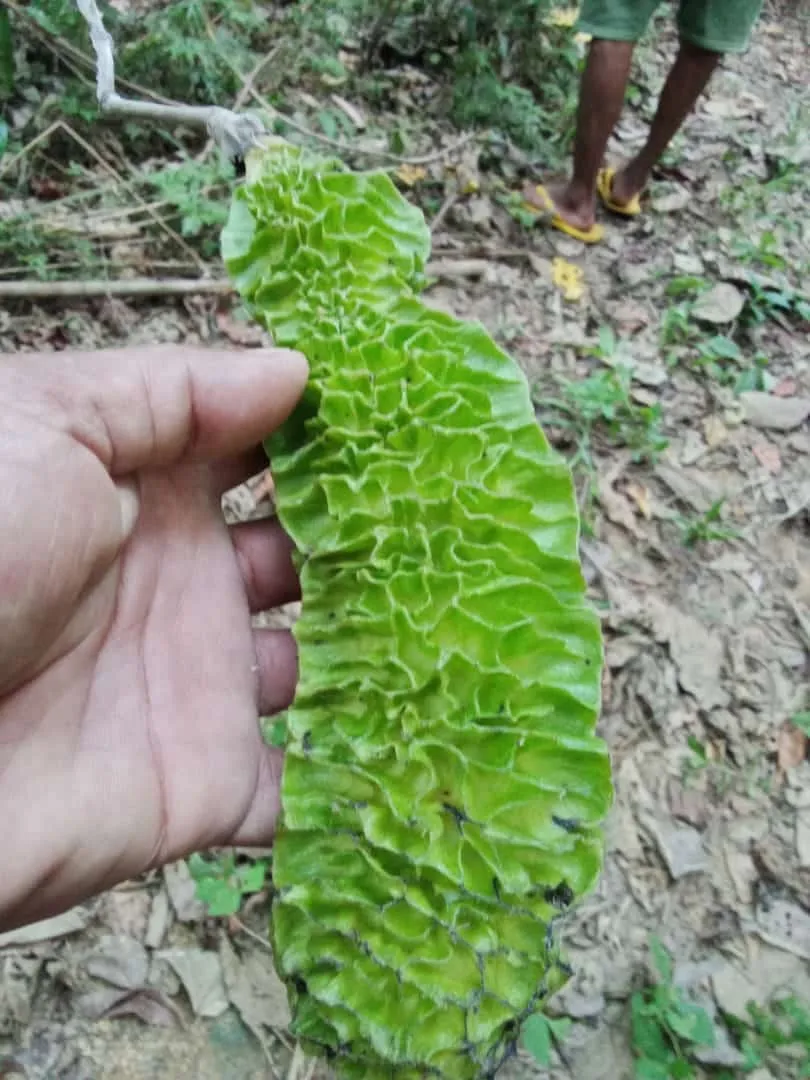
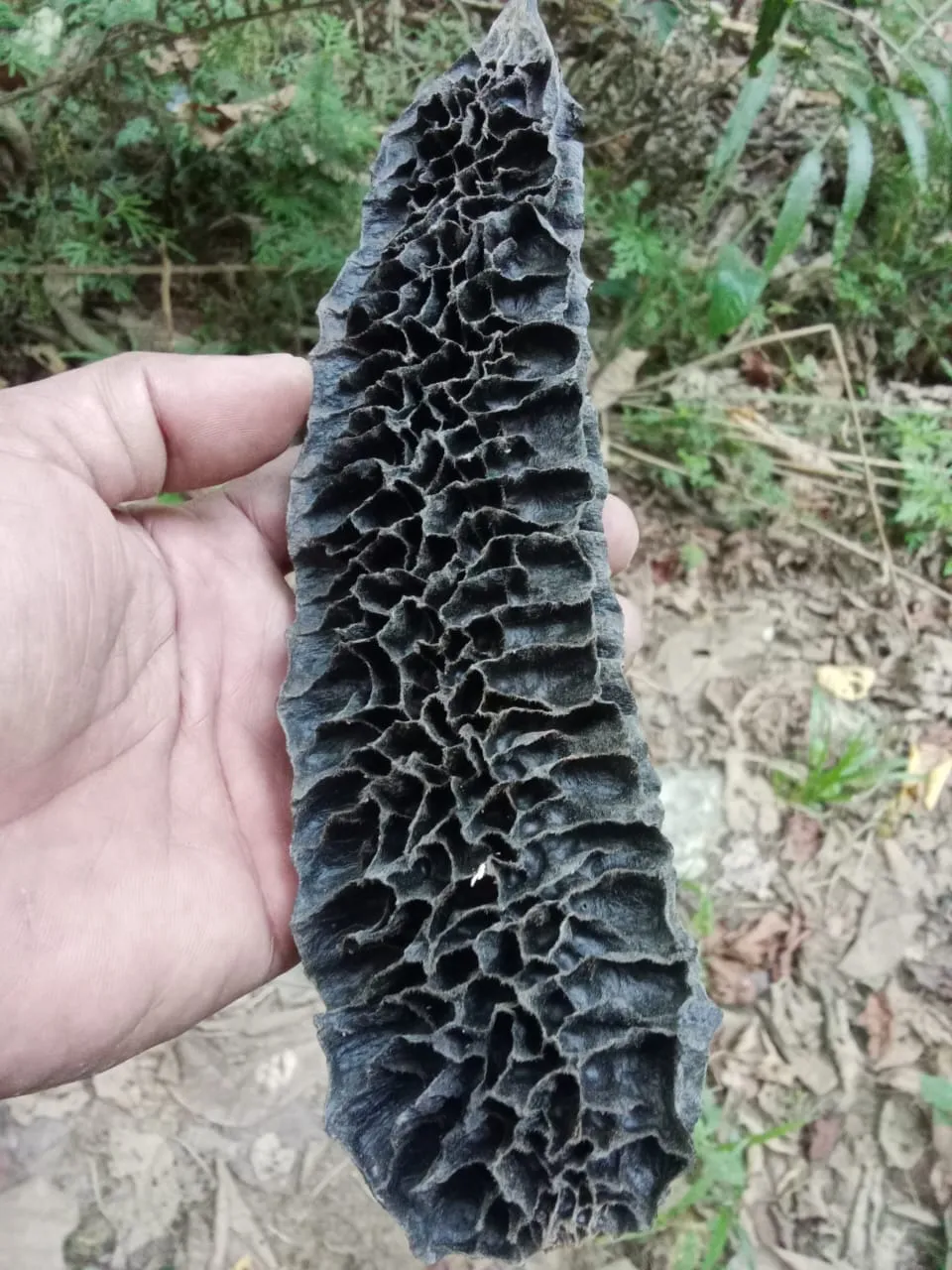
Mucuna reticulata produces clusters of yellow flowers in hanging racemes — drooping bunches, like grapes on a vine. Each flower has the curved, keel-shaped form typical of the legume family. The flowers are a striking feature. Furthermore, they attract pollinators and, in tropical climates, the plant can bloom multiple times per year. After flowering, the plant produces its most iconic feature: the netted seed pods. These pods are slender and elongated. Moreover, they are covered in distinctive membrane-like protrusions — raised ridges and folds that create a net-like pattern on the pod surface. This is the feature that gives the species its name, reticulata, which is Latin for “netted.” The pods are also covered in fine hairs. These hairs can cause mild skin irritation on contact, so handle pods with gloves. Additionally, the seeds inside are firm and rich-toned, making them highly prized by collectors.
Vine Growth and Climbing Habit
Mucuna reticulata is a climbing liana — a woody, long-stemmed vine — that can reach up to 6 metres in length. It uses its twining stems to wrap around any available support. Primarily, it climbs trees, trellis structures, fences, or bamboo poles. Consequently, it is well-suited to garden displays, living walls, and large indoor plant spaces. Furthermore, the vigorous growth habit makes it a rewarding plant to cultivate. The stems thicken with age and become semi-woody. Moreover, the plant is perennial in warm, frost-free climates. In cooler temperate climates, it grows well in large containers indoors near a bright, sunny window.
Global Seed Delivery & Phytosanitary Certification
Induare Agro is based in Indonesia and specialises in rare exotic seeds and Indonesian plants. Furthermore, we are committed to safe, legal, and professional international trade. Every seed we ship complies fully with international plant export regulations. Additionally, we serve buyers in Europe, North America, Asia, Australia, and beyond.
Packaging and Shipping
Induare Agro packages every seed order with expert care. Primarily, we use professional, moisture-resistant materials to protect seed viability during long-distance transit. Furthermore, all orders ship via Global Express courier services for fast and trackable delivery. Each shipment includes a full Phytosanitary Certificate — an official government-issued document that certifies the seeds are free from pests and disease. Consequently, your order clears customs smoothly and legally. Additionally, we provide tracking information so you can monitor your parcel every step of the way.
Buyer Peace of Mind
We understand that importing rare seeds internationally requires trust. Furthermore, we have extensive experience handling export documentation for rare plants in Indonesia. Induare Agro provides every buyer with a copy of the Phytosanitary Certificate before shipment. Moreover, our team is available to answer any customs or import questions you may have. Consequently, you can buy with full confidence. Additionally, our seeds are organically harvested — no synthetic chemicals are used at any stage. Primarily, our mission is to connect the world’s collectors with Indonesia’s most extraordinary botanical treasures.
How to Grow Mucuna reticulata
Mucuna reticulata is a rewarding plant to grow. Additionally, it thrives with a few simple steps. Follow this guide for the best results.
Step 1 – Seed Preparation Soak seeds in warm water for 24 hours before planting. This softens the hard seed coat and speeds up germination significantly.
Step 2 – Germination Mix Fill a small pot with a well-draining mix of perlite and coconut coir. Plant the seed 2–3 cm deep and keep the mix evenly moist.
Step 3 – Warmth and Light Place the pot in a warm spot with temperatures above 22°C (72°F). Furthermore, provide bright, indirect light until the seedling establishes.
Step 4 – Transplanting Once the seedling reaches 10–15 cm in height, transplant it to a larger pot or a garden bed. Consequently, the roots will have space to develop fully.
Step 5 – Climbing Support Provide a trellis, bamboo pole, or strong wire frame immediately. The vine will begin twining naturally within days of establishing.
Step 6 – Ongoing Care Water regularly but avoid waterlogging the soil. Additionally, apply a balanced organic fertiliser every 4–6 weeks during the growing season.
Step 7 – Flowering Expect flowers in the first or second growing season under good conditions. Moreover, warmer temperatures and high humidity encourage faster blooming.
