
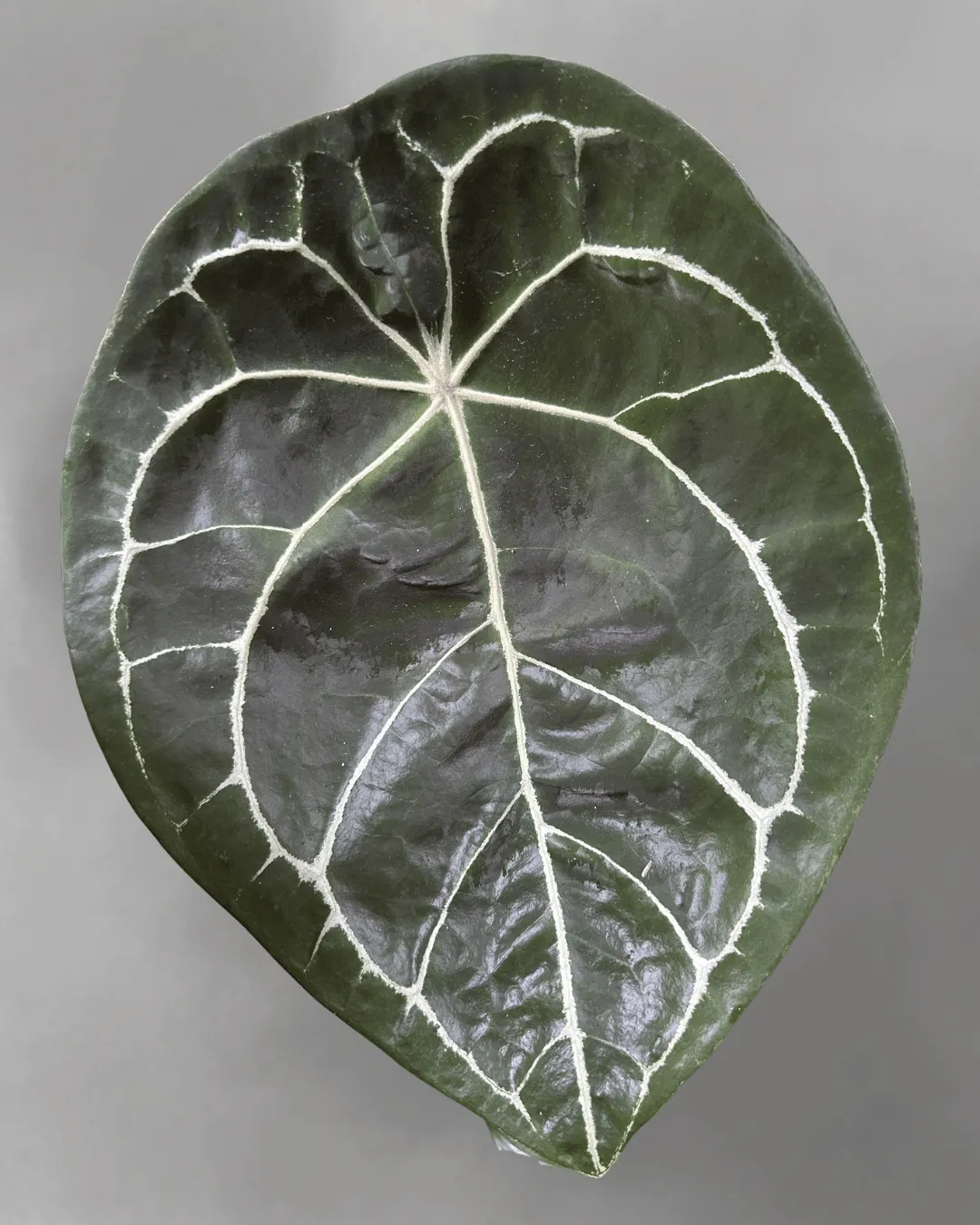
What Is Anthurium forgetii?
Anthurium forgetii is a rare tropical aroid native to the rainforests of Colombia. It grows naturally in warm, humid forest understories. The plant thrives at mid-elevation, beneath a shaded forest canopy. Botanist N.E. Brown first formally described this species. Since then, it has captured the attention of serious collectors worldwide.
Furthermore, Anthurium forgetii stands apart from most other aroids. It completely lacks the typical sinus — the notch or gap at the top of the leaf blade. This unique trait gives its leaves a smooth, rounded outline. No other widespread anthurium species looks quite like it. Consequently, demand for this plant has grown sharply among rare-plant enthusiasts globally.
Additionally, plants with the famous “White Stripes” form display even more dramatic silver venation. These forms are especially hard to source outside of specialist collections. Induare Agro is proud to offer genuine, fresh seeds of this extraordinary species.
Aesthetic Features Anthurium forgetii
Anthurium is a genus of roughly 1,000 flowering plant species in the family Araceae. Anthurium forgetii is widely considered one of its most striking members. Its physical features set it apart from all common houseplants. Moreover, each key characteristic adds to its value as a collector’s specimen.
Leaf Structure
The leaves of Anthurium forgetii are broad, rounded, and velvety to the touch. They grow in a teardrop or oval shape with no sinus indentation at the top. This smooth, unbroken outline is the plant’s most recognisable feature. Primarily, the leaf surface is deep, dark green with a soft, luxurious texture. Furthermore, the venation — the pattern of veins across the leaf — is bold and highly contrasting. These veins are silver, light green, or cream-coloured against the dark blade. Under certain lighting, they can appear almost pure white. This striking contrast is what creates the sought-after “White Stripes” appearance. Each leaf can reach impressive sizes in mature plants. Consequently, even a single leaf makes a dramatic visual statement in any interior.
Flower and Fruit
Anthurium forgetii produces a modest but elegant inflorescence — the plant’s reproductive structure. The inflorescence consists of two parts: the spathe and the spadix. The spathe is a modified leaf — a narrow, green protective sheath that surrounds the flower spike. The spadix — a slender upright spike — carries dozens of tiny flowers along its surface. Initially, the spadix is light green to ochre-yellow in colour. It may mature to a reddish tone as it ages. The inflorescence stalk typically rises well above the leaf level. Additionally, after successful pollination, the spadix produces small, dark purple berries. Each berry contains one to two seeds. These seeds are what Induare Agro carefully harvests, prepares, and ships worldwide.
Dormancy Cycle
Anthurium forgetii is an evergreen plant in warm, stable conditions. However, it may slow its growth significantly during cooler winter months. This period of reduced activity is called dormancy. During dormancy, the plant conserves energy and produces fewer new leaves. Primarily, you should reduce watering slightly during this phase. Moreover, you should stop fertilising until active growth resumes in spring. The plant does not die back completely. It simply rests before returning to vigorous growth when temperatures and light levels rise again. Furthermore, understanding this cycle helps growers avoid overwatering during the quiet season.
Global Seed Delivery & Phytosanitary Certification
Induare Agro takes pride in safe, legal, and professional global seed shipping. Every order is handled with the highest standards of care. Consequently, your seeds arrive fresh, viable, and fully compliant with international plant import regulations.
Packaging and Shipping
Every seed is carefully cleaned and prepared before dispatch. Induare Agro uses protective, moisture-controlled packaging designed for long-distance travel. Seeds are packed to minimise movement, damage, and dehydration during transit. Furthermore, all international orders are shipped via Global Express courier services. This ensures the fastest possible delivery to your door. Tracking information is provided with every shipment. Moreover, express shipping significantly reduces the time seeds spend in transit. Fresh seeds have the highest germination rates, so speed matters.
Buyer Peace of Mind
Every shipment from Induare Agro includes an official Phytosanitary Certificate. A Phytosanitary Certificate is an official government-issued document. It confirms that the seeds have been inspected and are free from pests and diseases. Additionally, it verifies that the seeds meet the import requirements of the destination country. Furthermore, this certificate is mandatory for legal plant import in most countries worldwide. Consequently, buyers can clear customs smoothly and with full confidence. Induare Agro handles all the paperwork on your behalf. You simply place your order and wait for your seeds to arrive legally and safely.
How to Grow Anthurium forgetii
Follow these steps to successfully germinate and grow your Anthurium forgetii seeds.
Step 1 — Prepare Your Germination Mix Use a well-draining, moisture-retaining mix. A blend of orchid bark, perlite, and coconut coir works very well. Avoid heavy, compacted soils that hold too much water.
Step 2 — Sow the Seeds Place seeds on the surface of the moist mix. Press them gently so they make contact with the medium. Do not bury them deeply — shallow placement improves germination rates.
Step 3 — Create a Humid Environment Cover the tray or pot loosely with a plastic dome or clear film. This traps warmth and moisture around the seeds. Maintain a temperature of 22–27°C (72–80°F) for best results.
Step 4 — Provide Bright, Indirect Light Place the germination tray near a bright window. Avoid direct sunlight, which can overheat and damage the seeds. A grow light set to a 12–16 hour daily schedule is also effective.
Step 5 — Keep the Medium Moist Check the medium daily. Mist lightly whenever the surface feels dry. Never allow the medium to become waterlogged, as this encourages fungal rot.
Step 6 — Transplant Seedlings Once seedlings develop two or three small leaves, transplant them into individual pots. Use a rich, well-draining aroid mix. Maintain high humidity of 60–80% for strong early growth.
Step 7 — Ongoing Care Fertilise monthly with a diluted, balanced liquid fertiliser during the growing season. Repot every two to three years or when roots begin to circle the pot base. Furthermore, keep the plant away from cold draughts and temperatures below 15°C (59°F).
