
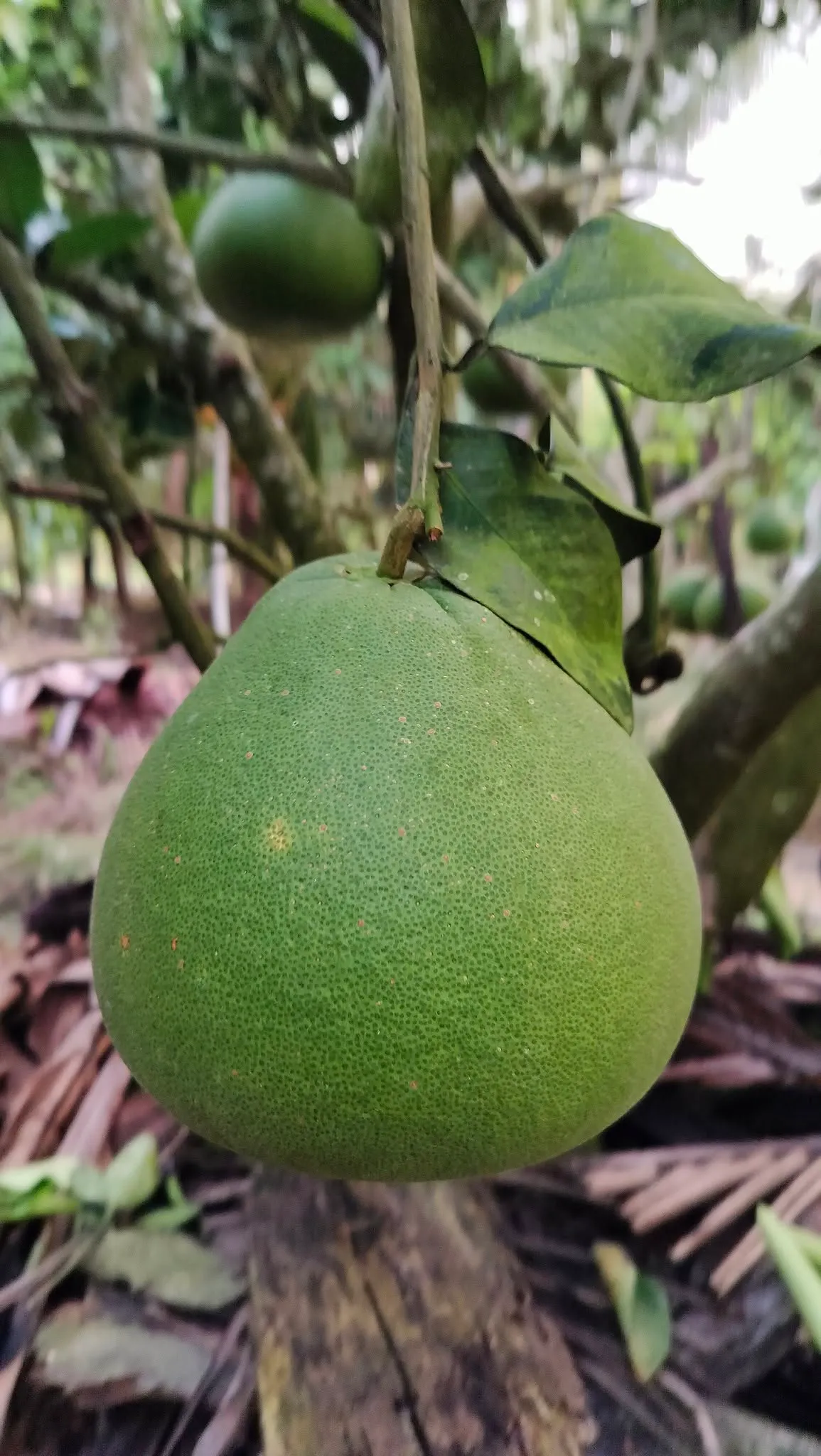
What Is Citrus maxima?
Citrus maxima is the largest citrus fruit in the world. It is commonly known as the Pomelo — or Pummelo and Shaddock in some regions. Furthermore, it holds a unique place in the history of all citrus. Scientists confirm that C. maxima is one of just four original wild citrus species. Consequently, every citrus fruit we eat today — orange, grapefruit, lemon, and lime — traces its roots back to this ancient tree.
The Pomelo is native to Southeast Asia. Primarily, it originates from the humid lowland forests and river plains of Malaysia, Indonesia, and Thailand. It grows wild along riverbanks and in coastal lowland forests below 600 metres. Additionally, it has been cultivated in China for over 2,000 years. It was introduced to the Caribbean in the late 17th century by a Captain Shaddock — which is why it is still called “shaddock” in some parts of the world.
In Indonesia, the Pomelo is known locally as jeruk bali or jeruk besar. Furthermore, it is widely grown across Java, Bali, and Sumatra. The fruit holds deep cultural significance across Southeast and East Asia. It appears in New Year celebrations, harvest festivals, and traditional medicine across the region. Consequently, this tree is not just a fruiting plant — it is a living piece of Asian botanical heritage. Induare Agro offers organic Pomelo seeds sourced from Indonesian origin, fully documented and ready for global export.
Aesthetic Features Citrus maxima
Citrus maxima is a bold, broad-canopied evergreen tree. In the wild, it grows between 5 and 15 metres tall. In a home garden or container, it typically reaches 3–5 metres with regular pruning. Furthermore, it has a thick, often slightly crooked trunk that grows 10–30 cm wide. The branches spread low and wide, creating a generous, shaded canopy. Primarily, this gives the tree a commanding, ornamental presence that works beautifully in tropical gardens and large containers alike.
Leaves
The leaves of Citrus maxima are a standout feature. They are oval to elliptic in shape and grow 5–20 cm long. Additionally, the upper surface is leathery and dull green. The underside is slightly hairy and paler in colour. Consequently, the leaves have a rich, bold texture that gives the tree year-round visual interest. Furthermore, the leaf stalks — called petioles — are distinctly winged. This means each stalk has a flat, wing-like extension running along its length. This winged petiole is one of the key identifying features of C. maxima and sets it apart from other citrus trees at a glance.
Flowers
The flowers of Citrus maxima are the largest of any citrus species. They are white to pale yellow and grow in small clusters or alone along the branches. Furthermore, each flower has five petals and 20–25 stamens — the small, pollen-carrying structures inside the bloom. The flowers are strongly fragrant. Consequently, they are valued not just for fruit production but also in perfumery and cultural rituals across Southeast Asia. The blooms appear primarily in spring and early summer. Additionally, a well-established Pomelo tree produces a heavy flush of flowers that fills the surrounding area with a rich, sweet citrus scent.
Fruit
The Pomelo fruit is the largest of all citrus fruits. It spreads 10–30 cm in width and weighs between 1 and 3 kg. Furthermore, the outer skin is thick, pale green to yellow, and slightly rough to the touch. Inside, the flesh ranges from white to pink or red depending on the variety. The taste is sweet, mild, and far less bitter than a grapefruit. Consequently, the Pomelo is widely eaten fresh, added to salads, and made into juice and preserves. Additionally, the thick white pith — the spongy layer under the skin — is edible and candied in many Asian culinary traditions. Each fruit contains large, thick seeds — making seed saving and propagation straightforward for the home grower.
Global Seed Delivery & Phytosanitary Certification
Induare Agro is a professional botanical seed exporter based in Indonesia. The company connects rare and authentic Indonesian plant species with collectors, growers, and agricultural institutions worldwide. Furthermore, Induare Agro ships to buyers in more than 50 countries across Europe, Asia, North America, Australia, and beyond. Every order follows a strict, fully documented export process from seed selection to final delivery.
Packaging and Shipping
Induare Agro packs every seed order with professional moisture-control materials. Cushioned express packaging protects the seeds safely throughout the entire transit journey. Shipments go out via Global Express couriers such as DHL and FedEx. Additionally, most international orders arrive within 5–14 business days. Furthermore, every parcel includes an official Phytosanitary Certificate. It confirms that the seeds are free from pests, disease, and regulated plant pathogens. Consequently, this certificate meets the import requirements of customs authorities in the EU, USA, UK, Australia, Japan, and most other regulated markets worldwide.
Buyer Peace of Mind
Induare Agro places legal compliance at the centre of every order. Every shipment includes the Phytosanitary Certificate and a commercial invoice. Furthermore, this full documentation package ensures smooth and fast customs clearance at every destination. Additionally, the Induare Agro team provides after-sales growing support to every buyer. Primarily, the goal is simple — to help every grower successfully cultivate their Citrus maxima tree from seed to first fruit.
How to Grow Citrus maxima
Citrus maxima is a rewarding tree to grow from seed. Furthermore, it adapts well to tropical, subtropical, and warm temperate gardens and large containers. The Pomelo thrives in full sun, warm temperatures, and fertile soil. Follow these steps for the best results from seed to established tree.
Step 1 — Seed Preparation Rinse the seed in clean water and remove any remaining fruit pulp. Additionally, soak the seed in warm water (25–28°C) for 12–24 hours before planting. This softens the outer coat and speeds up germination.
Step 2 — Growing Medium Use a fertile, well-draining mix: 50% loamy potting soil, 30% compost, and 20% perlite or coarse sand. Consequently, this gives the young seedling the nutrients and drainage it needs during the first weeks of growth.
Step 3 — Sowing Plant the seed 2–3 cm deep in a pot with drainage holes. Furthermore, keep the growing medium consistently moist — but never waterlogged — throughout the germination stage.
Step 4 — Temperature Maintain a temperature between 25°C and 32°C for best results. Primarily, warm and stable conditions are the most important factor for fast, reliable Pomelo germination. A heat mat works well in cooler climates.
Step 5 — Light Place the pot in a warm spot with full or bright indirect light. Additionally, once the seedling is established, move it to a position with maximum daily sun exposure. Pomelo trees grow best in full sun for at least 6–8 hours per day.
Step 6 — Watering Water the seedling regularly during active growth. Let the top 2–3 cm of soil dry slightly between waterings. Furthermore, always ensure the pot drains freely — citrus roots are sensitive to sitting in standing water.
Step 7 — Transplanting Move the seedling to a larger container or garden bed once it reaches 20–25 cm in height. Consequently, more root space leads to faster growth and earlier fruiting. Pomelo grows best in deep, fertile, slightly acidic soil (pH 5.5–6.5).
Step 8 — Feeding Apply a balanced, citrus-specific organic fertiliser every 6–8 weeks during the growing season. Additionally, a nitrogen-rich feed supports strong leaf and branch growth, while phosphorus and potassium promote flowering and fruit development. Furthermore, a well-fed Pomelo tree from seed will typically begin to fruit within 3–5 years.
© Induare Agro — Indonesia’s professional rare seed exporter.
