
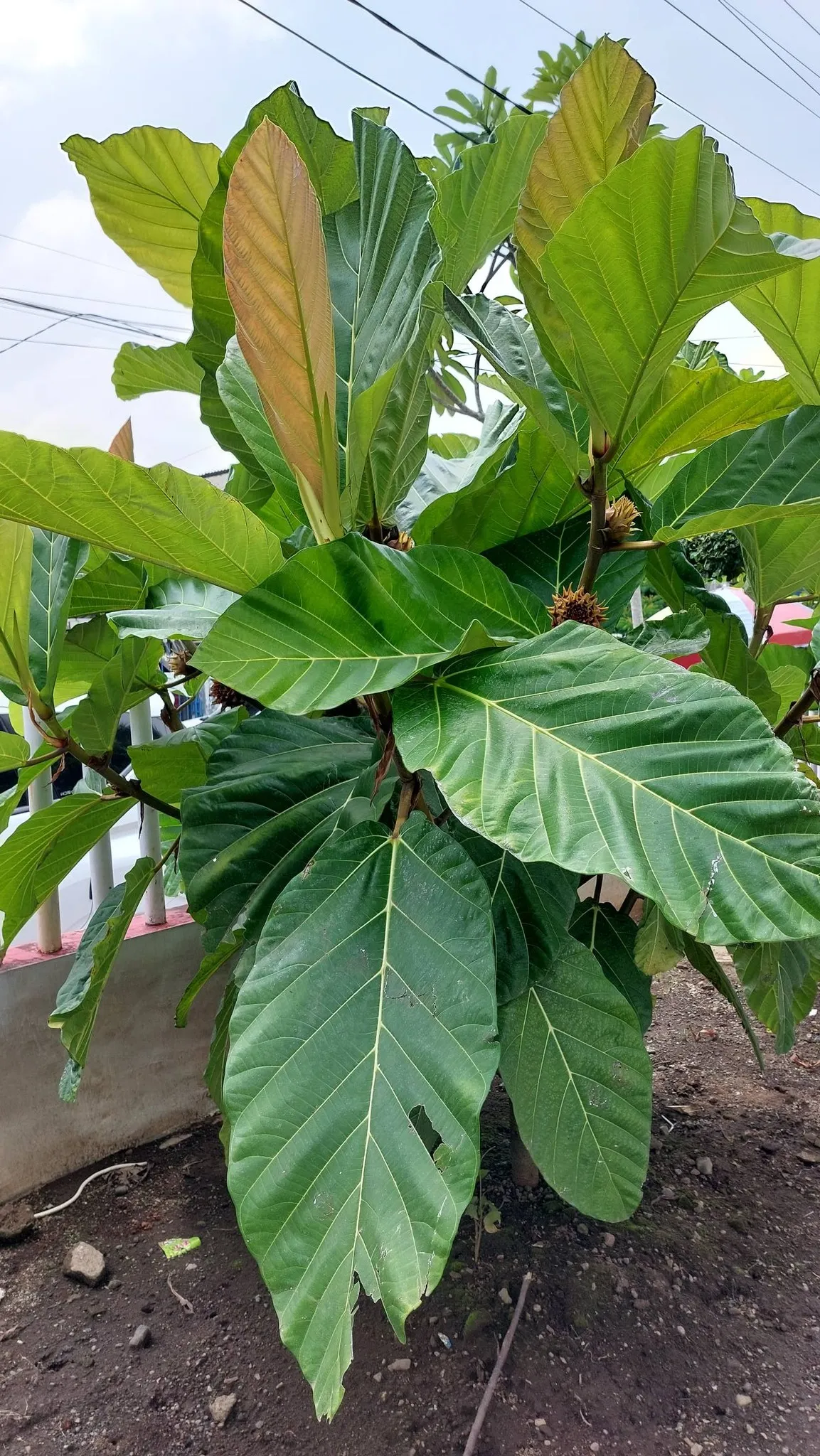
What Is Ficus brusii?
Ficus brusii, commonly known as the Lowland Breadfruit Fig, is a remarkably rare tropical fig tree. It is native exclusively to the island of New Guinea. The species grows naturally in lowland rainforests, along rivers and streams, at elevations below 900 metres above sea level.
What makes Ficus brusii truly special is its novelty. Scientists formally recognised it as a distinct species only in 2019. Before that, it was grouped with its highland relative, Ficus dammaropsis. Today, collectors and botanists around the world prize it for its extraordinary size, unusual fruits, and its incredible rarity in cultivation.
Additionally, Ficus brusii adapts well to any humid tropical climate outside its native range. Furthermore, it grows at a moderate to fast pace. Consequently, growers see impressive results within just a few growing seasons. This makes it a rewarding choice for collectors who want a rare plant that also performs beautifully.
Induare Agro is proud to offer fresh, export-quality Ficus brusii seeds to plant lovers and rare plant collectors worldwide.
Aesthetic Features Ficus brusii
Ficus brusii is a visually dramatic plant. Every part of it — from its giant leaves to its exotic fruits — commands attention. Moreover, it brings a bold, architectural presence to any tropical garden or large indoor space.
Leaf Structure
The leaves of Ficus brusii are among the largest in the entire Ficus genus. Each leaf can reach up to 80 cm long and 60–65 cm wide. That is roughly the size of a car door.
The leaves are deep green and arranged in a spiral pattern along the stems. Primarily, this spiral arrangement gives the tree a layered, sculptural look. The leaf surface is smooth and only lightly folded — less pleated than the closely related highland species. Furthermore, the pale, prominent veins create a striking contrast against the dark green surface. This makes every single leaf look like a piece of living artwork.
Flower and Fruit
The fruits of Ficus brusii are a genuine showstopper. Like all fig species, its fruit is technically called a syconium — a hollow, fleshy structure that holds hundreds of tiny flowers inside. In plain terms, what looks like a fruit on the outside is actually a closed flower head on the inside.
Consequently, these fruits are unlike anything most collectors have ever seen. They are densely covered in overlapping bracts — small, leaf-like scales — which make each fruit look like a giant flower or ornamental cone. The fruits grow up to 8 cm across. Additionally, they change colour as they ripen, shifting from bright green to a warm brownish-red. This ripening process is a visual event in itself.
Primarily, the fruits grow directly from the trunk and larger branches — a growth habit called cauliflory. This means the fruits emerge from the woody stem, not from the tips of branches. It gives the tree a prehistoric, almost alien appearance that collectors find irresistible.
Growth Form and Ecological Role
Ficus brusii grows into a small to medium-sized tree, reaching up to 13 metres in height in its natural habitat. The trunk has a slightly swollen base, which gives it a sturdy and distinctive silhouette.
Moreover, Ficus brusii plays an important role in its native ecosystem. Fruit-eating animals — including birds, bats, and other wildlife — feed on the ripe syconia. These animals then help disperse the seeds across the forest floor. Additionally, local communities in New Guinea use the young, tender leaves as cooked greens. The large, older leaves serve as natural wrappers for cooking food.
Furthermore, in a cultivation setting, this species makes a bold and fast-growing houseplant or garden specimen. It thrives in high humidity and indirect bright light.
Global Seed Delivery & Phytosanitary Certification
Induare Agro takes global seed delivery seriously. Every order is prepared to meet international plant trade standards. Consequently, buyers in any country receive seeds that are legally compliant, professionally packed, and ready to grow.
Packaging and Shipping
Induare Agro ships all seeds via Global Express courier. This ensures fast, reliable delivery to your door, wherever you are in the world. Furthermore, every shipment is carefully packed to protect seed viability during transit. Seeds are sealed in moisture-controlled packaging to preserve their freshness from the moment of dispatch.
Additionally, each order is accompanied by a full Phytosanitary Certificate. This is an official government-issued document. It certifies that the seeds have been inspected, are free from pests and diseases, and meet the import requirements of your country. Primarily, this certificate protects you as a buyer and ensures smooth customs clearance.
Buyer Peace of Mind
Induare Agro sources all seeds to the highest organic standards. No synthetic pesticides or chemical treatments are used in the seed collection process. Consequently, what arrives at your door is a genuinely natural, organic product.
Moreover, Induare Agro has extensive experience in exporting rare Indonesian and tropical plant seeds to collectors around the world. Furthermore, the team handles all necessary export documentation on your behalf. You simply place your order — and Induare Agro handles the rest.
Buyers can trust that every seed meets strict quality controls before it leaves our facility. Additionally, Ficus brusii seeds are dispatched fresh and in season. Consequently, germination rates are maximised for the best possible start.
How to Grow Ficus brusii
Ficus brusii is a rewarding plant to grow from seed. Follow these steps for the best results.
Step 1 — Prepare Your Germination Tray Fill a small seed tray or pot with a light, well-draining mix of coconut coir and perlite. Water it until evenly moist but not soggy.
Step 2 — Sow the Seeds Place the seeds on the surface of the soil. Press them very lightly so they make contact with the mix. Do not bury them deeply — Ficus brusii seeds need light to germinate.
Step 3 — Create a Humid Environment Cover the tray with a clear plastic lid or humidity dome. This keeps moisture levels high. Place the tray in a warm spot with a steady temperature between 22°C and 30°C (72–86°F).
Step 4 — Provide Indirect Light Place the tray near a bright window with filtered light. Avoid direct sun, as it can dry out the soil too fast. Alternatively, use a warm-spectrum grow light.
Step 5 — Monitor and Water Check the tray every few days. Keep the soil consistently moist. Germination typically takes several weeks to a few months. Patience is essential — do not allow the mix to dry out.
Step 6 — Transplant the Seedlings Once seedlings reach 5–8 cm tall, transplant them into individual pots. Use a rich, well-draining tropical potting mix. Maintain high humidity and temperatures above 20°C for strong, healthy growth.
Step 7 — Ongoing Care Water regularly and mist the leaves to maintain humidity. Protect young plants from direct midday sun. Feed with a balanced organic fertiliser every four to six weeks during the growing season.
© Induare Agro — Rare Exotic Seeds, Export Quality, Worldwide Shipping.
