
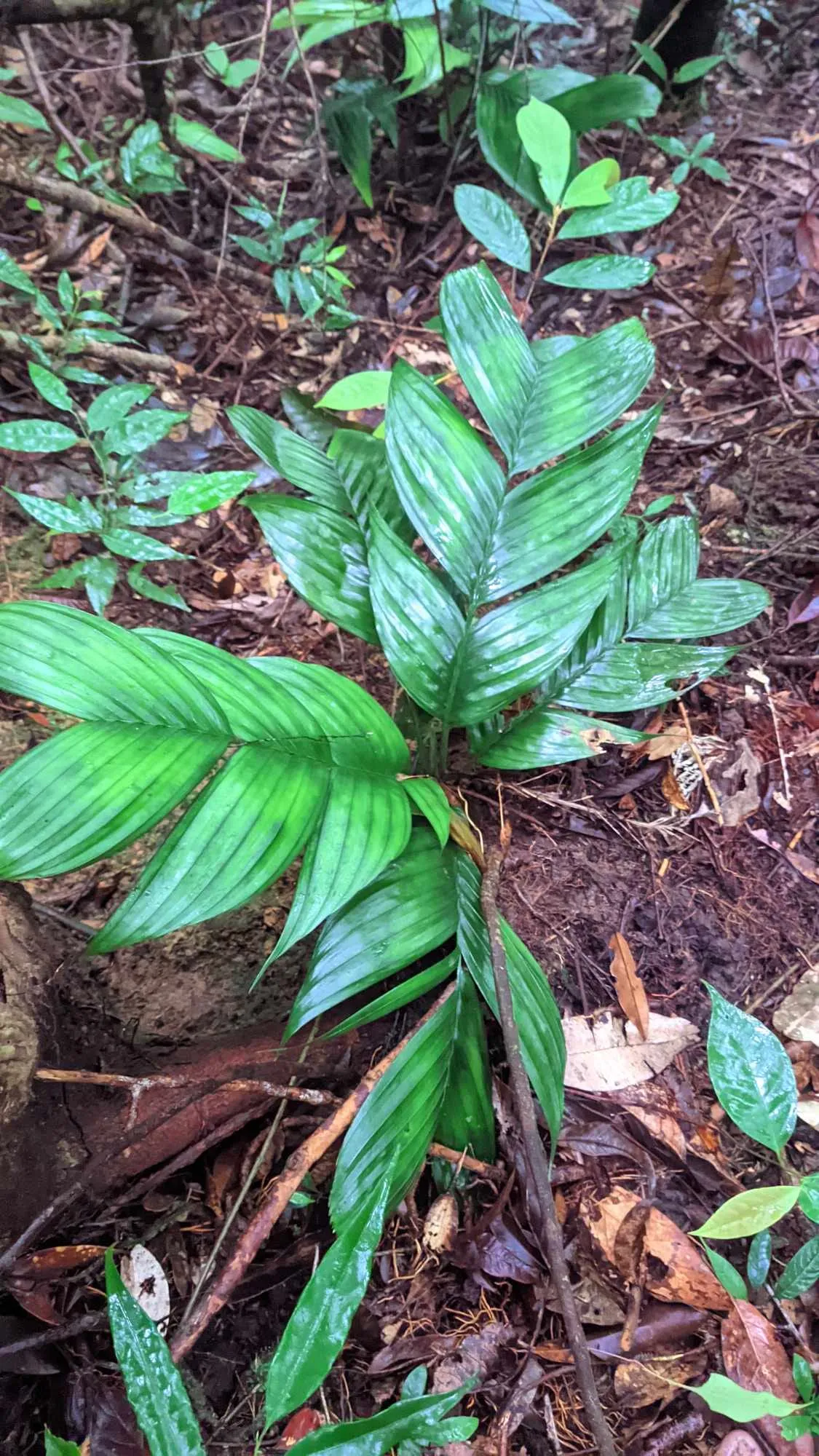
What Is Pinanga subterranea?
Pinanga subterranea is the most extraordinary palm ever described by science. It is native to Borneo — the large tropical island shared by Indonesia, Malaysia, and Brunei. Furthermore, it is the only member of the entire palm family known to flower and produce fruit completely underground. This makes it a genuine once-in-a-lifetime botanical discovery. Consequently, when researchers at Royal Botanic Gardens, Kew formally described the species in 2023, it immediately made global headlines.
The species name subterranea comes from Latin. It means “underground.” Furthermore, the plant is known by several local names across Borneo. In Malay and West Kalimantan, it is called Pinang Tanah — meaning “ground betel palm.” Additionally, local communities in Central Kalimantan know it as Pinang Pipit and Muring Pelandok. In Sarawak, the Iban people call it Tudong Pelandok. These names reveal that local people have known and used this palm for generations. However, scientists only formally recognised it in 2023.
The palm grows across a wide area of western Borneo — spanning more than 60,000 km² of lowland forest. Furthermore, it is found in four protected nature reserves in Malaysia and Indonesia. It grows in lowland mixed forest valleys and on slopes near streams, up to 650 metres above sea level. Induare Agro sources seeds of this remarkable palm directly from Borneo. Primarily, every order is fully documented and legally exported. This gives collectors worldwide a verified, legal path to growing the world’s most unique palm from seed.
Aesthetic Features Pinanga subterranea
Pinanga subterranea is a small, acaulescent palm. Acaulescent means it has no visible above-ground trunk. Furthermore, most of the plant’s main structures — including the stem, flowering head, and fruiting clusters — remain below the soil surface. Consequently, above ground, the plant looks deceptively simple. It resembles a cluster of young palm fronds growing directly from the ground. This is exactly why scientists overlooked it for so long.
Leaves
The leaves of Pinanga subterranea are the only part of the plant that grows clearly above ground. Furthermore, they are typical of young Borneo palms — long, arching, and mid-green. Each leaf is made up of multiple leaflets arranged along a central stem. Additionally, the leaves grow in a neat, upright cluster directly from ground level. The plant is solitary — meaning each plant grows as a single unit, not in clusters. Consequently, a mature specimen has a clean, tidy form that works well in tropical garden beds and large containers.
Underground Flowers
The flowering behaviour of Pinanga subterranea is unlike any other palm on Earth. The flower head — called an inflorescence — develops and opens entirely below the soil surface. Furthermore, this underground flowering is called geoflory — a process so rare that it has been recorded in only one other plant family in the world: the underground orchid genus Rhizanthella. Consequently, owning a flowering Pinanga subterranea is a genuinely once-in-a-generation botanical experience. The underground flowers are pollinated beneath the soil. Scientists are still studying exactly how this process works.
Fruit
The fruit of Pinanga subterranea also develops underground — directly below the leaf base. This underground fruiting is called geocarpy. Furthermore, the fruit is small, bright red, and juicy when ripe. Local communities across Borneo eat the fruit as a forest snack and consider it a delicacy. Additionally, wild boars — bearded pigs native to Borneo — actively dig into the ground to reach and eat the fruit. Consequently, these animals play an important role in spreading the seeds across the forest. Each fruit contains a single oval-shaped seed.
Global Seed Delivery & Phytosanitary Certification
Induare Agro is a professional botanical seed exporter based in Indonesia. The company works directly with verified collectors and growers across Borneo and the wider Indonesian archipelago. Furthermore, Induare Agro ships rare and scientifically significant seeds to collectors, botanical gardens, and research institutions in more than 50 countries worldwide. Every order follows a strict, fully documented export process.
Packaging and Shipping
Induare Agro packs every seed with professional moisture-control materials. Cushioned express packaging protects the seeds safely throughout the entire transit journey. Shipments go out via Global Express couriers such as DHL and EMS. Additionally, most international orders arrive within 5–14 business days. Furthermore, every parcel includes an official Phytosanitary Certificate issued by Indonesia’s Plant Health Authority. This certificate confirms that the seeds are free from pests, disease, and regulated plant pathogens. Consequently, it satisfies customs requirements in the EU, USA, UK, Australia, Japan, and most other regulated markets worldwide.
Buyer Peace of Mind
Induare Agro puts legal compliance at the centre of every order. Every shipment includes the Phytosanitary Certificate and a commercial invoice. Furthermore, this full documentation ensures smooth and fast customs clearance at every destination. Additionally, the Induare Agro team provides after-sales growing guidance for every buyer. Primarily, the goal is to ensure every collector successfully establishes their rare Pinanga subterranea — from the world’s most unique palm seed to a thriving living specimen.
How to Grow Pinanga subterranea
Pinanga subterranea is a rewarding plant to grow. Furthermore, it adapts well to tropical, subtropical, and humid warm indoor environments. The key is to replicate the warm, moist conditions of its native lowland Bornean forest floor. Follow these steps carefully for the best results.
Step 1 — Plant Fresh Seeds Quickly Pinanga subterranea seeds perform best when planted as soon as possible after harvest. Additionally, aim to sow within 7 days of receiving the seed for the highest germination rate.
Step 2 — Growing Medium Use a rich, moisture-retaining mix: 40% loamy potting soil, 30% compost, and 30% coarse sand or perlite. Consequently, this replicates the chalky, red or sandy clay soils where the palm grows naturally in Borneo.
Step 3 — Sowing Depth Plant the seed 3–4 cm deep in a pot with good drainage holes. Furthermore, water well immediately after sowing. Keep the soil consistently moist but never waterlogged.
Step 4 — Temperature Maintain a warm temperature between 24°C and 30°C at all times. Primarily, consistent warmth is the most critical factor for reliable germination in this tropical palm.
Step 5 — Humidity Keep humidity above 65% throughout the germination stage. Furthermore, a humidity dome or enclosed propagation tray works very well for this species. High humidity closely matches its native forest environment.
Step 6 — Light Place the pot in bright, indirect light. Additionally, protect the germinating seed from direct sun. In its natural habitat, this palm grows beneath dense forest canopy with filtered light only.
Step 7 — Watering Keep the growing medium evenly moist at all times during germination and early growth. Furthermore, never allow the pot to dry out completely. This species grows naturally near streams and prefers consistent soil moisture.
Step 8 — Long-Term Care Once established, repot annually into a slightly larger container with fresh growing medium. Additionally, apply a balanced slow-release palm fertiliser (NPK 8-2-12 or similar) twice per year. Furthermore, this supports healthy leaf development and a strong underground root and stem system.
© Induare Agro — Indonesia’s professional rare seed exporter.
