
What Is Gnetum gnemon?
Gnetum gnemon is a rare and ancient gymnosperm tree native to tropical Southeast Asia. Its native range stretches from Assam and Mizoram in India, south through the Malay Peninsula and Malay Archipelago, reaching the western Pacific islands including Fiji. In Indonesia, it is most commonly known as Melinjo or Belinjo. Primarily, it grows in lowland rainforests at elevations below 1,700 metres.
This plant is extraordinary because it sits in its own plant division: Gnetophyta. Consequently, it is neither a true flowering plant nor a typical conifer. It sits in a rare evolutionary position between the two groups. Furthermore, scientists study it closely because its vascular system shares traits with flowering plants — a feature almost unique in the plant kingdom.
Additionally, Gnetum gnemon holds deep cultural importance across Java, Sulawesi, and the wider Indonesian archipelago. Farmers have cultivated it for centuries in home gardens and agroforestry systems. The seeds and young leaves appear in traditional dishes such as sayur asem and the famous emping cracker. Moreover, wild populations face threats from deforestation in parts of its range. In Singapore, authorities have classified it as Critically Endangered. Consequently, sourcing fresh, export-quality seeds from a certified supplier is increasingly important for collectors and botanical enthusiasts globally.
For rare plant collectors, Gnetum gnemon offers something truly exceptional. It is one of the few surviving members of a 200-million-year-old plant lineage. Primarily, its rarity, ancient origin, and striking appearance make it a must-have for any serious exotic plant collection.
Aesthetic Features Gnetum gnemon
The visual appeal of Gnetum gnemon is remarkable. Furthermore, it combines the lush look of a tropical broadleaf tree with the ancient structure of a primitive gymnosperm — a seed plant that does not produce true flowers.
Leaf Structure
The leaves of Gnetum gnemon are evergreen and opposite — meaning they grow in pairs directly across from each other on the stem. Each leaf is elliptic to lanceolate in shape, similar to a long oval with a pointed tip. Additionally, the leaves measure 8–20 cm long and 3–10 cm wide. Young leaves emerge with a warm bronze tone. They then mature into a deep, glossy dark green. This two-stage colour shift gives the tree a layered, dynamic appearance throughout the growing season. Furthermore, the leathery texture of each leaf catches light beautifully, giving the canopy a polished, ornamental quality.
Flower and Fruit (Strobili)
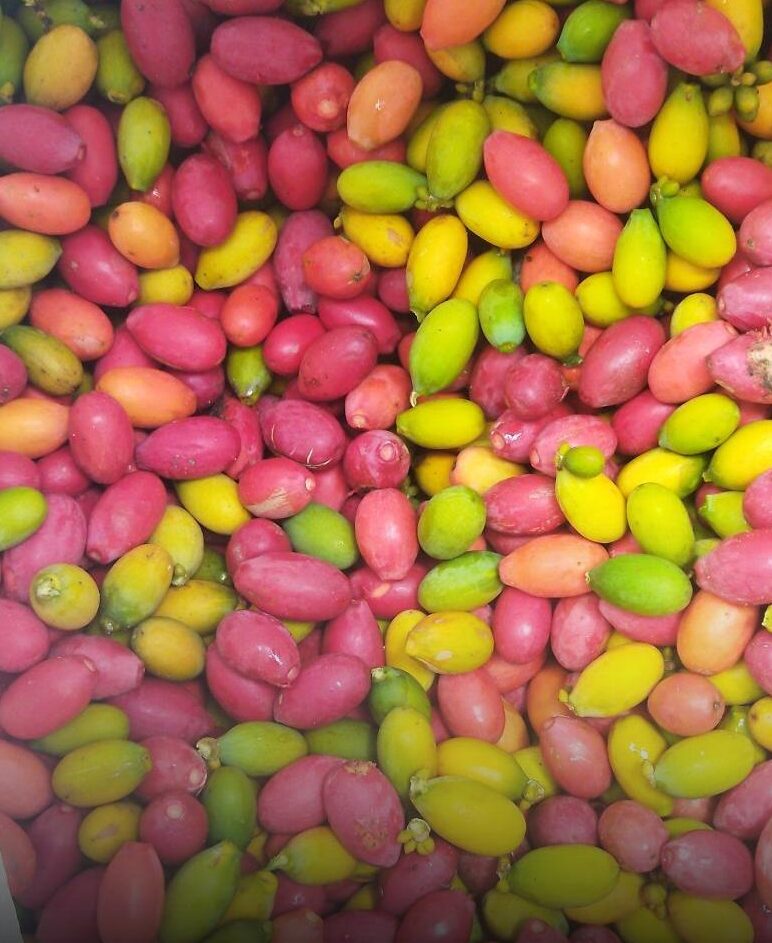
Gnetum gnemon does not produce true flowers. Instead, it produces strobili — cone-like reproductive structures — that closely resemble both flowers and fruit. This is the result of convergent evolution, meaning the plant evolved flower-like features independently of flowering plants. The male strobili look like small catkins, releasing dust-like pollen when ripe. The female strobili develop into oval seed structures, measuring 1–3.5 cm long. These seeds are covered by a thin, fleshy outer layer called an integument — a skin-like seed coat — that ripens from yellow through to vivid orange-red. Consequently, the fruiting tree becomes a striking visual display of warm colours against deep green foliage.
The plant belongs to the genus Gnetum, which includes approximately 30–35 species globally, almost all of which are climbing vines. Gnetum gnemon is unique as one of the few tree-forming species in this genus.
Crown and Trunk Form
The trunk of Gnetum gnemon is slender and straight. It is marked by raised circular rings along its length, giving it a segmented, architectural appearance. The tree typically grows 5–22 metres tall, with a narrow, pyramidal crown. Moreover, the wood is sturdy, grayish in tone, and straight-grained. This upright, columnar habit makes Gnetum gnemon an excellent specimen tree for tropical and subtropical gardens. Furthermore, it fits neatly into smaller spaces due to its naturally compact crown.
Global Seed Delivery & Phytosanitary Certification
Induare Agro is a professional supplier of rare and exotic tropical seeds based in Indonesia. Primarily, the team focuses on making hard-to-find Indonesian plants accessible to collectors, botanists, and growers worldwide. Furthermore, every shipment meets strict international plant export standards.
Packaging and Shipping
Induare Agro ships all seeds via Global Express courier services. Consequently, buyers receive their orders quickly and reliably, regardless of destination. Each seed is carefully prepared and packaged to maintain maximum viability during transit. Moreover, the packaging protects seeds from moisture, pressure, and temperature changes during long-distance shipping. Additionally, Induare Agro handles all export paperwork on behalf of the buyer.
Buyer Peace of Mind
Every order from Induare Agro includes a Phytosanitary Certificate issued by the official Indonesian plant health authority. This certificate confirms that the seeds are free from pests and diseases. Consequently, buyers can import them in compliance with their country’s agricultural regulations. Furthermore, this documentation protects buyers at customs and ensures a smooth, legal import process. Additionally, Induare Agro follows all CITES and international plant export guidelines. Primarily, the goal is to give every collector confidence and complete peace of mind with every purchase.
How to Grow Gnetum gnemon
Step 1 – Seed Preparation Soak the fresh seed in warm water for 24–48 hours before planting. This softens the outer seed coat and speeds up germination.
Step 2 – Choose the Right Soil Use a well-draining tropical potting mix or loamy soil with good organic content. The soil pH should sit between 5.5 and 7.0 for best results.
Step 3 – Plant the Seed Place the seed 2–3 cm deep in the growing medium with the pointed end facing downward. Water gently and keep the soil consistently moist but never waterlogged.
Step 4 – Provide Warmth and Indirect Light Gnetum gnemon thrives in temperatures between 20–35°C (68–95°F). Primarily, keep young seedlings in bright, indirect light or partial shade until established.
Step 5 – Be Patient with Germination Seeds can take several months to germinate — sometimes up to 12 months. Consequently, consistent warmth and moisture are essential during this waiting period. Do not let the soil dry out completely.
Step 6 – Transplant When Ready Once the seedling reaches 10–15 cm in height, transplant it into a larger container or directly into the ground. Furthermore, mature trees are drought-tolerant and low-maintenance once well established.
