
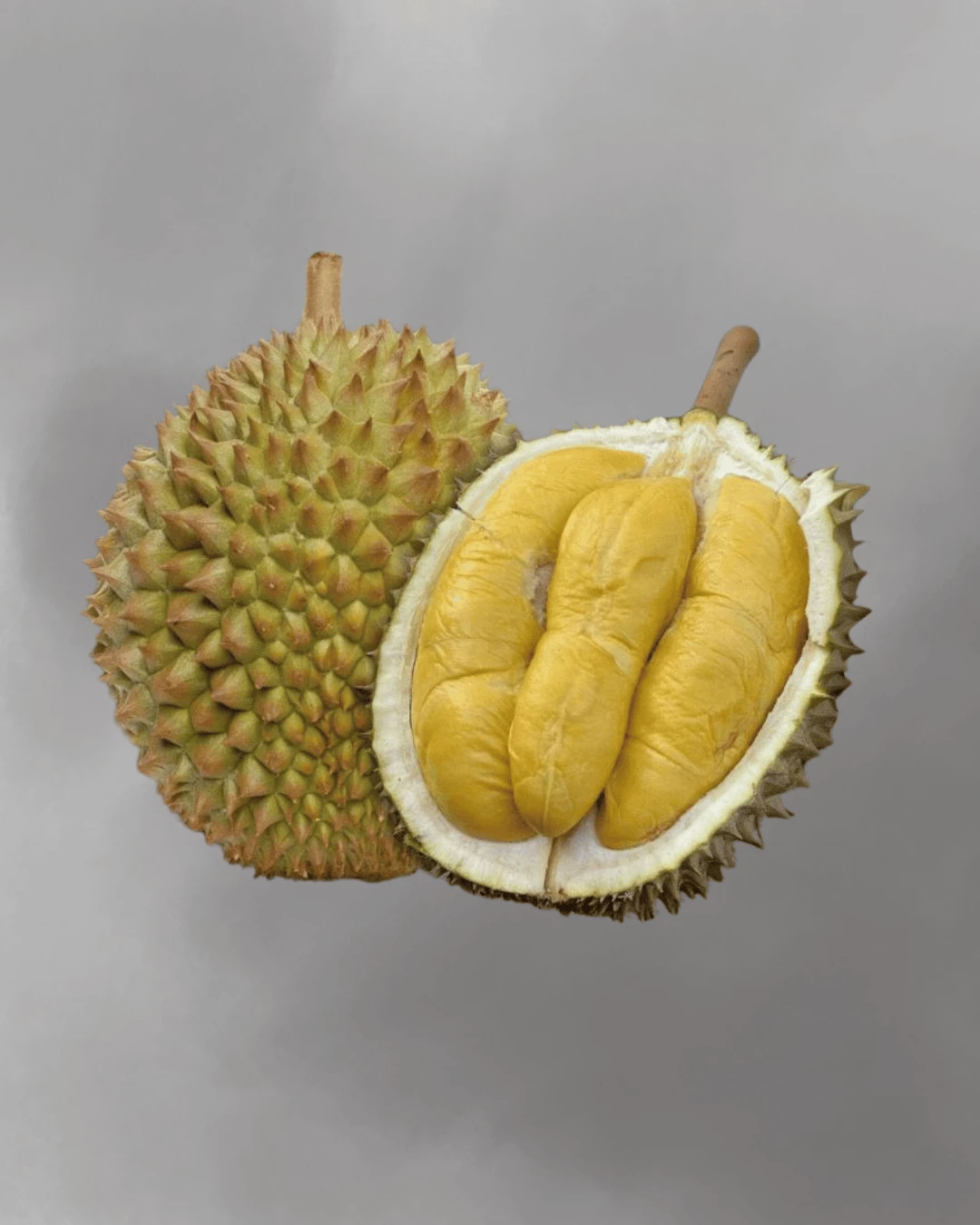
What Is Durio zibethinus?
Durio zibethinus is the most famous fruit tree in Southeast Asia. It is commonly known as the Durian — the King of Fruits. The tree is native to the rainforests of Borneo and Sumatra, Indonesia. Furthermore, it has grown wild in these islands for thousands of years. The earliest written record of the Durian dates back to the 15th century. That account came from an Italian traveller who visited Southeast Asia and described the fruit with wonder.
Today, D. zibethinus is the only Durian species available on the international market. Additionally, it is the most widely grown of all 30 recognised Durio species. Consequently, it holds unique commercial and cultural value across Indonesia, Malaysia, Thailand, and the Philippines. The name “Durian” comes from the Malay word duri, meaning thorn — a direct reference to the fruit’s sharp, spiky shell.
Induare Agro offers authentic Durio zibethinus seeds from Indonesian origin. Furthermore, every seed is fresh, organic, and fully export-ready. This is a rare opportunity to grow the true King of Fruits from seed — the same variety grown in the birthplace of the Durian.
Aesthetic Features Durio zibethinus
Durio zibethinus is a large, evergreen tropical tree with a bold and commanding presence. It grows to 25–50 metres tall in the wild. In cultivation, it typically reaches 12–15 metres. Furthermore, it has a straight trunk with grey-brown bark and a wide, cone-shaped canopy. The overall form is tall, dense, and deeply tropical in character.
Leaves and Bark
The leaves are oval and smooth. They grow 10–18 cm long and are dark green on top. Additionally, the underside of each leaf is lighter, with a subtle golden or silvery sheen. The leaves grow in an alternating pattern along the branches. Furthermore, the bark is grey-brown and slightly rough. The trunk can grow up to 120 cm wide at its base, forming broad supports — called buttress roots — at the base that anchor the tree in soft forest soil.
Flowers
The flowers of Durio zibethinus are large and striking. They grow in clusters of 3 to 30 directly on the older branches and trunk. Primarily, each flower has five cream to pale yellow petals. The flowers open at night and release a strong fragrance. Consequently, they attract moths and bats as their main pollinators. This night-blooming habit makes the tree particularly interesting to observe. The tree typically flowers once or twice per year.
Fruit
The Durian fruit is unlike any other in the world. It grows up to 30 cm long and 15 cm wide. Additionally, it can weigh between 1 and 3 kg. The outer shell is hard and covered in sharp, pyramid-shaped spines. The color ranges from green to brown as it ripens. Inside, the fruit holds five sections — each filled with a soft, creamy, pale yellow to red flesh. Primarily, the flesh is sweet, rich, and complex in flavour. Many describe it as a blend of caramel, cream, and tropical fruit. Furthermore, the seeds inside can be boiled or roasted and eaten like nuts. The raw seed, however, is toxic and must always be cooked before eating.
Global Seed Delivery & Phytosanitary Certification
Induare Agro is a trusted botanical seed exporter based in Indonesia. The company connects rare and iconic Indonesian plant species with collectors, growers, and research institutions worldwide. Furthermore, Induare Agro follows a strict, fully documented export process for every single order. Consequently, buyers in more than 50 countries receive their seeds legally and safely.
Packaging and Shipping
Induare Agro wraps every seed in moisture-control material before packing. Cushioned express packaging keeps the seeds safe throughout the entire journey. Shipments go out via Global Express couriers such as DHL and EMS. Additionally, most international orders arrive within 5–14 business days. Furthermore, every parcel includes an official Phytosanitary Certificate. This document is issued by Indonesia’s Plant Health Authority. It confirms that the seeds are free from pests, disease, and regulated pathogens. Consequently, it meets the customs requirements of the EU, USA, UK, Australia, Japan, and most other countries worldwide.
Buyer Peace of Mind
Induare Agro puts documentation first. Every order ships with the Phytosanitary Certificate and a commercial invoice. Furthermore, this full-document approach ensures smooth, fast customs clearance at every destination. Additionally, the Induare Agro team provides after-sales support for growers at every stage. Primarily, the goal is simple — help every buyer grow a healthy, fruit-bearing Durian tree from their very first seed.
How to Grow Durio zibethinus
Growing Durio zibethinus from seed is a rewarding process. Furthermore, growers in tropical and subtropical regions can achieve excellent results by following these steps closely. The key is warmth, moisture, and patience.
Step 1 — Seed Preparation Use the seed fresh — Durian seeds lose viability quickly after harvest. Additionally, plant the seed within 5–7 days of receiving it for the best germination rate.
Step 2 — Growing Medium Use a rich, well-draining mix: 50% loamy potting soil, 30% compost, and 20% perlite or coarse sand. Consequently, this supports root development while preventing waterlogging at the base.
Step 3 — Sowing Plant the seed flat, about 2–3 cm deep, in a pot with good drainage holes. Furthermore, the flat side of the seed should face downward. Keep the soil evenly moist throughout germination.
Step 4 — Temperature Maintain a temperature of 25–30°C at all times. Primarily, consistent warmth is the most critical factor for successful Durian germination. A heated propagation tray works well in cooler climates.
Step 5 — Light Place the pot in a warm, bright spot with indirect light. Additionally, young seedlings need partial shade for the first few weeks. Direct strong sun can stress the tender new growth.
Step 6 — Watering Keep the soil moist but not wet during the germination and early seedling stage. Furthermore, Durian roots are sensitive to standing water. Always ensure the pot drains freely after each watering.
Step 7 — Transplanting Move the seedling to a larger pot or garden bed once it reaches 20–30 cm tall. Consequently, more root space leads to faster, stronger trunk development. Durian grows best in deep, fertile, slightly acidic soil (pH 5.0–6.5).
Step 8 — Long-Term Care and Fruiting Apply a balanced organic fertiliser (NPK 15-15-15) every 4–6 weeks during the growing season. Additionally, a phosphorus-rich feed supports flowering and fruit set. Furthermore, a well-cared-for tree grown from seed will begin to bear fruit in 4–5 years.
© Induare Agro — Indonesia’s professional rare seed exporter.
