
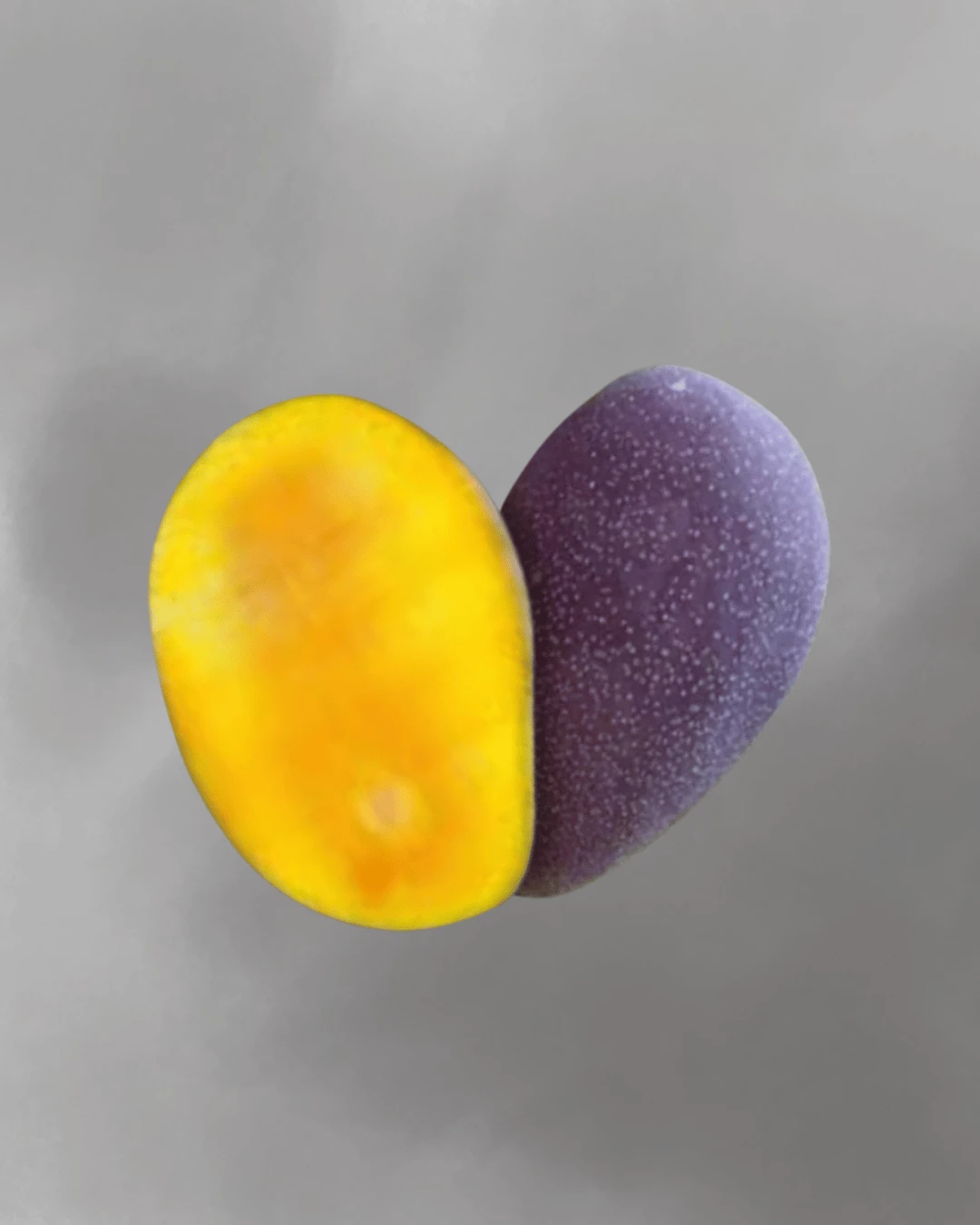
What Is Mangifera casturi?
Mangifera casturi is one of the rarest mango species on the planet. It originates from a very small area near Banjarmasin, in South Kalimantan (Borneo), Indonesia. Additionally, it holds the floral emblem status of South Kalimantan province — a living symbol of the region’s botanical identity.
Primarily due to widespread deforestation and illegal logging, this species is now classified as extinct in the wild on the IUCN Red List. Consequently, it survives only through careful cultivation by dedicated growers. Moreover, the Kasturi Mango is considered a key genetic resource for future mango breeding programs worldwide.
This is not simply a rare tropical fruit tree. It is a living connection to Indonesia’s vanishing rainforest biodiversity. Furthermore, its uniquely aromatic fruit — turning deep purple-black at ripeness — makes it a crown jewel for any serious plant collection.
Induare Agro is proud to offer export-quality, fresh Mangifera casturi seeds. Additionally, every order ships with full phytosanitary documentation, ensuring legal and safe global delivery.
Aesthetic Features Mangifera casturi
Leaf Structure
Mangifera trees are known for their bold, upright canopy. Mangifera casturi grows as a tall evergreen tree, reaching 10 to 30 meters in height. Its trunk can exceed one meter in diameter in mature specimens.
The leaves are long, dark green, and glossy. Furthermore, new growth emerges in a striking bright red color. This red flush — the fresh young leaves before they mature — creates a dramatic seasonal display. Additionally, the tight, upright canopy gives the tree an elegant, architectural profile in any landscape.
Flower and Fruit
The flowers of Mangifera casturi are small and clustered in branched groups called panicles — essentially large, branching flower stalks. Consequently, a single tree can produce abundant flower clusters across the entire canopy.
The fruit is where this species truly shines. Each fruit is small and oval, measuring approximately 5 to 6 cm in length and weighing 50 to 84 grams. Furthermore, when unripe, the skin is bright green with dark purple spots. As the fruit ripens, it transforms into a deep, shiny purple-black. The thin skin covers dark orange flesh that is notably aromatic, sweet, and intensely fragrant.
Moreover, the sweetness level is exceptional. Scientists measure fruit sweetness using a Brix scale — a unit that shows sugar concentration in liquid. Mangifera casturi scores 17.5° Brix, ranking it among the sweetest in its group. Additionally, its flowers and fruit show strong natural resistance to anthracnose, a common and damaging fungal disease in mangoes.
Growth and Maturity
Mangifera casturi is a slow-growing tree. Consequently, patience is a key virtue for any grower. Trees take several years to begin fruiting from seed. However, the wait is entirely worthwhile for collectors who value rarity and botanical distinction.
Furthermore, the tree is well-adapted to wet tropical conditions. It tolerates high rainfall and humid environments naturally. Additionally, it can flower and fruit year-round under suitable tropical conditions, making it a rewarding long-term addition to any exotic garden.
Global Seed Delivery & Phytosanitary Certification
Packaging and Shipping
Induare Agro ships Mangifera casturi seeds worldwide using Global Express courier services. Furthermore, every package is prepared with professional care. Seeds are packed with moisture-retaining material to protect viability during transit. Additionally, seeds are clearly labelled with full botanical information to assist customs inspections in any country.
Primarily, speed is essential for rare tropical seeds. Fresh seeds lose viability quickly. Consequently, Induare Agro processes all orders promptly after harvest. Moreover, tracking information is provided for every shipment, so buyers can follow their order from Indonesia to their door.
Buyer Peace of Mind
Every Mangifera casturi seed order from Induare Agro includes a Phytosanitary Certificate issued by the Indonesian government’s plant health authority. This is an official document — it certifies that the seeds have been inspected and are free from pests and diseases. Furthermore, it is required by most countries for legal plant import.
Additionally, Induare Agro complies fully with CITES and international plant trade regulations. Consequently, buyers can import with confidence. Moreover, our team is available to advise on import requirements specific to your country. Primarily, our goal is a smooth, legal, and successful delivery every time.
How to Grow Mangifera casturi
Step 1 — Prepare Your Seed Soak the fresh seed in clean water at 20–25°C (68–77°F) for 4 to 6 hours. This softens the outer coat and helps trigger germination.
Step 2 — Choose the Right Soil Use a light, well-draining sandy mix — a blend of coarse sand and organic potting compost works well. Furthermore, ensure the pot has drainage holes to prevent waterlogging.
Step 3 — Plant the Seed Place the seed horizontally just below the soil surface, about 1 to 2 cm deep. Additionally, water gently but do not flood the pot. Keep the soil consistently moist, never dry and never soaking wet.
Step 4 — Maintain Warmth Keep the pot at a stable temperature of 25–30°C (77–86°F). Consequently, a warm greenhouse, grow tent, or heated windowsill is ideal. Avoid cold drafts and temperatures below 15°C.
Step 5 — Wait for Germination Seeds typically sprout within 10 to 21 days. Furthermore, place seedlings in a position with bright but indirect light once the first shoots appear. Direct harsh midday sun can scorch young seedlings.
Step 6 — Care for Your Seedling Water regularly and feed with a balanced tropical fertilizer once per month. Additionally, repot into a larger container as the roots develop. Moreover, in cooler climates, keep the plant indoors or in a heated greenhouse year-round.
Supplied by Induare Agro — Indonesia’s trusted source for rare exotic seeds with export-quality phytosanitary certification.
