
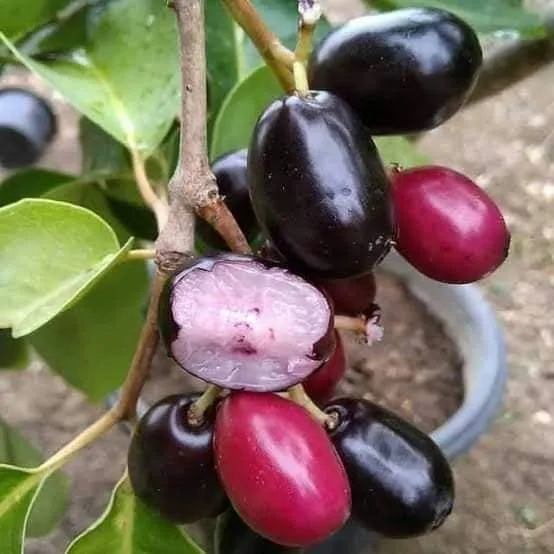
What Is Syzygium cumini?
Syzygium cumini is one of the most celebrated fruiting trees in tropical Asia. It is commonly known as the Jambolan, Java Plum, Black Plum, or Jamun. Furthermore, it is native to the Indian subcontinent and Southeast Asia. Its natural range covers India, Bangladesh, Sri Lanka, Nepal, Pakistan, Malaysia, the Philippines, and Indonesia. Consequently, it has been part of the food, culture, and traditional medicine of these regions for over three thousand years.
The tree is a true long-term investment. It is evergreen — meaning it keeps its leaves year-round. Furthermore, it can grow up to 30 metres tall and live for more than 100 years. Additionally, it produces abundant fruit every year once it reaches maturity. Primarily, it is valued for three things: its sweet-tart edible fruit, its remarkable medicinal properties, and its strength as an ornamental shade tree. Induare Agro offers fresh, organic seeds of this iconic species, directly sourced from Indonesian origin. Consequently, collectors, growers, and herbal medicine enthusiasts worldwide can now access this storied tree through a fully legal, documented export process.
Aesthetic Features Syzygium cumini
Syzygium cumini is a tall, upright, evergreen tree with a dense, spreading canopy. It can reach up to 30 metres in the wild. In cultivation, it typically grows to 8–12 metres. Furthermore, the tree has a straight central trunk with thick, rough, grey-brown bark on the lower section. The upper branches are smoother and lighter in colour. Additionally, the dense canopy provides strong shade — making it a popular street and garden tree across tropical Asia.
Leaves
The leaves are a key ornamental feature of this tree. They are oval, smooth, and glossy. Additionally, they are dark green on the upper surface and a lighter, slightly yellowish green underneath. Each leaf measures 10–15 cm in length. Furthermore, young new leaves emerge with a striking bronze-pink flush before maturing to full green. The leaves are aromatic — they release a mild clove-like scent when crushed. Consequently, even the foliage adds sensory value to this exceptional tree.
Flowers
The flowers of Syzygium cumini appear in clusters along the branches from March to April. Furthermore, they are small — about 5 mm across — and white to pale pink in colour. The flowers are richly fragrant. Consequently, a flowering Jambolan tree releases a sweet, honey-like scent that carries well across the garden. Additionally, the flowers are produced in abundance — covering whole sections of the canopy during peak season. This brief but spectacular flower display attracts bees, butterflies, and birds in large numbers.
Fruit
The fruit is the centrepiece of Syzygium cumini. It develops from May to June. Furthermore, the fruit starts green and ripens to light magenta, then deepens to a rich dark purple — almost black — at full maturity. Each fruit is oblong, about 1.5–3 cm long. The flesh is juicy, soft, and deep purple inside. Primarily, the flavour is a bold mix of sweet, tart, and slightly astringent — meaning it leaves a dry, puckering sensation in the mouth. Additionally, the fruit is rich in anthocyanins — natural plant compounds that give it its deep colour and powerful antioxidant properties. The fruit also contains iron, vitamin C, and natural compounds linked to blood sugar support in traditional Ayurvedic medicine.
Global Seed Delivery & Phytosanitary Certification
Induare Agro is a trusted professional seed exporter based in Indonesia. The company works with verified growers and sources across the Indonesian archipelago and the wider tropics. Furthermore, Induare Agro ships rare, organic, and export-quality seeds to collectors, botanical gardens, and research institutions in more than 50 countries worldwide. Every single order follows a strict, fully documented export process from packing to final delivery.
Packaging and Shipping
Induare Agro packs every seed with professional moisture-control materials. Cushioned express packaging protects the seeds during the entire transit journey. Shipments go out via Global Express couriers such as DHL and FedEx. Additionally, most international orders arrive within 5–14 business days. Furthermore, every parcel includes an official Phytosanitary Certificate. This certificate is issued by Indonesia’s Plant Health Authority. It confirms that the seeds are free from pests, disease, and regulated plant pathogens. Consequently, it fully satisfies the customs import requirements of the EU, USA, UK, Australia, Japan, and most other regulated markets worldwide.
Buyer Peace of Mind
Induare Agro places full legal compliance at the heart of every order. Every shipment leaves with the Phytosanitary Certificate and a detailed commercial invoice. Furthermore, this complete paperwork makes customs clearance smooth and fast at every international destination. Additionally, the Induare Agro team provides after-sales growing guidance to support every buyer from seed to established tree. Primarily, the goal is simple — every collector should succeed in growing a healthy, fruit-bearing Syzygium cumini tree from their very first seed.
How to Grow Syzygium cumini
Syzygium cumini is a vigorous and fast-growing tree. Furthermore, it adapts well to a wide range of tropical and subtropical conditions. Growers in warm climates will find it one of the most rewarding fruit trees to grow from seed. Follow these steps for reliable germination and strong early establishment.
Step 1 — Seed Preparation Remove any remaining fruit pulp from the seed before planting. Additionally, soak the seed in clean warm water (25–30°C) for 24 hours. This softens the outer coat and speeds up the sprouting process.
Step 2 — Growing Medium Use a fertile, well-draining mix: 50% loamy potting soil, 30% compost, and 20% perlite or coarse sand. Consequently, this gives the seedling the rich nutrients and good drainage it needs for fast early growth.
Step 3 — Sowing Plant the seed 2–3 cm deep in a pot with drainage holes. Furthermore, keep the soil consistently moist from the moment of planting. S. cumini seeds germinate best in warm, moist conditions.
Step 4 — Temperature Maintain a temperature of 22–30°C throughout the germination period. Primarily, warmth is the single most important factor for fast and reliable sprouting. A heat mat or warm windowsill works well in cooler climates.
Step 5 — Light Place the pot in a bright, warm spot with full or partial sunlight. Additionally, Syzygium cumini is more sun-tolerant than most tropical seedlings. Strong light from an early stage supports faster, stronger growth.
Step 6 — Watering Keep the soil consistently moist but never waterlogged. Furthermore, this tree grows naturally near rivers and in moist forest zones. Regular, deep watering with good drainage gives the best results.
Step 7 — Transplanting Move the seedling to a larger container or garden bed once it reaches 20–30 cm tall. Consequently, more root space drives rapid trunk development and brings the tree to fruiting stage faster. The tree grows best in deep, fertile soil with a pH of 6.0–7.5.
Step 8 — Feeding Apply a balanced organic fertiliser (NPK 15-15-15) every 4–6 weeks during the growing season. Additionally, a potassium-rich feed during the flowering period supports stronger fruit set and more abundant harvests year after year.
© Induare Agro — Indonesia’s professional rare seed exporter.
