
What Is Syzygium rubrocarpum?
Syzygium rubrocarpum is one of the rarest plants in the world. It is known locally as the Ruruhi. This species was only formally named and described by scientists in 2025. The researchers who discovered it — Martiansyah, Hariri, and Irsyam — published the species description in the journal Phytotaxa. Furthermore, the name rubrocarpum comes from Latin. It means “red fruit” — a direct reference to the bright red berries the tree produces.
Currently, Syzygium rubrocarpum is known from only two wild locations. Both are in Southeast Sulawesi, Indonesia — the cities of Kendari and Kolaka. Consequently, this makes it one of the most narrowly distributed Syzygium species ever documented. Scientists have classified it as “Data Deficient” by IUCN standards. This is because so little field investigation has been done. Additional wild populations may exist, but they have not yet been found. Furthermore, the species was previously growing unrecognised at the Bogor Botanic Gardens — Indonesia’s most prestigious botanical institution — where it had been kept since 1996 without a confirmed name.
Induare Agro is proud to offer seeds of this newly described Indonesian endemic. Primarily, this is a chance that very few collectors worldwide will ever encounter. Additionally, every seed ships with full export documentation, including a Phytosanitary Certificate. This makes Induare Agro the only verified international source for this extraordinary Sulawesian species.
Aesthetic Features Syzygium rubrocarpum
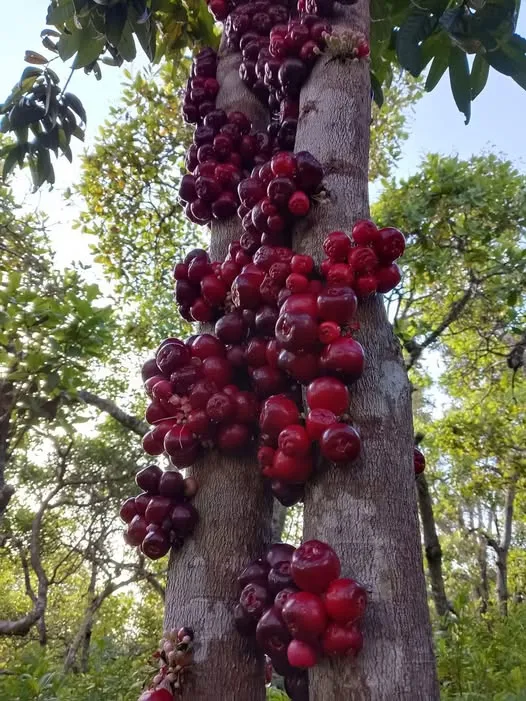
Syzygium rubrocarpum is a small to medium-sized tropical tree or large shrub. It has a compact, bushy growth habit and a dense canopy. Furthermore, mature trees develop a distinctive feature called cauliflory — a botanical term meaning the flowers and fruit grow directly on the main trunk and older branches, rather than just at the branch tips. Consequently, a fruiting Ruruhi tree is a spectacular sight. Hundreds of bright red berries can ripen simultaneously along the entire length of the trunk, creating a dramatic visual display unlike most other fruiting trees.
Leaves
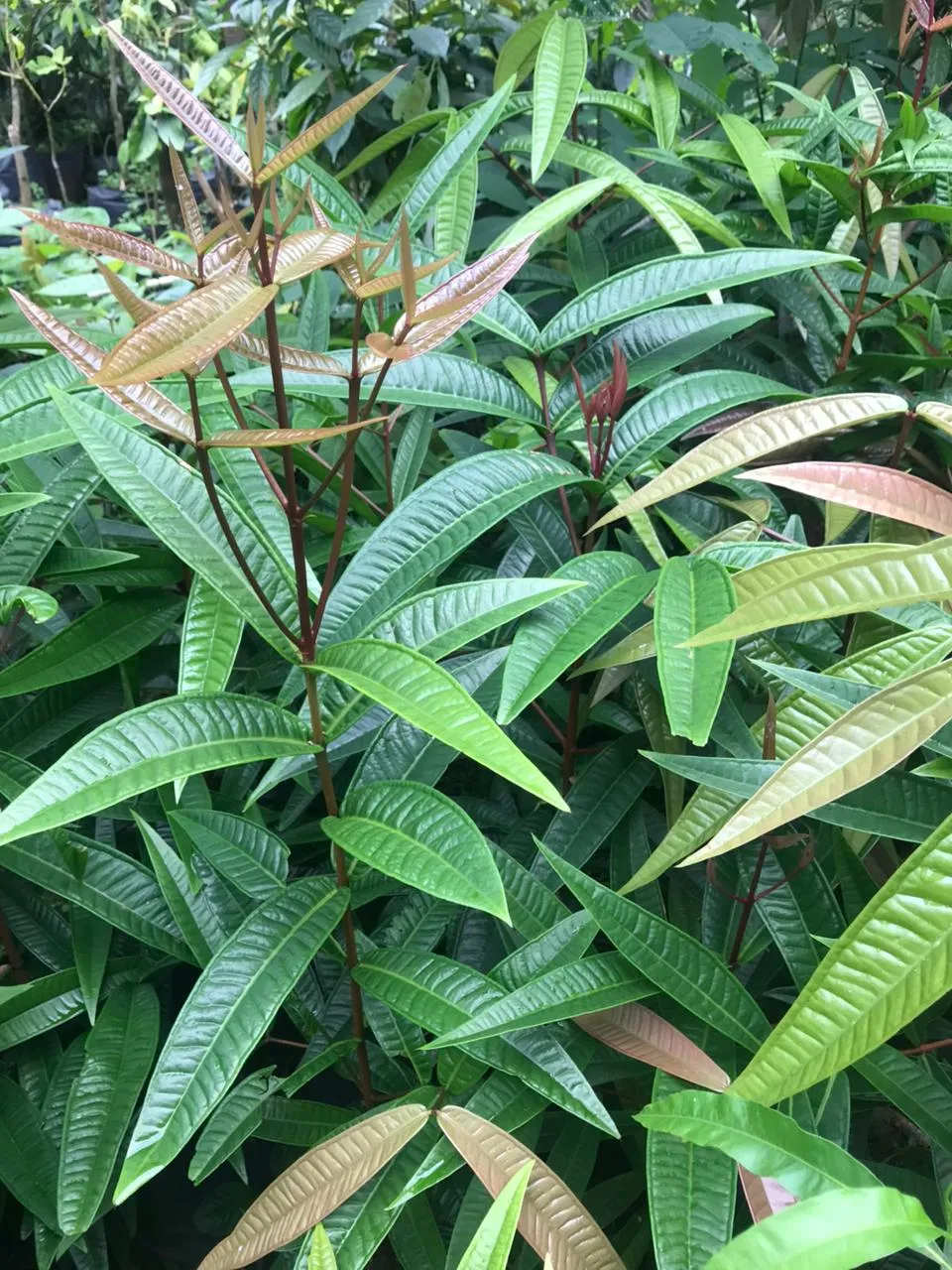
The leaves of S. rubrocarpum are narrowly elliptic — meaning long and oval — to oblong-elliptic in shape. Furthermore, some leaves are slightly curved, which botanists describe as subfalcate — like a gentle sickle. Each leaf has 13 to 15 visible side veins — the fine lines running from the central midrib to the leaf edge. Additionally, the leaf surface is smooth and firm. The color is deep, glossy green on the upper surface and slightly paler below. The leaves give the tree a neat, polished appearance throughout the year.
Flowers
The flowers of Syzygium rubrocarpum are small and delicate. They are pink in color. Furthermore, they grow in clusters — called cymes — directly on the main trunk and larger branches. This trunk-flowering habit is one of the most visually striking traits of the species. Consequently, during flowering season, the trunk appears to be covered in a soft pink mist. The flowers attract insects and small beetles that act as pollinators. Additionally, the flowers are fragrant and typical of the wider Syzygium and Myrtaceae — the myrtle — family.
Fruit
The fruit is the most celebrated feature of the Ruruhi. It grows as a round, globe-shaped berry. Furthermore, the ripe fruit is deep red in color — vivid and jewel-like against the dark bark of the trunk. The flesh inside is crisp, juicy, and crunchy in texture. The flavour is sweet with a pleasant sour note — similar to a wild rose apple or a lightly acidic lychee. Additionally, the species is notable for producing hundreds of fruits along the trunk at once — a fruiting event that is truly spectacular in a mature tree.
Global Seed Delivery & Phytosanitary Certification
Induare Agro is a professional botanical seed exporter based in Indonesia. The company works directly with verified local growers and field researchers across the Indonesian archipelago. Furthermore, Induare Agro ships rare and newly discovered Indonesian plant species to collectors, botanical gardens, and research institutions in more than 50 countries worldwide. Every order follows a strict, fully documented export process from packing to final delivery.
Packaging and Shipping
Induare Agro packs every seed with professional moisture-control materials. Syzygium seeds are recalcitrant — meaning they lose their ability to germinate quickly after harvest. Consequently, Induare Agro prioritises fast dispatch to preserve maximum seed viability on arrival. Cushioned express packaging protects the seeds throughout the full transit journey. Shipments go out via Global Express couriers such as DHL and FedEx. Additionally, most international orders arrive within 5–14 business days. Furthermore, every parcel includes an official Phytosanitary Certificate. This document is issued by Indonesia’s Plant Health Authority. It confirms that the seeds are free from pests, disease, and regulated plant pathogens. Consequently, it meets the customs import requirements of the EU, USA, UK, Australia, Japan, and most other regulated markets worldwide.
Buyer Peace of Mind
Induare Agro puts full compliance first in every single order. Every shipment includes the Phytosanitary Certificate and a commercial invoice. Furthermore, this complete documentation ensures smooth and fast customs clearance at every international destination. Additionally, the Induare Agro team provides after-sales growing support for every buyer. Primarily, the goal is to make sure every collector successfully sprouts and grows their rare Syzygium rubrocarpum from seed to a productive, fruit-bearing Ruruhi tree.
How to Grow Syzygium rubrocarpum
Syzygium rubrocarpum is a rewarding tree to grow from seed. Furthermore, it thrives in tropical and subtropical climates with warmth, humidity, and regular moisture. The key is to plant the seed quickly after receiving it, as Syzygium seeds lose viability fast. Follow these steps for the best results.
Step 1 — Plant Immediately Syzygium seeds are recalcitrant — they begin to lose sprouting ability within days of harvest. Additionally, plant your seed within 3–5 days of receiving it for the highest germination rate.
Step 2 — Growing Medium Use a rich, well-draining tropical mix: 50% loamy potting soil, 30% compost, and 20% perlite or coarse sand. Consequently, this provides the fertile, moist-but-draining soil conditions that mirror the humid forest floor of Southeast Sulawesi.
Step 3 — Sowing Plant the seed about 2–3 cm deep in a pot with good drainage holes. Furthermore, keep the growing medium consistently moist throughout the entire germination period.
Step 4 — Temperature and Humidity Maintain a steady temperature of 24–30°C and humidity of 65–80%. Primarily, warmth and high humidity are the two most critical factors for fast and reliable germination of this tropical species.
Step 5 — Light Place the pot in bright, indirect light during the germination and early seedling stage. Additionally, protect young seedlings from strong direct sun for the first few weeks. The species naturally grows under partial forest canopy.
Step 6 — Watering Keep the growing medium consistently moist at all times. Furthermore, never let the pot sit in standing water. Root rot can develop quickly in waterlogged conditions.
Step 7 — Transplanting Move the seedling to a larger pot or garden bed once it reaches 20–25 cm in height. Consequently, expanded root space dramatically speeds up trunk development and leads to earlier fruiting. The tree performs best in deep, fertile, slightly acidic soil (pH 5.5–6.5).
Step 8 — Long-Term Care and Feeding Apply a balanced organic fertiliser (NPK 15-15-15) every 4–6 weeks throughout the growing season. Additionally, add a potassium-rich feed during flowering to support fruit development. Furthermore, a well-cared-for tree grown from seed typically begins to fruit within 3–5 years of planting.
© Content produced for Induare Agro — Indonesia’s professional rare seed exporter.
