
What Is Theobroma bicolor?
Theobroma bicolor is a rare and extraordinary tropical tree. It belongs to the Malvaceae family and is a close cousin of the famous cacao tree. This plant originates from the wet tropical rainforests of northern South America and parts of Central America. Primarily, it thrives in the Amazon basin regions of Colombia, Peru, Ecuador, and Brazil. Additionally, wild populations extend as far north as Mexico and Panama.
The name Theobroma translates from Latin as “Food of the Gods.” This title reflects the deep cultural value placed on the genus for thousands of years. Indigenous communities have used Theobroma bicolor — also called Macambo, Pataxte, or Mocambo — for food, medicine, and ritual ceremonies since ancient times. Furthermore, the Aztecs cultivated it alongside Theobroma cacao to produce early forms of chocolate. Consequently, this plant carries a living history that spans millennia.
Today, Theobroma bicolor remains commercially underutilized compared to its famous relative. Moreover, it is rarely exported outside South America. This makes a viable, fresh seed an exceptionally rare find for collectors outside the Americas. Additionally, global demand for rare exotic seeds and superfoods continues to grow rapidly. Induare Agro proudly offers certified, export-quality seeds to passionate growers worldwide.
Aesthetic Features Theobroma bicolor
Theobroma is a genus of roughly 40 neotropical tree species. Each one carries a striking visual identity that sets it apart from common ornamental trees. Theobroma bicolor is no exception. Furthermore, its appearance evolves beautifully from seedling to mature tree, offering collectors a dynamic and rewarding growing experience.
Leaf Structure
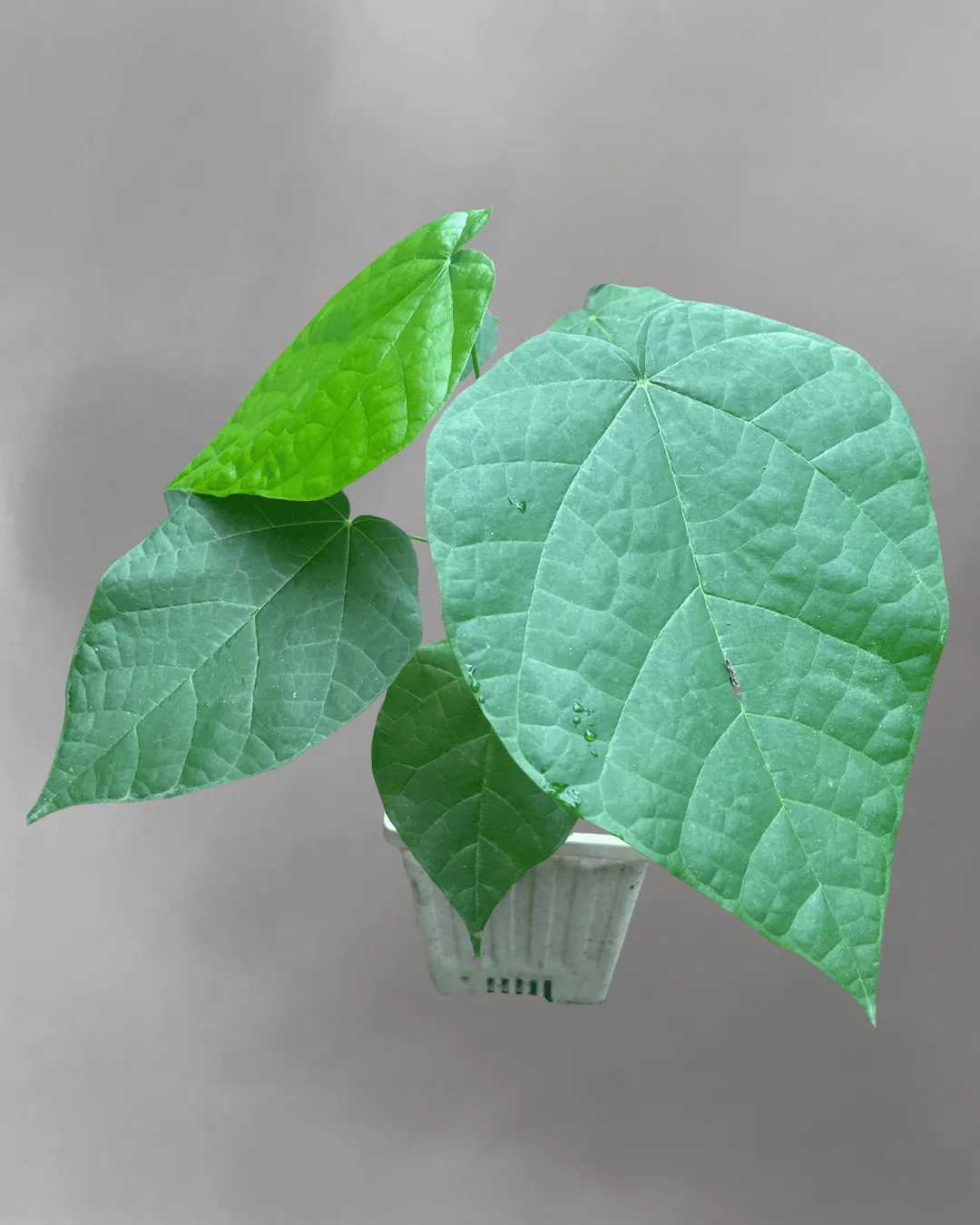
Theobroma bicolor produces large, oblong to oval-shaped leaves. Each leaf can grow between 20 and 36 cm long and 8 to 17 cm wide. Additionally, the upper surface of each leaf is smooth and glossy green. The underside, however, is densely covered in fine, soft, star-shaped hairs — giving it a dusty silvery-grey texture. This two-toned appearance is a key reason for the species name bicolor, meaning “two colors.” Furthermore, the prominent central vein runs boldly along the underside of each leaf, creating a striking visual contrast. These large, tropical leaves make the tree an instant statement piece in any garden or greenhouse collection.
Flower and Fruit
The flowers of Theobroma bicolor are small and delicate, growing white to pale-yellow in color with reddish-pink petal accents. Primarily, they are cauliflorous — meaning the flowers grow directly on the trunk and older branches of the tree, not at the tips. This feature is a hallmark characteristic of the Theobroma genus and is visually captivating. Moreover, the flowers appear from July to September in the central Amazon region.
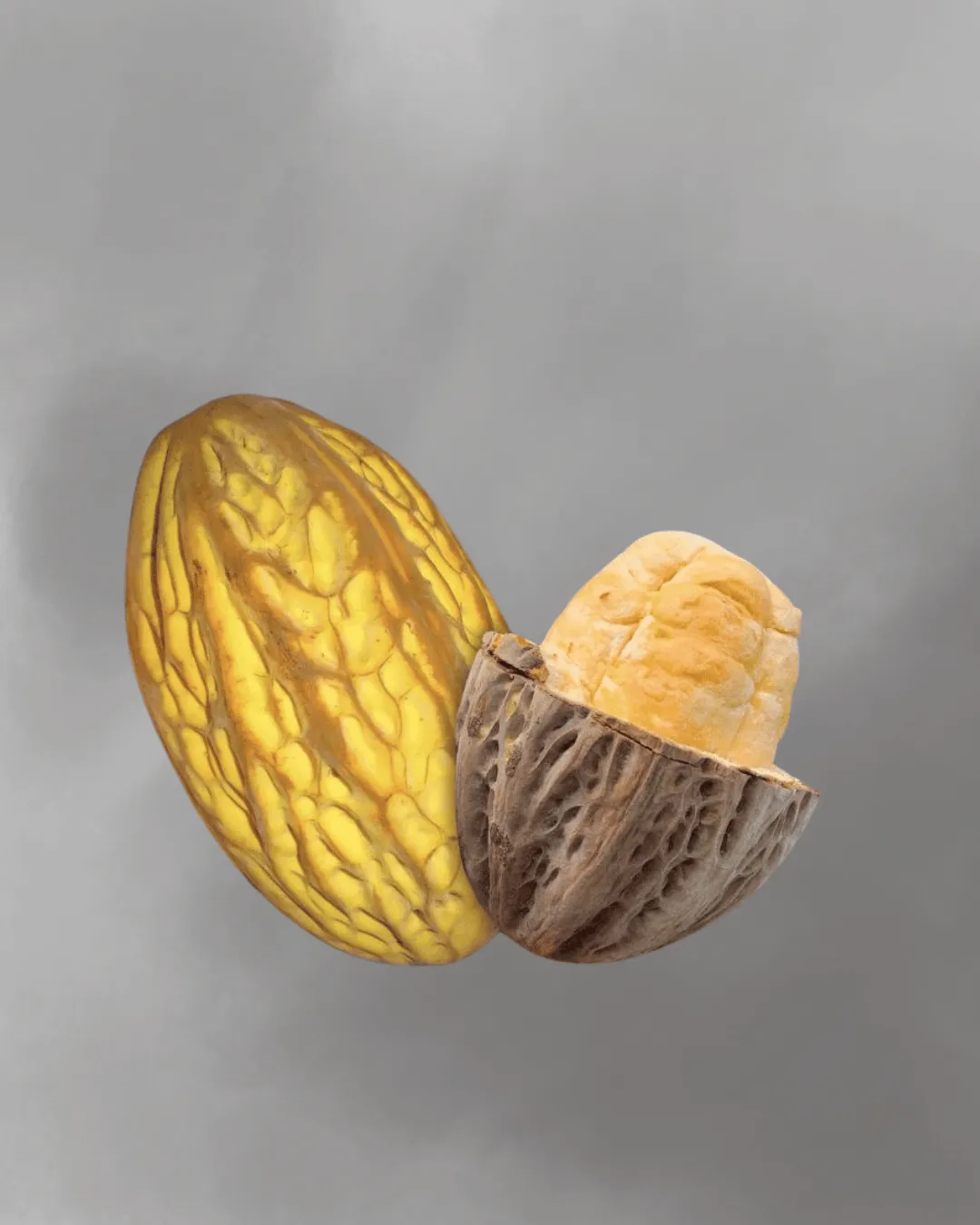
The fruit is equally impressive. It is ellipsoid — meaning oval and slightly elongated — measuring between 15 and 30 cm long and up to 12 cm wide. The outer shell is hard and woody, colored green when young and turning yellow-brown at full ripeness. Additionally, the surface is strongly ridged with ten deep grooves running the length of the pod. Inside, a sweet, fibrous, pale-yellow pulp surrounds the seeds. This pulp has a mild cocoa flavor. The seeds themselves are white — unlike the purple seeds of regular cacao — and are rich in protein, healthy fats, and omega-9 fatty acids.
Growth Habit and Fruiting Cycle
Theobroma bicolor grows as a slender, upright evergreen tree with a graceful, narrow crown. In open fields, it typically reaches 3 to 8 meters in height. Furthermore, in deep forest understory conditions, it can grow up to 25 to 30 meters tall. The tree is a slow to moderate grower and prefers loose, well-draining tropical soils. It thrives in partial shade, mimicking its natural habitat beneath the rainforest canopy.
Consequently, patience is part of the joy of growing this tree. Fruiting begins approximately five years after planting from seed. Moreover, in the central Amazon, fruit production runs from March through November — making it one of the longest-fruiting exotic trees available. Additionally, the tree is remarkably adaptable. It tolerates minimal flooding and grows well in both lowland and upland tropical environments.
Global Seed Delivery & Phytosanitary Certification
Induare Agro is an Indonesian-based supplier of rare and exotic botanical seeds. We specialize in responsibly sourced, export-quality plant material for collectors, researchers, and growers worldwide. Furthermore, we understand that buying rare seeds internationally requires trust, legal compliance, and professional handling.
Packaging and Shipping
Every seed order from Induare Agro is carefully prepared for international transport. Additionally, we use moisture-controlled, protective packaging to preserve seed viability during long-distance shipping. All orders ship via Global Express courier for fast and trackable delivery. Furthermore, we ship to most destinations worldwide, ensuring your rare seeds arrive in optimal planting condition.
Each shipment includes a valid Phytosanitary Certificate — an official government-issued plant health document. This certificate confirms that your seeds have been officially inspected and are free from pests and diseases. Moreover, it is required by most countries for legal importation of plant material. Consequently, your order clears customs smoothly and legally, without delays or complications.
Buyer Peace of Mind
Induare Agro is committed to full transparency and legal compliance. Primarily, we follow all international phytosanitary standards set by the International Plant Protection Convention (IPPC). Additionally, our seeds are sourced fresh and organic — no chemical treatments, no artificial preservation. Moreover, we provide clear documentation with every order to ensure a stress-free import experience for our buyers. Consequently, collectors across Europe, Asia, the Middle East, and the Americas trust us as their go-to source for Indonesian and tropical rare plants.
How to Grow Theobroma bicolor
Step 1 — Prepare the Seeds Soak fresh seeds in warm water for 24 hours before planting. This softens the seed coat and encourages faster germination.
Step 2 — Choose the Right Soil Use a well-draining tropical mix rich in organic matter. A slightly acidic pH between 5.5 and 6.5 works best for this species.
Step 3 — Plant at the Correct Depth Sow the seed approximately 2 to 3 cm deep in a nursery pot. Firm the soil lightly around the seed to eliminate air pockets.
Step 4 — Provide Warmth and Partial Shade Place the pot in a warm location with temperatures between 22°C and 28°C. Additionally, avoid direct midday sun — dappled light or 50% shade mimics the natural rainforest understory.
Step 5 — Water Consistently Keep the soil evenly moist but never waterlogged. Furthermore, high ambient humidity will greatly benefit germination and early seedling growth.
Step 6 — Transplant When Ready Once the seedling reaches 20 to 30 cm in height, transplant it to a larger container or a suitable outdoor site. Consequently, a well-prepared tropical garden bed or large greenhouse pot works ideal for long-term growth.
Step 7 — Be Patient and Consistent Theobroma bicolor is a slow to moderate grower. Moreover, fruiting typically begins around year five. Consistent care, warmth, and humidity will reward you with a magnificent, rare tree.
