
What Is Pouteria sapota?
Pouteria sapota is a rare and highly coveted tropical fruit tree. It originates from the lowland forests of southern Mexico and Central America. The tree now grows across the Caribbean, parts of South America, and South Florida. However, it remains extremely rare outside these regions. This rarity makes Pouteria sapota a top target for serious plant collectors worldwide.
The tree belongs to the family Sapotaceae. It can reach impressive heights of 15 to 45 metres in the wild. Furthermore, it produces large, oval fruits that are botanically classified as berries. Each fruit contains a single, large, glossy seed. The seed’s oil content is remarkably high — between 45 and 60%. Consequently, the seed has been used for centuries in traditional culinary and cosmetic applications across Latin America.
Globally, demand for Pouteria sapota seeds is growing fast. Collectors in Europe, Asia, and the Middle East increasingly seek this species for tropical gardens and botanical collections. Additionally, its exotic fruit profile — combining flavors of sweet potato, pumpkin, honey, and almond — makes it one of the most talked-about rare fruit trees today. Induare Agro is proud to offer certified, export-quality seeds for growers who demand the best.
Aesthetic Features Pouteria sapota
Pouteria sapota is a visually stunning tree at every stage of growth. From its bold canopy to its extraordinary fruit, it commands attention in any tropical garden or collection. Moreover, the tree’s physical features make it just as valuable as an ornamental plant as it is as a fruit producer.
Leaf Structure
The leaves of Pouteria sapota are large, leathery, and deep green. They cluster near the tips of branches in a dense, elegant arrangement. Each leaf is obovate — meaning it is wider toward the tip and narrower at the base. Furthermore, the leaves can grow quite large, creating a lush, tropical canopy. The leaf undersides are slightly paler, giving the tree a layered, dimensional look from below.
Flower and Fruit
The flowers are small, white to pale yellow, and grow in tight clusters. They emerge along the branches and in the axils — the joints where leaves meet stems. The blooms are delicate but appear in impressive numbers. Additionally, they carry a faint, pleasant fragrance.
The fruit is the tree’s most dramatic feature. It grows between 10 and 25 centimetres long. The rough, brown skin has a texture similar to sandpaper. Inside, the flesh ranges from vibrant salmon-pink to deep red-orange. The flavour is extraordinarily complex — sweet, creamy, and rich. Primarily, tasters describe it as a blend of sweet potato, pumpkin, honey, almond, and tropical fruit. Each fruit typically contains one large, glossy, dark brown-black seed.
Seed and Dormancy Traits
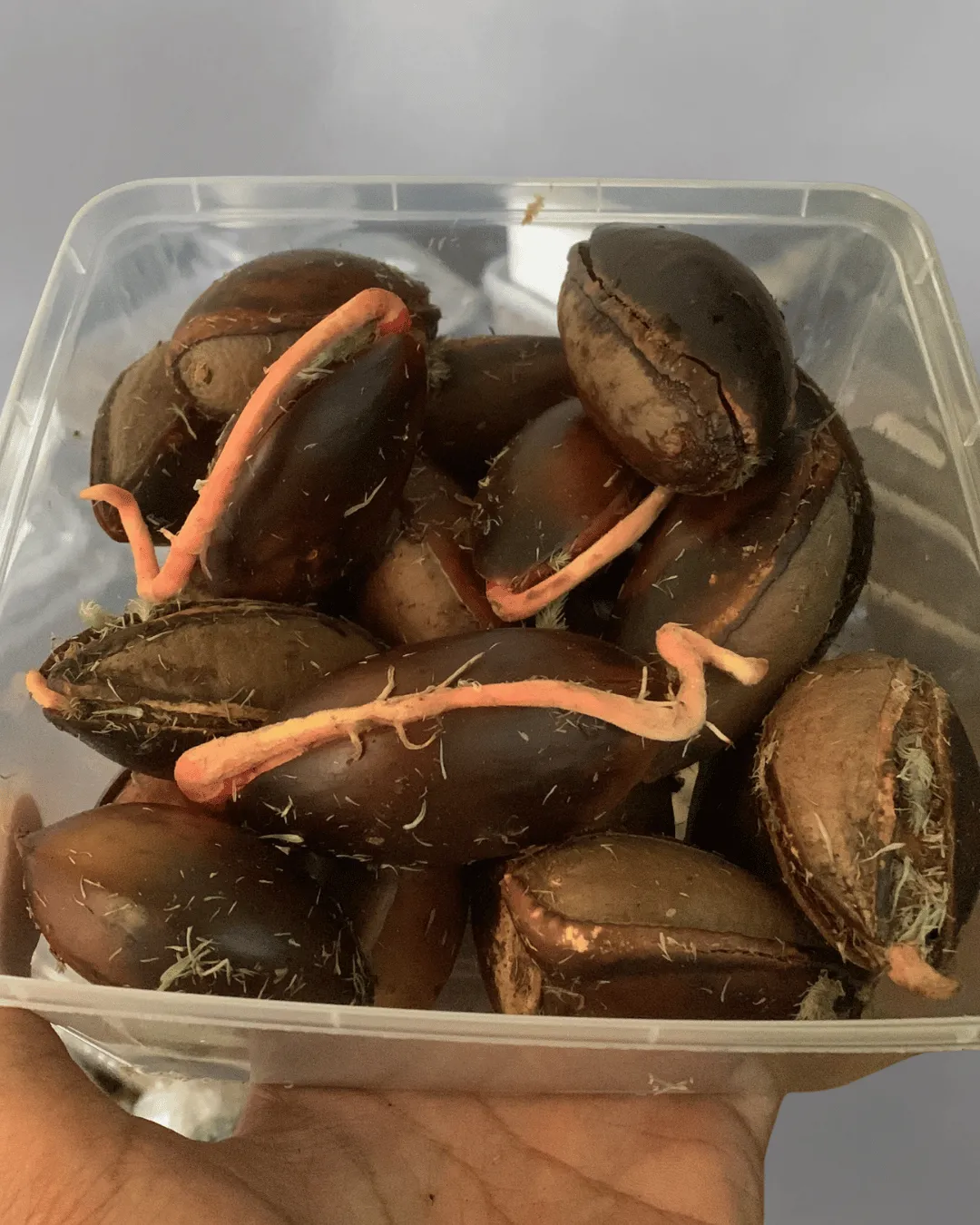
The seed of Pouteria sapota is large, hard, and highly distinctive. It has a smooth, shiny shell and a pointed ellipsoid shape. Moreover, the seed contains a thick, oily kernel used in traditional preparations. Seeds have short viability — they must be planted quickly after harvest to ensure successful germination. Consequently, freshness is critically important when purchasing Pouteria sapota seeds. Induare Agro supplies only freshly harvested, organically sourced seeds to protect germination rates.
Global Seed Delivery & Phytosanitary Certification
Induare Agro ships rare and exotic plant seeds to collectors in over 50 countries. Furthermore, every shipment meets strict international plant health and biosecurity standards. Our team handles every order with care and expertise.
Packaging and Shipping
Seeds are individually packed using professional moisture-control materials. This packaging preserves freshness and viability during international transit. Additionally, every order ships via Global Express courier for the fastest possible delivery. We track every parcel from dispatch to delivery. Consequently, buyers receive their seeds in the best possible condition, ready for immediate planting.
We understand that seed viability is time-sensitive for species like Pouteria sapota. Therefore, we process orders quickly. Furthermore, we offer full shipping transparency with tracking codes provided to every buyer.
Buyer Peace of Mind
Every order from Induare Agro includes a legally issued Phytosanitary Certificate. This certificate is an official government-issued plant health document. It confirms that seeds have been inspected, treated where necessary, and are free of pests and diseases. Moreover, it is required by customs authorities in most countries for legal plant material import.
Additionally, our Phytosanitary Certificate ensures your seeds clear customs without delays or legal complications. Buying from Induare Agro means buying with full confidence. You receive export-quality seeds backed by professional documentation. Consequently, you can focus on growing — not paperwork.
How to Grow Pouteria sapota
Pouteria sapota thrives in warm, humid tropical and subtropical climates. Primarily, it is suited for growers in USDA hardiness zones 10–11. Furthermore, it can be grown in large containers in cooler climates, brought indoors during cold months.
Step 1 – Prepare the Seed Remove the seed from its hard outer shell — or scarify (lightly scratch) the seed coat before planting. This step shortens germination time significantly. It exposes the inner kernel to moisture more easily.
Step 2 – Soak the Seed Soak the prepared seed in warm water for 24 to 48 hours. This softens the seed coat further and activates germination. Additionally, discard any seeds that float, as these may not be viable.
Step 3 – Choose the Right Growing Medium Fill a deep pot or seedling tray with well-draining, fertile loamy soil. Mix in organic compost to enrich the growing medium. Furthermore, ensure the container has drainage holes to prevent waterlogging.
Step 4 – Plant the Seed Plant the seed 2 to 3 centimetres deep with the pointed end facing down. Firm the soil gently around the seed. Primarily, one seed per pot is recommended for best results.
Step 5 – Provide Warmth and Moisture Place the pot in a warm location with temperatures of 22–30°C. Keep the soil consistently moist but never waterlogged. Germination typically occurs within 4 to 8 weeks under ideal conditions.
Step 6 – Grow On and Transplant Once the seedling reaches 30 centimetres tall, it is ready for a larger container or outdoor planting. Choose a full-sun location. Additionally, water regularly during dry periods and fertilise monthly with a balanced organic feed.
Step 7 – Patience Pays Off Seed-grown Pouteria sapota trees typically begin fruiting after 7 to 10 years. Consequently, this is a long-term investment for committed collectors. Moreover, the reward — a magnificent fruiting tropical specimen — is well worth the wait.
