
What Is Artocarpus sericicarpus?
Artocarpus sericicarpus is a rare tropical rainforest tree from the island of Borneo. Its common name is Pedalai. The tree is also known locally as peluntan, gumihan, and terap bulu. Furthermore, it belongs to the same plant family as jackfruit and breadfruit — the Moraceae family. However, many fruit experts consider the Pedalai to be the best-tasting of all Artocarpus fruits. Consequently, collectors and tropical fruit enthusiasts worldwide place it at the very top of their must-grow lists.
The tree grows naturally in northern Borneo — in the Sarawak and Sabah regions of Malaysia — and across parts of Indonesia, including Kalimantan, Sulawesi, and the Maluku Islands. Additionally, it grows in the Philippines. It thrives in humid tropical forests at elevations of 500–1,000 metres. The tree grows on steep clay hillsides as well as near the coast.
Pedalai is exceptionally rare outside its native range. Furthermore, viable seeds are nearly impossible to find on the global market. Induare Agro sources these seeds directly from Indonesian origin. Additionally, every seed is fresh, organic, and fully export-documented. This makes Induare Agro one of the very few verified global suppliers offering this rare Bornean fruit tree through a fully legal process.
Aesthetic Features Artocarpus sericicarpus
Artocarpus sericicarpus is a large, impressive evergreen tree. It grows to 30–40 metres tall in the wild. Furthermore, the trunk is thick and develops wide, flat supports at the base — called buttress roots — that help anchor the tree in the steep, clay soils of its native forest habitat. The overall form is broad, well-branched, and powerfully tropical in character.
Leaves
The leaves of Pedalai are one of its most striking ornamental features. Young trees produce enormous, deeply lobed leaves. Furthermore, these juvenile leaves can measure up to 180 cm long and 70 cm wide — making them some of the largest leaves of any fruiting tree in the world. The lobes radiate outward like spread fingers on a hand. Consequently, young Pedalai trees make bold, dramatic landscape specimens on their own. As the tree matures, the leaf shape changes. Adult leaves are oval to elliptic in shape. Additionally, they measure 20–70 cm long and 10–50 cm wide. They are dark green, smooth, and richly textured. The shift from lobed juvenile leaves to smooth adult leaves adds an evolving visual interest that few other trees can match.
Fruit
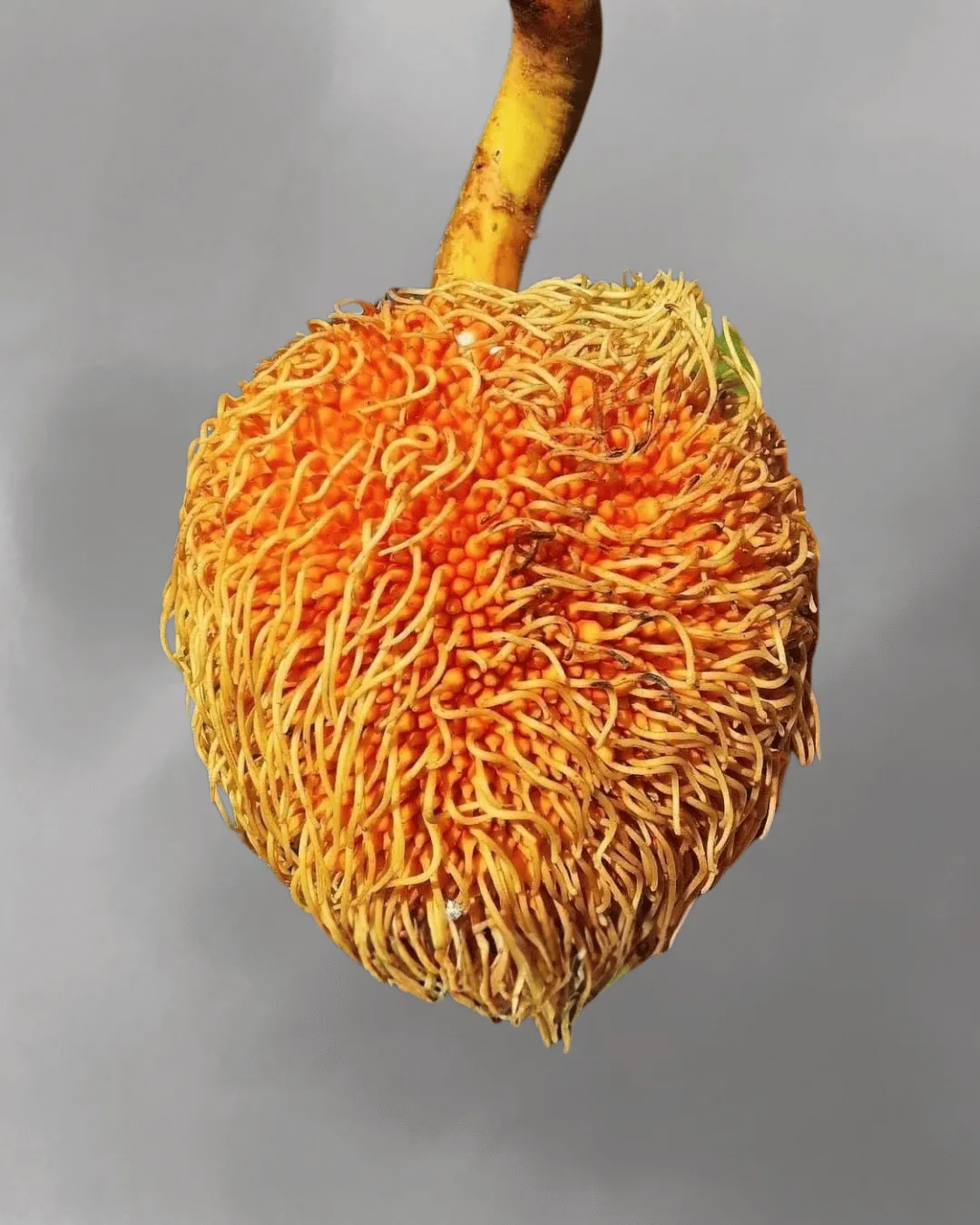
The fruit of Artocarpus sericicarpus is unlike almost any other in the world. It is round and approximately 15 cm in diameter. Furthermore, the outer skin turns bright orange when fully ripe. The surface is covered in small, soft bumps. Each bump sprouts a curly yellow hair up to 40 mm long. Consequently, the ripe fruit looks exactly like a giant rambutan — vivid orange, hairy, and almost unreal in appearance.
Inside, the flesh is creamy white, sweet, and mildly aromatic. Additionally, the flavour surpasses that of the closely related marang fruit. The texture is firmer and the sweetness is richer. Furthermore, the seeds inside are also edible. People boil or roast them and eat them like peanuts — adding even more value to every single fruit.
Tree Habit and Bark
Artocarpus sericicarpus is an evergreen tree. It keeps its foliage year-round. Furthermore, the bark has an important traditional use — local communities in Borneo have long used it to make barkcloth. Additionally, the tree begins to bear fruit in 3–4 years from seed under good growing conditions. Primarily, this relatively fast fruiting timeline makes it an attractive investment for both collectors and serious tropical growers.
Global Seed Delivery & Phytosanitary Certification
Induare Agro is a professional botanical seed exporter based in Indonesia. The company specialises in rare, exotic, and hard-to-source tropical seeds from across the Indonesian archipelago. Furthermore, Induare Agro ships to collectors, botanical gardens, and growers in more than 50 countries worldwide. Every single order follows a strict, fully documented export process.
Packaging and Shipping
Induare Agro packs every Pedalai seed with professional moisture-control materials. Cushioned express packaging protects the seed throughout the full transit journey. Shipments go out via Global Express couriers such as DHL and EMS. Additionally, most international orders arrive within 5–14 business days. Furthermore, every parcel includes an official Phytosanitary Certificate. This document is issued by Indonesia’s Plant Health Authority. It confirms the seeds are free from pests, disease, and regulated pathogens. Consequently, it meets the import requirements of customs authorities in the EU, USA, UK, Australia, Japan, and most other regulated markets.
Buyer Peace of Mind
Induare Agro puts legal compliance first on every order. Every shipment travels with the Phytosanitary Certificate and a commercial invoice. Furthermore, this full-document approach ensures smooth and fast customs clearance at every destination. Additionally, the Induare Agro team provides after-sales growing support for every buyer. Primarily, the goal is simple — help every collector successfully grow a healthy, fruit-bearing Pedalai tree from their very first seed.
How to Grow Artocarpus sericicarpus
Artocarpus sericicarpus grows best in warm, humid tropical conditions. Furthermore, growers in tropical and subtropical regions can achieve excellent results by following the steps below. The key is warmth, rich soil, and consistent moisture throughout the growing process.
Step 1 — Seed Preparation Plant the seed as soon as possible after receiving it. Additionally, Pedalai seeds lose viability quickly — aim to sow within 5–7 days of arrival for the best germination rate.
Step 2 — Growing Medium Use a rich, well-draining mix: 50% loamy topsoil, 30% compost, and 20% coarse perlite or sand. Consequently, this provides the fertile, moisture-retaining conditions the seedling needs to establish quickly.
Step 3 — Sowing Plant the seed 3–4 cm deep in a large pot with good drainage holes. Furthermore, keep the soil evenly moist at all times during the germination period. Do not let the soil dry out.
Step 4 — Temperature Maintain temperatures between 22°C and 32°C at all times. Primarily, consistent warmth is the most critical factor for successful Pedalai germination. A heated propagation mat works well in cooler climates.
Step 5 — Light Place the pot in a bright, warm position with indirect light during early germination. Additionally, move the seedling to full sun once it reaches 20–25 cm. Pedalai is a full-sun tree at maturity.
Step 6 — Watering Keep the soil consistently moist but never waterlogged. Furthermore, the tree prefers high rainfall and does not tolerate drought. Water regularly and ensure the pot drains freely after each watering.
Step 7 — Transplanting Move the seedling to a large container or garden bed once it reaches 30 cm tall. Consequently, more root space drives faster growth and brings the tree to its first fruiting stage sooner. Pedalai grows best in slightly acidic soil (pH 5.5–6.5).
Step 8 — Feeding Apply a balanced organic fertiliser (NPK 15-15-15 or similar) every 4–6 weeks during the growing season. Additionally, increase phosphorus feeding during the flowering stage to support strong fruit set. Furthermore, a well-fed Pedalai tree will begin to bear fruit in as little as 3–4 years from seed.
© Induare Agro — Indonesia’s professional rare seed exporter.
