
What Is Pinanga celebica?
Pinanga celebica is a rare and exotic palm native to the island of Sulawesi, Indonesia. Sulawesi was historically known as the Celebes — and that is exactly where this palm gets its name. It grows deep in the humid tropical rainforests of northern Sulawesi. Furthermore, it thrives at low to mid elevations beneath the dense rainforest canopy.
This species belongs to the Pinanga genus, a large group of tropical palms found across Asia and the Pacific. Consequently, Pinanga celebica is formally described by the botanist Scheffer, recorded as Pinanga celebica Scheff. Additionally, it is listed as an accepted species in the World Checklist of Palms by the Royal Botanic Gardens, Kew.
Collectors worldwide prize this palm for its island-endemic status. It does not grow naturally anywhere outside of Sulawesi. Moreover, habitat loss and limited seed availability make it increasingly difficult to source. Primarily, it appeals to serious palm enthusiasts and botanical collectors who seek plants with genuine rarity. Induare Agro sources these seeds directly from verified locations in Indonesia. We ensure full traceability from forest to your hands.
Aesthetic Features Pinanga celebica
The visual character of Pinanga celebica is both elegant and distinctive. It stands apart from more common landscape palms. Furthermore, its features reflect the rich biodiversity of Sulawesi’s tropical rainforests. Collectors consistently rank it among the most beautiful Indonesian palms in private cultivation.
Leaf Structure
Pinanga celebica produces a crown of arching, pinnate leaves — that means the leaves are feather-like, with many smaller leaflets arranged along a central stalk. The leaflets droop gracefully at their tips, giving the entire canopy a soft, flowing appearance. Additionally, the underside of the leaves and the leaf rachis — the central midrib running through each leaf — carry a subtle bluish to violet tone. This feature is rare and highly sought-after among palm growers. The overall leaf crown sits atop a slender, closely ringed trunk. Furthermore, the trunk’s smooth, ring-marked surface adds an architectural quality to the plant.
Crownshaft and Trunk
One of the most striking visual features of Pinanga celebica is its crownshaft. The crownshaft is the smooth, cylinder-shaped section just below the leaf crown, formed by the overlapping bases of the leaves. On this species, the crownshaft displays a vivid purple to deep orange coloration. Consequently, this creates a dramatic contrast with the dark green of the leaves above. The trunk itself is slender and medium-sized, typically reaching around 3 metres in height in cultivation. Moreover, the closely spaced ring scars — marks left by old leaf bases — give the trunk a clean, textured look.
Flower and Fruit
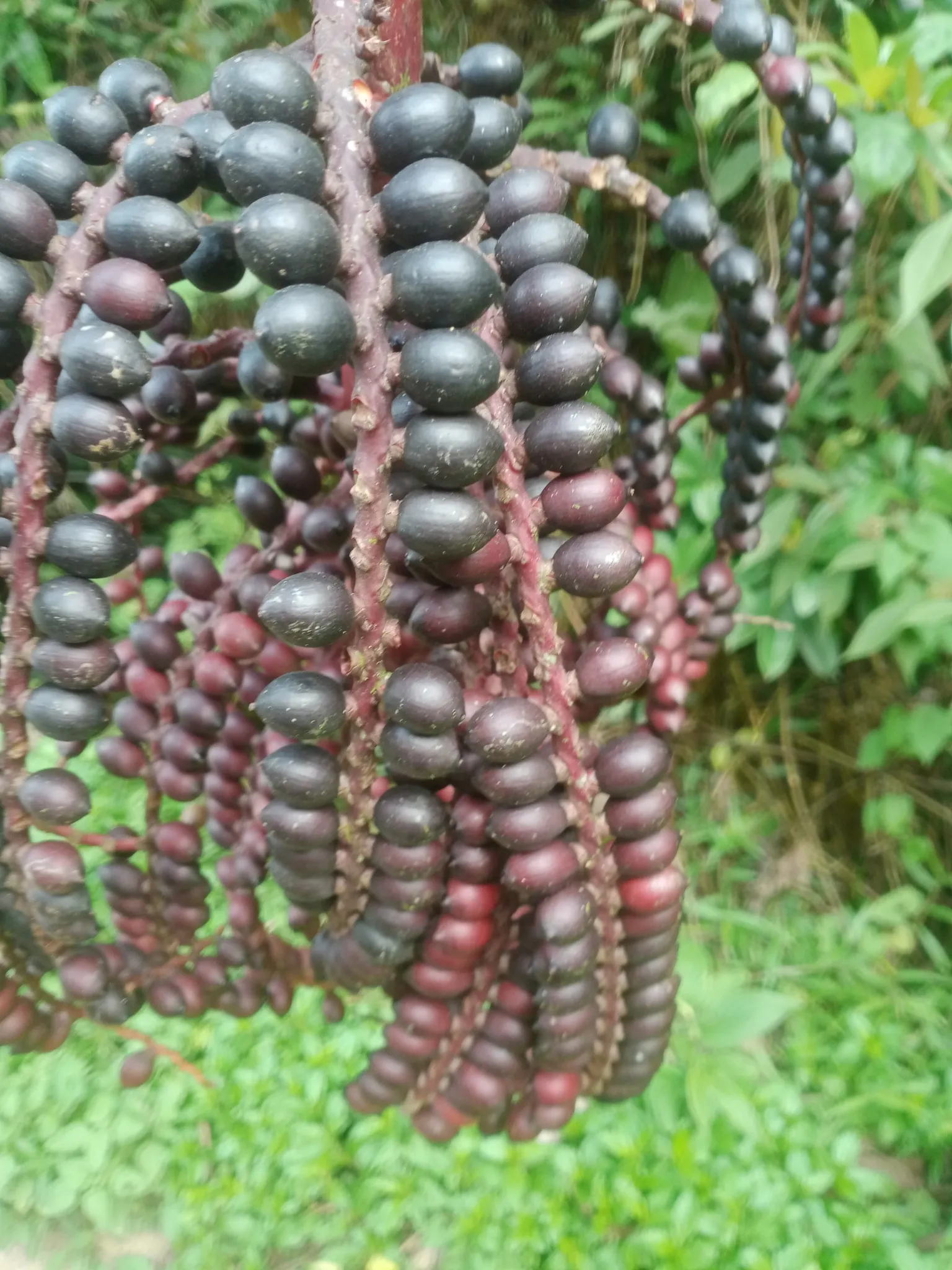
Pinanga celebica produces inflorescences — flower clusters — that emerge just below the crownshaft. The flowers are small and appear in branched clusters on a central flowering stalk. Furthermore, the fruiting bodies that follow are small and compact. The fruits ripen to a deep red or near-black color when mature. Additionally, the fruiting display adds seasonal ornamental interest beyond the palm’s already striking foliage. The complete plant — from trunk to crown — offers year-round visual appeal.
Global Seed Delivery & Phytosanitary Certification
Induare Agro is a professional seed supplier based in Indonesia. We specialise in rare, exotic, and organic seeds from Indonesian native plants. Consequently, we understand that international buyers expect both quality and legal compliance. Furthermore, every order we ship meets the highest standards for safety, legality, and seed viability.
Packaging and Shipping
We pack each seed with great care to preserve its freshness and germination potential. Seeds travel in protective, moisture-controlled packaging. Furthermore, we ship via Global Express courier services to ensure fast and reliable delivery. Additionally, tracking is provided on every shipment. We export to collectors, botanical gardens, universities, and nurseries across Europe, North America, Asia, and beyond. Primarily, our goal is to get viable, fresh seeds to your door in perfect condition.
Buyer Peace of Mind
Every order of Pinanga celebica seeds from Induare Agro includes a Phytosanitary Certificate. This is an official government-issued plant health document. Consequently, it confirms that the seeds have been inspected and cleared by Indonesian plant health authorities. Moreover, it ensures smooth customs clearance in most importing countries. Furthermore, we comply with CITES regulations and all applicable Indonesian export laws. Additionally, buyers receive full documentation support upon request. You can order with full confidence, knowing every step is legal, traceable, and professionally managed.
How to Grow Pinanga celebica
Pinanga celebica is best suited to tropical and warm subtropical climates. Furthermore, it also grows well in pots indoors with proper humidity and warmth. Follow these steps to give your seeds the best start.
Step 1 — Prepare Your Substrate Fill a small pot or germination tray with a well-draining mix of perlite and peat, or a quality tropical palm mix. The substrate must hold moisture without becoming waterlogged.
Step 2 — Sow the Seed Press each seed gently into the substrate at a depth of about 1 cm. Additionally, make sure the seed has good contact with the moist growing medium.
Step 3 — Maintain Warmth and Humidity Place the pot in a warm location with temperatures between 25–30°C (77–86°F). Furthermore, cover the pot with a clear plastic bag or humidity dome to keep moisture consistent.
Step 4 — Provide Indirect Light Position the pot in bright, indirect light. Avoid direct sun during germination. Moreover, Pinanga palms are natural understory plants — they prefer filtered shade.
Step 5 — Water Regularly Keep the substrate evenly moist. Consequently, do not allow it to dry out between waterings. Additionally, do not overwater, as this can cause the seed to rot.
Step 6 — Be Patient Palm seeds can take 2–6 months to germinate. Furthermore, fresh seeds from Induare Agro give you the best possible start. Once the first leaf shoot emerges, gradually reduce the humidity cover.
Step 7 — Transplant When Ready Once your seedling has 2–3 leaves, transplant it into a larger pot with rich, well-draining tropical soil. Additionally, maintain high humidity and warm temperatures as the plant establishes.
All seeds are sourced, inspected, and exported by Induare Agro — Indonesia’s trusted supplier of rare exotic plants and organic seeds for collectors worldwide.
