
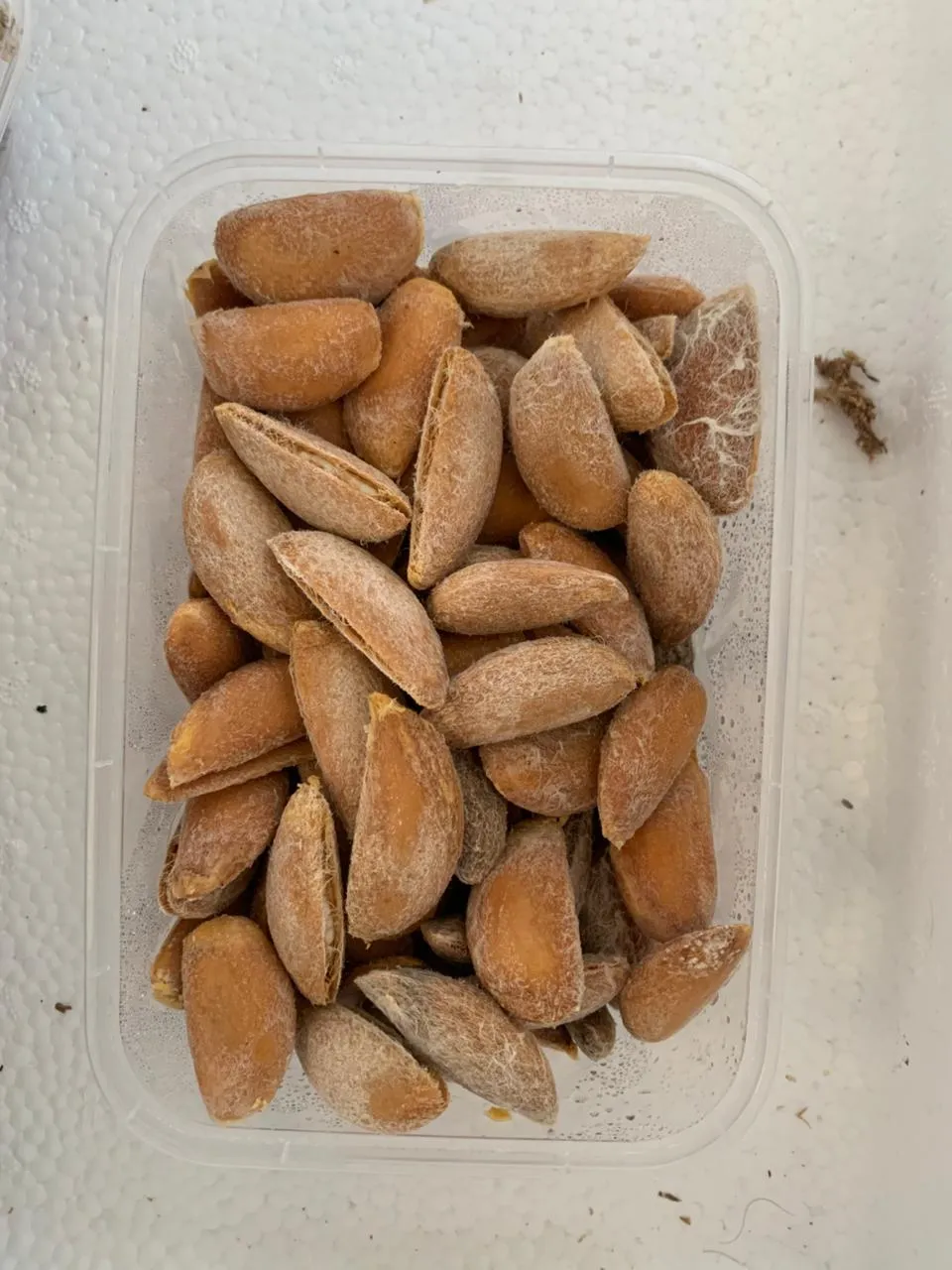
What Is Quararibea cordata?
Quararibea cordata is one of the most extraordinary fruit trees on Earth. It originates deep within the Amazon rainforest. Its native range spans Brazil, Colombia, Ecuador, and Peru — lands of exceptional biodiversity.
The local name “Chupa-chupa” comes from the Spanish word for “suck.” It describes the traditional way people eat the fruit — by sucking the sweet pulp from the large seeds. This name is used widely across Colombia and Peru. Additionally, the tree is known as “zapote chupa-chupa,” “sapote de monte,” and “sapota-do-Solimões” in Brazil.
Outside its native rainforest, Quararibea cordata is extremely rare. It has seldom been cultivated internationally. In fact, US pomologist Bill Whitman introduced the first known specimen to Florida in 1964. That tree took nine years before producing its first fruit. Consequently, access to genuine, export-quality seeds of this species is genuinely exceptional.
Induare Agro sources these seeds from responsible growers. Moreover, each seed is prepared to full international export standards. This makes Quararibea cordata seeds from Induare Agro among the rarest botanical offerings available online today.
Aesthetic Features Quararibea cordata
Quararibea cordata is one of the most visually striking trees in the tropical world. It grows fast, it grows tall, and it commands attention. The tree belongs to the family Malvaceae — the same family as the hibiscus. Furthermore, it is one of the very few members of that family to produce a genuinely desirable edible fruit.
Leaf Structure
The leaves of Quararibea cordata are its most iconic feature. They are large, heart-shaped, and deep green. Each leaf measures between 25 and 40 cm in length. Additionally, the leaves cluster in dramatic whorls — circular groups — near the tips of the branches. This creates a lush, layered, canopy effect. The texture is smooth on top and slightly paler underneath. Consequently, the tree looks spectacular as a garden specimen even before it fruits.
The branches grow in tiered whorls — stacked layers — of five. This gives the tree a pagoda-like silhouette. Moreover, when the trunk or branches are cut, they release a thick, gummy yellow sap. This is a distinctive characteristic of the species.
Flower and Fruit
The flowers of Quararibea cordata are small and grow directly from the older branches and trunk — a trait called cauliflory. They are creamy yellow to orange in colour. Hummingbirds and insects pollinate them naturally. Furthermore, the flowers appear in tight clusters, making the tree look decorated in bloom.
The fruit is the star of the show. Each fruit is round to oval — roughly the size of a grapefruit. It weighs between 200 and 500 grams, and sometimes much more. The outer skin is leathery, green when young and turning brown as it ripens. Inside, the pulp is soft, brilliantly orange, juicy, and very sweet. The flavour is described as a blend of sweet pumpkin, mango, and apricot. Each fruit contains two to five large seeds surrounded by fibrous flesh — similar in structure to a mango.
Primarily, the fruit is eaten fresh by hand. The pulp can also be juiced or blended into smoothies. The high carotene content gives the flesh its vivid orange colour. Additionally, the fruit contains useful polyphenol antioxidants.
Growth and Canopy
In the wild, Quararibea cordata reaches heights of 40 to 45 metres. In cultivation, most trees grow to between 10 and 15 metres. This makes it very manageable in a home garden or orchard. The tree is classified as semi-deciduous — meaning it may drop some leaves during a dry season, then recover with fresh growth. Consequently, it maintains a year-round presence in tropical landscapes.
The tree grows at a fast rate. Young plants establish quickly in suitable conditions. Moreover, the tree is a natural pioneer species — it thrives in cleared land and helps restore tropical ecosystems. Growers often plant it alongside avocado trees, since both species share the same soil preferences.
Global Seed Delivery & Phytosanitary Certification
Induare Agro is committed to safe, legal, and professional global seed export. We understand that our buyers are serious collectors, researchers, and growers. Consequently, we treat every order with the highest level of care and compliance.
Packaging and Shipping
Every seed is packaged to preserve maximum viability during international transit. Quararibea cordata seeds are recalcitrant — meaning they lose viability quickly if not handled correctly. Additionally, the fibrous pulp surrounding each seed is carefully cleaned before packing. This reduces the risk of mold or decay during shipping.
Induare Agro uses Global Express courier services for all international orders. This ensures fast delivery and full tracking at every step. Moreover, our packaging is moisture-controlled and cushioned. Seeds arrive in optimal condition, ready for immediate sowing.
Buyer Peace of Mind
Every shipment from Induare Agro includes a genuine Phytosanitary Certificate. This is an official government document. It confirms that the seeds have been inspected and are free from pests and diseases. Furthermore, it meets the import requirements of most countries worldwide.
Primarily, this certificate protects you as a buyer. It allows the seeds to pass through customs legally and without issue. Additionally, it confirms the botanical identity of the species you receive. Consequently, you can import with full confidence and zero legal uncertainty.
Induare Agro holds full export documentation for all products we sell. Our team prepares all paperwork in compliance with Indonesian phytosanitary regulations. Moreover, we coordinate directly with buyers to ensure smooth customs clearance on arrival.
How to Grow Quararibea cordata
Step 1 — Source Fresh Seeds Always plant Quararibea cordata seeds as soon as possible after receipt. These seeds are recalcitrant — they lose their ability to germinate if stored for too long.
Step 2 — Clean the Seeds Remove any remaining fibrous pulp from around the seed. Rinse gently with clean water. Allow the seed to air-dry for no more than a few hours before sowing.
Step 3 — Prepare the Planting Mix Use a well-draining, loamy potting mix rich in organic matter. Fill an individual container — one seed per pot. This prevents root disturbance during transplanting.
Step 4 — Sow the Seed Plant the seed at a depth of approximately 2–3 cm. Place the container in a warm, partially shaded position. Maintain a temperature between 24°C and 30°C for best results.
Step 5 — Water and Wait Keep the soil consistently moist — not waterlogged. Germination typically occurs within 20 to 30 days under warm, humid conditions. Furthermore, placing the pot on a heat mat speeds up the process.
Step 6 — Provide Light Once the seedling emerges, move it to a position with more direct sunlight. Full sun is ideal for mature growth. Additionally, protect young seedlings from strong winds.
Step 7 — Transplant Outdoors Transplant the young tree outdoors once it is at least 30 cm tall and the weather is reliably warm. Choose a spot with full sun, rich soil, and good drainage. Moreover, ensure the tree has space to grow — it will eventually form a wide, layered canopy.
Step 8 — Ongoing Care Water regularly, especially during dry periods. Apply a balanced fertiliser every two to three months. Prune dead wood as needed. Primarily, protect the tree from frost, as it has no tolerance for cold temperatures.
