
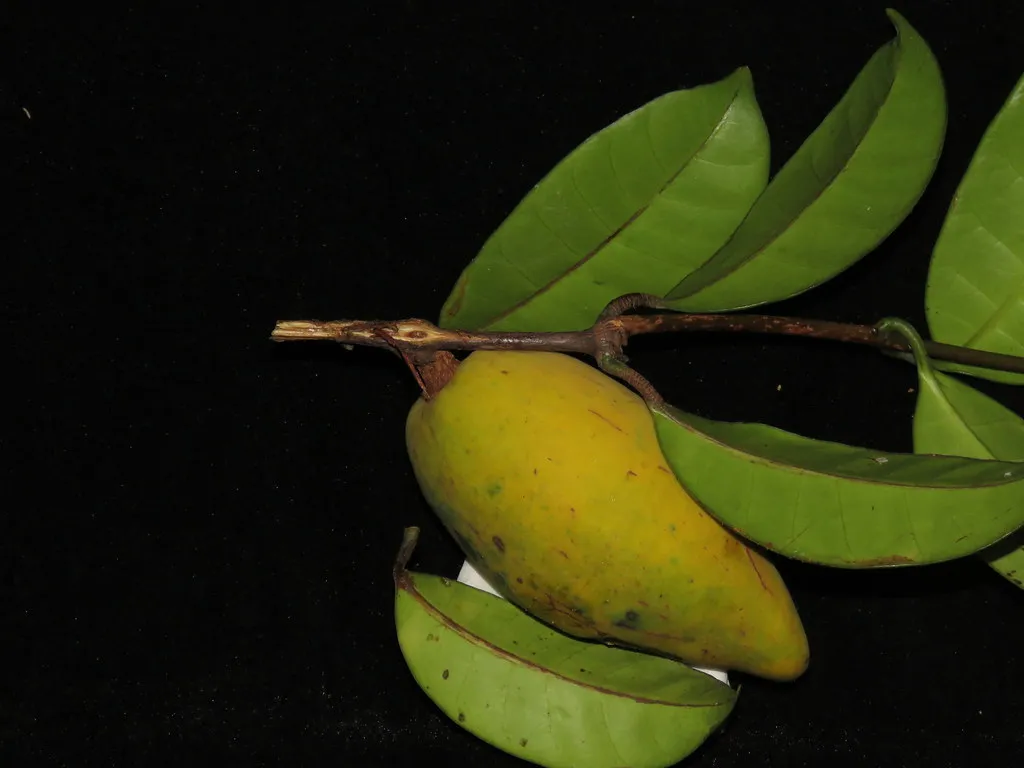
What Is Willughbeia coriacea?
Willughbeia coriacea is a rare, evergreen climbing vine native to the tropical rainforests of Southeast Asia. It grows naturally in Indonesia — including Sumatra, Java, Kalimantan, and Borneo — as well as in parts of Thailand and Malaysia. Furthermore, it thrives in primary and secondary forests at altitudes of up to 1,600 metres above sea level.
This plant is genuinely exceptional in botanical history. Before the Brazilian rubber tree (Hevea brasiliensis) took over global markets around 1900, Willughbeia coriacea was cultivated in plantations across the region. Additionally, botanists considered its latex — the milky, natural sap — to be the finest quality rubber produced by any climbing vine. That extraordinary heritage makes it one of the most sought-after rare plants in Indonesia and among exotic plant collectors worldwide.
Consequently, seeds of this species are very difficult to source outside its native range. Induare Agro is proud to offer fresh, organic, export-quality seeds directly from certified growers in Indonesia. Moreover, each order ships with a full Phytosanitary Certificate — ensuring full legal compliance for international buyers.
Aesthetic Features Willughbeia coriacea
Willughbeia coriacea is a visually striking plant at every stage of its life. Its ornamental value is just as impressive as its historical and economic significance. Primarily, it combines rapid vigorous growth with beautiful foliage, delicate flowers, and colourful fruit.
Leaf Structure
The leaves of Willughbeia coriacea are elliptical to obovate — meaning they are broadly oval, wider near the tip than at the base. Each leaf blade grows between 3 cm and 30 cm long. Furthermore, the surface is smooth, glossy, and slightly leathery.
Young leaves emerge in a vivid orange colour. They gradually transition to a rich, deep green as they mature. Additionally, the leaves are arranged in opposite pairs along woody stems, creating a dense and lush canopy effect. The overall foliage is highly ornamental and makes this plant a standout in any tropical garden or greenhouse display.
Flower and Fruit
Willughbeia produces small, bisexual flowers in clusters — called axillary cymes — that grow along the stem joints. The flowers are five-petalled and appear in white to pale yellow shades, sometimes tinged with red. Moreover, they are tubular at the base, with lobes that open outward like a star.
After pollination, the plant produces large, globose or oval berries — smooth, rounded fruit — that can grow up to 12 cm long. The skin turns from green to yellow or orange when ripe. Consequently, the pulp inside is sweet and sour, often compared to orange sorbet. This is why the plant earned the nickname “Heaven Fruit” among local communities in Borneo and Sumatra. The fruit is both edible and locally prized.
Climbing Growth and Stem Structure
Willughbeia coriacea is a fast-growing climber. The woody stem can reach up to 30 metres in length and 10 cm in diameter at full maturity. Additionally, the plant uses hooked, leafless branchlets — small modified stems with curved tips — to anchor itself to surrounding trees and structures.
The stem contains a milky white latex — a natural rubbery sap — throughout. This latex flows through the plant’s internal tissue and was historically harvested as a rubber source. Primarily, the climbing habit and lush density make this plant ideal for large vertical structures, pergolas, trellises, or tropical forest gardens.
Global Seed Delivery & Phytosanitary Certification
Induare Agro is a professional exotic plant seed exporter based in Indonesia. We source directly from trusted, certified growers across the Indonesian archipelago. Furthermore, every seed we ship meets strict international phytosanitary — meaning plant health and biosecurity — standards.
Packaging and Shipping
Each seed is carefully prepared and packed to survive long-distance international transit. Induare Agro uses protective, moisture-controlled packaging to maintain seed viability — the ability of the seed to sprout and grow — during shipping. Consequently, seeds arrive in the best possible condition for planting.
Additionally, all orders are dispatched via Global Express courier services. This ensures fast, trackable delivery to customers across Europe, North America, Asia, Australia, and beyond. Moreover, we handle all export documentation in-house, so buyers receive a complete, ready-to-clear shipment at their border.
Buyer Peace of Mind
Every order from Induare Agro includes an official Phytosanitary Certificate. This is a government-issued document that certifies the seeds are free from pests and diseases, in full compliance with international import regulations. Consequently, buyers face no customs issues or legal complications on arrival.
Furthermore, Induare Agro provides full order tracking and responsive customer support. We are committed to making rare seed importing simple, safe, and professional. Additionally, our seeds carry export-quality grading — meaning they meet the highest standards for germination viability, cleanliness, and true-to-species identity.
How to Grow Willughbeia coriacea
Step 1 — Prepare Your Growing Medium Use well-draining tropical potting soil or a mix of loam and perlite — a lightweight volcanic material that improves drainage. Fill a deep container or nursery pot, as the roots need room to establish.
Step 2 — Sow the Seed Plant the seed just below the surface, around 1–2 cm deep. Keep the soil consistently moist but never waterlogged — too much water causes the seed to rot before germination.
Step 3 — Provide Warmth and Humidity Place the pot in a warm location above 20 °C (68 °F). High humidity speeds up germination and early growth. Additionally, a plastic dome or humidity tent over the pot helps retain moisture in drier climates.
Step 4 — Choose the Right Light Place the seedling in a bright spot with indirect sunlight. Avoid direct harsh midday sun during the early growth stage. Furthermore, as the plant matures, it tolerates more light and benefits from filtered morning sun.
Step 5 — Provide a Climbing Support Install a trellis, stake, or moss pole once the first true leaves appear. Willughbeia coriacea is a natural climber and grows vigorously with physical support. Consequently, without support, growth becomes tangled and less vigorous.
Step 6 — Water and Fertilise Regularly Keep the soil slightly moist at all times. Mist the leaves regularly to replicate the plant’s humid native habitat. Moreover, apply a balanced liquid fertiliser every two to four weeks during the active growing season.
